
U.S. House Rejects War Powers Resolution Limiting Trump’s Iran Strikes, 213-214
Key Takeaways
- House narrowly rejects latest war powers resolution to curb Trump's Iran war powers, 213-214.
- Democrats backed the measure; Republicans largely opposed, signaling a narrow partisan split.
- Senate previously rejected similar efforts to constrain Trump's Iran war powers.
House vote fails, war powers blocked
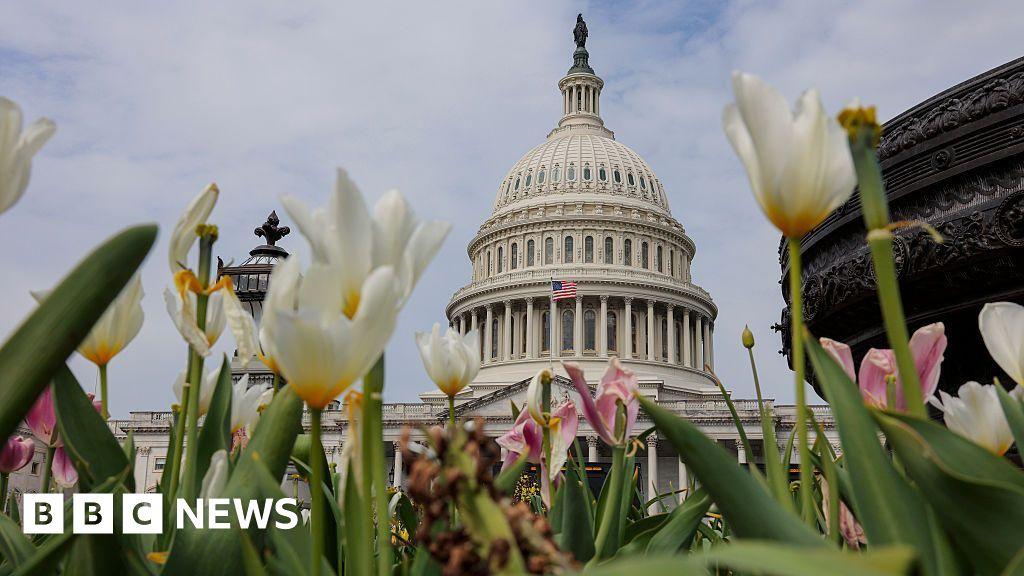
The U.S. House of Representatives narrowly rejected a war powers resolution aimed at constraining President Donald Trump’s ability to wage war with Iran, with the measure failing by a vote of 213-214.
The BBC described the House war powers resolution as “largely symbolic,” noting it faced “little chance of overcoming an expected presidential veto even if it had passed.”

The BBC also reported that the House vote came “just a day after a similar resolution was blocked in the Senate,” where a comparable measure was rejected in a “47-52 vote.”
In the House vote, Representative Thomas Massie of Kentucky was “the only Republican to side with Democrats,” while Jared Golden of Maine was “the lone Democrat to oppose it,” according to the BBC.
Warren Davidson of Ohio voted “present,” which the BBC described as “a form of abstention,” while Democrat Gregory Meeks of New York introduced the resolution and said he would lobby Golden and others.
Al Jazeera likewise said the House vote showed “Only a single vote on Thursday separated the yeas and nays, with 213 in favour and 214 against the latest war powers resolution,” and it tied the defeat to Democrats’ consolidation.
Axios added that the vote was the third time Democrats tried and failed to pass an Iran war powers resolution, and it framed the outcome as a “win” for Trump because the House measure failed 213 to 214.
Across outlets, the same core timeline appears: the U.S.-Israel strikes began on 28 February, and the conflict continued into a period when ceasefire negotiations were underway.
War powers timeline and escalation
The House vote landed inside a broader legal and political timeline tied to the War Powers Resolution of 1973 and a looming deadline for congressional authorization.
The BBC reported that “Federal law requires congressional approval to continue military actions for more than 60 days,” and it added that the War Powers Resolution in 1973 was passed to constrain then-President Richard Nixon’s ability to continue waging war in Vietnam.

Fox News described the operational deadline in more procedural terms, saying that under the War Powers Resolution, Trump has “60 days until Congress is required to weigh in,” and if Congress disapproves, “the administration has 30 days to draw down forces in Iran.”
Fox News also said Senate Republicans blocked another war powers resolution from Senate Democrats “for a fourth time on Tuesday as Operation Epic Fury entered its 46th day,” linking the legislative push to the conflict’s duration.
Politico similarly emphasized that “a more significant deadline is looming,” describing a “legal deadline later this month that requires Congress to authorize continued military operations,” and it connected that to the War Powers Resolution’s withdrawal rule after 60 days unless Congress authorizes it.
The Guardian and Politico both pointed to ceasefire negotiations as the setting for the vote, with the Guardian saying the resolution failed as “peace talks that have yet to make a breakthrough” continued.
Al Jazeera added that the House defeat came “a day after a similar resolution failed in the US Senate, by a vote of 52 to 47,” and it described ceasefire negotiations as ongoing while the U.S. and Iran signaled openness to another round of talks in Pakistan.
In parallel, Al Jazeera reported that Pentagon chief Pete Hegseth said on Thursday the U.S. was ready to resume attacks on Iran’s energy facilities, while the administration preferred diplomacy, and it quoted him saying, “Our forces are maximally postured to restart combat operations, should this new Iranian regime choose poorly and not agree to a deal.”
Lawmakers and officials trade charges
The vote triggered sharp, competing arguments about constitutional authority, legality, and the war’s trajectory, with multiple lawmakers and officials quoted directly.
“Washington, DC – The latest effort to curtail United States President Donald Trump’s power to wage war with Iran has failed in the House of Representatives by a slim margin”
Al Jazeera reported that Representative Bill Foster, a Democrat, wrote on X that “Servicemembers have been killed, gas prices are soaring, and the US in a worse position than before,” and it added his warning that “Congress cannot abdicate its power as a co-equal branch of government and let this rogue President continue to unilaterally wage war.”
Fox News quoted Sen. Chris Murphy, D-Conn., saying, “We're going to have a debate and a vote every week in the United States Senate until either this war comes to an end or our Republican colleagues decide to do their constitutional duty,” while it also quoted Sen. Adam Schiff, D-Calif., arguing, “Otherwise, it's illegal to make war as he's doing.”
Fox News also included a direct statement from Sen. Jeff Merkley, D-Ore., saying, “If the president has a plan, he can come to Congress and ask for authorization, and we can have the debate we should have had beforehand.”
On the Republican side, Fox News quoted Sen. Rand Paul, R-Ky., saying, “I'm not for the war in Iran, I think it’s a war of choice but not my choice,” and it quoted Sen. Thom Tillis, R-N.C., saying, “I think maybe an AUMF could be an advantage for the president.”
Politico quoted House Foreign Affairs Chair Brian Mast, R-Fla., charging Democrats with politics and saying, “I think they want America to lose,” and it added his claim that “That is why in the midst of this ceasefire that’s going on, they are literally offering a resolution to say remove any and all U.S. forces from hostilities in or within Iran.”
Politico also quoted Defense Secretary Pete Hegseth telling reporters at the Pentagon that the military is “locked and loaded” to resume the war with Iran if Trump orders it, and it quoted Joint Chiefs Chair Gen. Dan Caine boasting of American military superiority.
The Guardian provided additional direct quotes from lawmakers who shifted positions, including Henry Cuellar’s statement that information he received about US strategy has “not been sufficient” and his warning that “When the United States echoes the rhetoric of its adversaries, we risk weakening the values that have long defined our leadership.”
Different outlets frame the same vote
While all the outlets describe the same narrow House defeat, they frame its meaning differently—either as a symbolic failure, a consolidation of Democratic opposition, or a political win for Trump.
The BBC emphasized the procedural reality that the resolution was “largely symbolic,” and it stressed that it faced “little chance of overcoming an expected presidential veto even if it had passed,” while also noting that “Most Republicans opposed the resolution in both chambers.”

The Guardian, by contrast, foregrounded party consolidation and internal shifts, saying “Democrats united against continued US involvement in the conflict” and that “three congressmen who had voted against a previous resolution in March” voted in favor this time.
Al Jazeera framed the vote as part of a constitutional struggle, saying the House defeat “underscored Republicans’ continued wariness about constraining Trump’s war against Iran,” and it added that Democrats accused Republicans of giving “unchecked power to Trump.”
Axios presented the outcome as a “win” for Trump, writing that “House Democrats failed Thursday to pass a war powers resolution” and that it was the “third time Democrats have tried and failed” to pass such a measure.
Politico described the vote as a narrow rejection that still left Republicans largely intact, saying “Republican leaders kept defections to a minimum” and that “the impact of the war… hasn’t yet broken Trump’s stranglehold on the GOP.”
Fox News similarly focused on cracks emerging as deadlines neared, stating that “Republicans aren’t ready to jump ship against President Donald Trump's Iran war” while also saying “they also aren’t lining up to support a prolonged conflict.”
These framing differences show up in how each outlet highlights the same named lawmakers: the BBC spotlighted Massie, Golden, and Davidson’s “present,” while Axios listed the flips of Vargas, Landsman, and Cuellar and the “present” vote by Davidson.
What comes next for Iran war
The sources converge on a near-term sequence of deadlines and potential next steps, with ceasefire timing and the possibility of renewed military action repeatedly emphasized.
“Skip to main content Updated 2 hours ago - Politics & Policy House hands Trump a win with failed Iran war powers vote Andrew Solender email (opens in new window) sms (opens in new window) facebook (opens in new window) twitter (opens in new window) linkedin (opens in new window) bluesky (opens in new window) Add Axios as your preferred source to see more of our stories on Google”
Politico said “a fragile ceasefire is set to expire next week” and that “peace talks led by Vice President JD Vance ended without an agreement,” while it also described the U.S. blockade of Iranian ports and Tehran’s earlier closure of the Strait of Hormuz as drivers of economic pressure.
The Guardian reported that talks held in Pakistan over the weekend between JD Vance and Iranian officials “failed to reach an agreement to extend the ceasefire beyond its 22 April expiry,” and it added that “indirect negotiations continued this week, with Pakistan’s army chief traveling to Iran to continue mediation efforts.”
Al Jazeera stated that the two-week pause in fighting “currently extends through April 22,” and it described unresolved issues including “control of the Strait of Hormuz and the future of Iran’s nuclear programme.”
Al Jazeera also said there were indications the U.S. was preparing to re-start military operations if the ceasefire failed, and it quoted Hegseth’s readiness to restart attacks on Iran’s energy facilities.
Fox News tied the legislative timeline to a “60-day deadline” that will require Congress to weigh in or Trump to cease hostilities, and it described the War Powers Resolution mechanics as requiring authorization or disapproval and then a 30-day drawdown.
The BBC similarly pointed to the War Powers Resolution’s 60-day requirement and said the House vote was followed by Senate rejection “yesterday” in a “47-52 vote,” leaving the veto threat as a central obstacle.
Beyond legislation, the sources also describe ongoing diplomatic efforts and domestic political pressure, including Demand Progress’s criticism that “Congress has once again failed to uphold its constitutional responsibility by refusing to block this unauthorized and dangerous war.”
More on Iran

US Naval Blockade Near Strait Of Hormuz Pushes Iran Into Broader Conflict Negotiations
11 sources compared

U.S. Navy Expands Iran Maritime Blockade to Cover Contraband Shipments Worldwide
11 sources compared

U.S. Implements Naval Blockade on Iran, Halting 13 Ships in Strait of Hormuz
10 sources compared

Pakistan Pushes to Include Lebanon in Broader Iran Ceasefire Talks
17 sources compared