U.S. Senate Votes to End Longest Government Shutdown, Reopen Federal Agencies

U.S. Senate Votes to End Longest Government Shutdown, Reopen Federal Agencies

11 November, 202514 sources compared
USA

Key Points from 14 News Sources

  1. 1

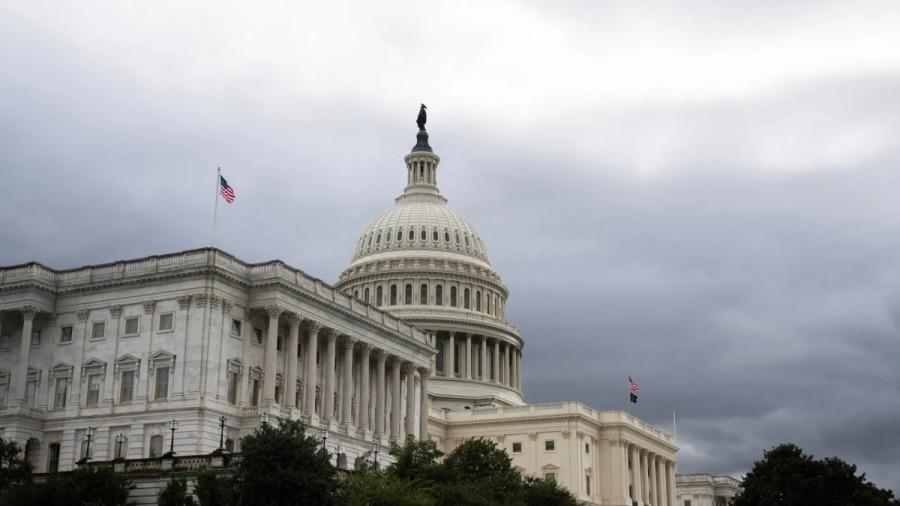
    Senate passed a bipartisan spending bill 60-40 to end the 41-day government shutdown

  2. 2

    Eight Democrats joined Republicans to break the Senate deadlock on the funding measure
  3. 3

    Bill now moves to the House for approval before President Trump can sign it into law

Full Analysis Summary

U.S. Government Shutdown Resolution

The U.S. Senate voted 60-40 to approve a bipartisan funding measure to reopen the federal government.

This vote aims to end the record-long shutdown.

It was the longest shutdown in U.S. history.

Eight Democrats joined Republicans in supporting the measure.

The measure now heads to the House, where Speaker Mike Johnson is pushing for swift action.

President Donald Trump supports the effort to reopen the government.

The immediate impact of the deal includes the restoration of critical services and pay for federal workers.

Coverage Differences

specificity/omission

NBC News (Western Mainstream) and Times Kuwait (Other) specify that eight Democrats joined Republicans, while CNN (Western Mainstream) uses the more general phrasing of support from “a small group of Senate Democrats,” reflecting a difference in specificity about Democratic defections.

tone/certainty

Roll Call (Western Alternative) hedges that the vote is “likely ending” the shutdown, whereas CNN (Western Mainstream) asserts it is “ending,” and Times Kuwait (Other) states the bill will “end the longest government shutdown,” indicating differences in certainty about the outcome before House action.

narrative/emphasis

Times Kuwait (Other) emphasizes House coordination and Trump’s positive reaction, quoting him calling the deal “very good,” while CNN (Western Mainstream) stresses a potential Wednesday House vote with GOP optimism; both highlight next steps but with different emphasis on actors and timing.

Government Funding Breakdown

What the bill funds varies by time horizon.

Multiple outlets report that most of the government is kept open on a short-term basis through January 30.

Select agencies receive full-year appropriations, including Agriculture, Veterans Affairs, legislative operations, and SNAP food assistance.

Some coverage adds that a subset of agencies will be funded through next September.

This indicates a patchwork approach to ending the shutdown while completing the broader appropriations process.

Coverage Differences

contradiction

Deseret News (Local Western) reports the framework “funds the government through January 30, 2026,” which conflicts with NPR (Western Mainstream), NBC News (Western Mainstream), China Daily – Global Edition (Other), and Roll Call (Western Alternative), all of which state funding runs through January 30 without the 2026 extension.

narrative/coverage detail

NBC News (Western Mainstream) and China Daily – Global Edition (Other) explicitly highlight SNAP being fully funded through next September, while Roll Call (Western Alternative) details full-year appropriations for Agriculture, Veterans Affairs, and legislative operations without naming SNAP specifically, reflecting different emphases on programmatic details.

tone/certainty

Roll Call (Western Alternative) presents the package as “likely ending” the shutdown, whereas NPR (Western Mainstream) neutrally describes a continuing resolution to reopen the government, indicating varying editorial tone about the durability of the fix.

Debate Over Health Care Subsidies

The most contentious omission is the enhanced Affordable Care Act subsidies.

Western mainstream outlets emphasize that the package excludes an extension and note a promised but uncertain future vote.

Other coverage amplifies criticism from Democratic leaders.

Some reports highlight forecasts of steep premium increases and coverage losses without subsidies.

These concerns underscore why Democrats are split between reopening government now and securing health care guarantees later.

Coverage Differences

tone/severity

Al Jazeera (West Asian) reports strong warnings and uses the phrase “empty promises,” citing JB Pritzker, and projects that premiums could double in 2026 with millions losing coverage by 2034, whereas NBC News (Western Mainstream) and CNN (Western Mainstream) focus on the omission and a promised vote, noting that premiums could rise next year but without Al Jazeera’s long-term projections.

narrative/political accountability

China Daily – Global Edition (Other) names Senate Majority Leader John Thune and notes his commitment to a mid-December vote, adding that prominent Democrats like Chuck Schumer and Bernie Sanders criticized the deal as insufficient, while CNN (Western Mainstream) more generally references a promised future vote without naming Thune in the excerpt.

coverage scope

Hindustan Times (Asian) highlights specific Democratic figures who supported the bill and notes criticism from Newsom and Pritzker, complementing Western Mainstream accounts that focus more on the policy omission and process.

Effects and Relief from Shutdown

Reports detail severe impacts from the shutdown and what the bill restores.

Outlets cite furloughs or unpaid federal workers numbering from hundreds of thousands to over a million.

Flight operations were curtailed and food assistance programs experienced disruptions.

The measure is described as restoring food aid and federal pay.

It fully funds SNAP through next September.

The bill blocks or reverses mass federal layoffs until January 30.

It includes provisions to rehire affected workers and guarantee back pay.

Coverage Differences

metrics/specificity

Hindustan Times (Asian) quantifies air travel disruptions as “over 1,000 daily flight cancellations,” Al Jazeera (West Asian) cites a “10% reduction in air traffic,” and CNN (Western Mainstream) uses a broader description of “reduced flight operations,” showing varied specificity in measuring travel impacts.

framing of worker protections

Times Kuwait (Other) frames the layoff protections as halting President Trump’s downsizing efforts, whereas Roll Call (Western Alternative) describes provisions to rehire and prohibit mass layoffs until January 30 without attributing intent to Trump, indicating different narrative framing.

program emphasis

NBC News (Western Mainstream) highlights that SNAP is fully funded through next September, while CNN (Western Mainstream) stresses restoration of “federal food aid” broadly; both point to food security impacts but with different programmatic emphasis.

Media Coverage of Fiscal Legislation

Political and fiscal framing varies across sources.

Some Western mainstream outlets describe a bipartisan effort and quick House action.

Others spotlight risks and fiscal critiques.

Coverage ranges from Republicans’ praise and lists of Democratic supporters to warnings that only three of 12 appropriations are settled, raising the prospect of another shutdown.

Other reporting underscores Trump’s endorsement and an expected fast House vote.

In contrast, House Democrats plan to slow the process and attack the bill for omitting ACA tax credits.

Coverage Differences

unique fiscal angle/omission elsewhere

Times Kuwait (Other) uniquely underscores debt implications and critiques of Trump’s prior unilateral actions, noting the deal “maintains federal spending levels that add about $1.8 trillion annually to the national debt” and that “Trump has faced criticism for unilaterally cutting spending and reducing federal pay,” details not foregrounded in Western Mainstream summaries.

risk assessment/future outlook

China Daily – Global Edition (Other) stresses that only three of 12 appropriations are covered and warns of another shutdown risk, whereas Roll Call (Western Alternative) frames the Senate vote as “likely ending” the shutdown and CNN (Western Mainstream) focuses on reopening and House passage without emphasizing renewed risk.

House strategy and partisan messaging

Deseret News (Local Western) reports Democrats plan to delay the process with amendments and quotes House Minority Leader Hakeem Jeffries attacking the bill for omitting ACA tax credits, calling Republicans’ absence a “taxpayer-funded vacation,” while CNN (Western Mainstream) highlights GOP optimism for quick passage and Times Kuwait (Other) quotes Trump calling the deal “very good.”

All 14 Sources Compared

Al Jazeera

US Senate passes bill to end longest ever government shutdown

Read Original

CBS News

Government shutdown end in sight as Senate approves funding package, sending it to House

Read Original

China Daily - Global Edition

US Senate passes bipartisan spending package to end longest govt shutdown

Read Original

CNN

Senate advances deal to end government shutdown as air traffic control staffing worsens - live updates | CNN Politics

Read Original

Deseret News

Senate votes to reopen government, teeing up final vote in House later this week

Read Original

Hindustan Times

US government shutdown to end soon? Senate passes key funding bill | Hindustan Times

Read Original

KVUE

Senate passes spending bill in decisive vote to reopen government, sending it to the House

Read Original

Latest news from Azerbaijan

US Senate approves bill to end shutdown, sending it to House

Read Original

NBC News

Senate passes bill to reopen government, sends it to the House

Read Original

NBC4 Washington

Senate passes bill to reopen government, as 8 Democrats break with their party

Read Original

NPR

Senate approves shutdown ending legislation, sending bill to the House for a vote

Read Original

Roll Call

Senate passes spending package in key step to end shutdown

Read Original

Sri Lanka Guardian

U.S. Senate Passes Deal to End Longest Government Shutdown in History

Read Original

Times Kuwait

U.S. Senate passes deal to end longest government shutdown in history

Read Original