
U.S. sends 15-point plan to end Iran war
Key Takeaways
- The U.S. sent Iran a 15-point plan delivered via Pakistan to end the war.
- Plan demands nuclear, missile, and regional concessions, including sanctions relief and Bushehr civilian program.
- Mediators from Pakistan, Turkey, and Egypt push for US-Iran talks, hosted by Pakistan.
Diplomatic Initiative Overview
The United States has transmitted a 15-point diplomatic proposal to Iran aimed at ending the ongoing Middle East war, as confirmed by multiple sources across different regions.
“Trump said Monday that U”
According to The New York Times, citing two officials briefed on the matter, the plan was delivered to Iran via Pakistan and addresses key issues including Iran's ballistic missile and nuclear programs as well as maritime security concerns in the Strait of Hormuz.
The proposal represents a significant diplomatic push by the Trump administration to find an "offramp" from a conflict that has now entered its fourth week and has widened to involve multiple countries.
Israeli sources including The Jerusalem Post and i24NEWS confirm the existence of this comprehensive peace framework, while West Asian outlet Anadolu Ajansı notes that it remains unclear whether Iran will accept the proposal or if Israel supports it as the war continues with US-Israeli strikes and Iranian retaliation.
Trump administration officials have framed this as part of a dual-track approach combining military pressure with diplomatic engagement, with President Trump himself stating that negotiations are "ongoing" and that Iran "badly" wants to make a deal during a press conference in the Oval Office.
Plan Terms and Demands
The 15-point plan contains sweeping demands from the United States that would fundamentally reshape Iran's nuclear and regional policies, according to detailed reports from multiple sources.
Israeli Channel 12, as cited by The New York Post, outlines that the plan requires Iran to dismantle all existing nuclear capabilities, commit to never pursuing nuclear weapons, and hand over its entire stockpile of enriched uranium (approximately 440-450 kg) to the International Atomic Energy Agency (IAEA).

Specific nuclear facilities including Natanz, Isfahan, and Fordo would need to be dismantled, with the IAEA granted full inspection rights across all Iranian nuclear sites.
CNBCTV18 further details that the plan demands an end to uranium enrichment on Iranian territory and the abandonment of Iran's "regional proxy paradigm," including cessation of funding, training, and arming allied militias across the Middle East.
In return for these concessions, Asian and Western sources indicate that Iran would receive comprehensive sanctions relief, US assistance for advancing its civilian nuclear program at Bushehr, and removal of the "snapback" mechanism that allows for automatic reimposition of sanctions if Iran fails to comply.
The Jerusalem Post notes that maritime security provisions would include declaring the Strait of Hormuz a free maritime zone ensuring open navigation.
Iranian Response
Iran has responded to the US proposal with a mixture of denial and counter-demands, according to reports from multiple sources indicating significant gaps between the two sides' positions.
“President Donald Trump said Tuesday the U”
While Trump administration officials, including the president himself, have claimed that Iran has "agreed" to the critical demand of never obtaining nuclear weapons, Iranian officials have consistently denied that any negotiations are taking place, with one source describing the claims as "outlandish" and "ridiculous."
The New York Post reports that Iran has made counter-demands including the ability to collect fees from ships transiting the Strait of Hormuz, guarantees that the war won't restart, an end to Israel's strikes on Hezbollah in Lebanon, lifting of all sanctions, and the right to maintain its ballistic missile program without negotiations to limit it.
These Iranian demands have been characterized by a US official as "unrealistic," highlighting the fundamental differences between the two sides' approaches to resolving the conflict.
ABC13 Houston notes that Iran continues to insist that no negotiations are underway, despite Trump's claims to the contrary, while Folha de S.Paulo reports that Tehran's chokehold on the Strait of Hormuz has effectively blocked passage for most Western ships, disrupting global oil and gas supplies and driving prices higher as leverage in the diplomatic standoff.
Regional Diplomacy
Pakistan has emerged as the central diplomatic intermediary in the US-Iran negotiations, with its military leadership playing a crucial role in facilitating communication between the two adversaries.
According to multiple sources including The New York Post, Anadolu Ajansı, and Folha de S.Paulo, Pakistan's army chief, Field Marshal Syed Asim Munir, has become the key interlocutor between Washington and Tehran, maintaining close ties with both the US administration and Iran's Revolutionary Guards.

The sources indicate that Munir recently contacted Mohammad Bagher Ghalibaf, Speaker of Iran's Parliament and former Revolutionary Guards commander, proposing that Pakistan host peace talks between the US and Iran.
Pakistani Prime Minister Shehbaz Sharif has publicly expressed his country's willingness to host these negotiations, stating that Pakistan "fully supports ongoing efforts to pursue dialogue to end" the war and stands ready to "facilitate meaningful and conclusive talks for a comprehensive settlement."
Other regional players including Egypt and Turkey have also been involved in encouraging the Iranians to engage constructively, according to officials cited by Folha de S.Paulo.
This regional diplomatic framework comes as the Trump administration continues military operations under the name "Operation Epic Fury," with White House Press Secretary Karoline Leavitt stating that military operations will continue until Trump's objectives are met, even as diplomatic efforts proceed.
Military Context
The diplomatic initiative occurs against a backdrop of escalating military preparations and continued combat operations, creating a complex situation of simultaneous war and peace talks.
“Donald Trump is pushing for a month-long ceasefire with a 15-point plan sent to Iran in a bid to end the war in the Middle East, reports have claimed”
Multiple sources report that the US military is significantly reinforcing its presence in the Middle East, with The Las Vegas Review-Journal and Times Union indicating that at least 1,000 troops from the 82nd Airborne Division are being deployed to supplement the approximately 50,000 troops already in the region.

Additionally, two Marine Expeditionary Units are being deployed, adding about 5,000 Marines and thousands of sailors to the area.
These troop movements are being framed as providing Trump with "max flexibility" on future actions, according to officials cited by Las Vegas Review-Journal.
Israeli officials, who have been advocating for continued military action against Iran, were reportedly surprised by the sudden submission of a ceasefire plan, highlighting potential divisions within the US-Israeli coalition regarding the timing and approach to ending the conflict.
The war has now entered its fourth week with no clear end in sight, as Israeli officials expect it to continue for weeks according to Folha de S.Paulo.
Meanwhile, Iran has effectively restricted Western shipping through the Strait of Hormuz, disrupting global energy supplies, and the Trump administration recently announced a five-day pause on strikes on Iranian power plants and energy infrastructure, citing "very good and productive" talks with Tehran, though Iran has denied the existence of such negotiations.
More on Iran
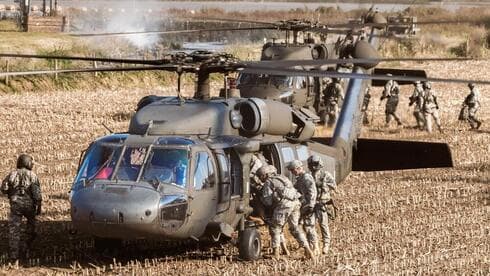
Pentagon to deploy thousands of 82nd Airborne soldiers to Middle East amid Iran talks
48 sources compared
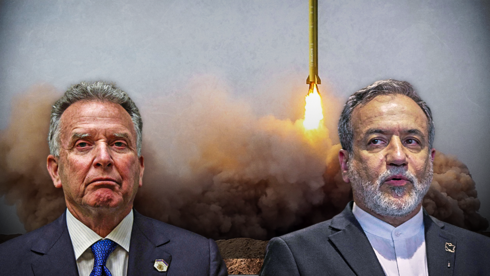
Iran prefers Vice President JD Vance to lead talks with US amid trust gap
12 sources compared

Pakistan Mediates US-Iran Ceasefire Talks Amid US-Israel War on Iran
12 sources compared

President Trump says talks underway to end war with Iran; Iran denies talks.
15 sources compared