
President Trump says talks underway to end war with Iran; Iran denies talks.
Key Takeaways
- Trump says very strong talks underway to end the war with Iran.
- Iran denies talks are taking place with the United States.
- Mediators and regional brokers reportedly exploring indirect, high-level talks.
Trump's Claims vs Reality
President Donald Trump has announced that 'very strong talks' are currently underway between the United States and Iran to end their ongoing war, claiming significant progress toward a potential agreement.
“Trump says “very strong talks” underway to end war, but Iran denies talks Pres”
According to Trump, negotiations are so advanced that he has instructed the Department of War to postpone any military strikes against Iranian power plants and energy infrastructure for a five-day period, contingent on the success of ongoing discussions.
The president asserted that Iran has committed to not pursuing nuclear weapons or enriching uranium, to hand over existing stockpiles, and to be 'low-key on missiles,' while agreeing to reopen the vital Strait of Hormuz.
Trump emphasized that his administration has kept Israel informed about these talks, stating that 'Israel will be very happy with what we have' and that such an agreement would 'safeguard our interests.'
However, these claims stand in stark contrast to Iran's official position, which has consistently denied any direct dialogue with Washington.
Iran's Rejection of Talks
Iran has categorically rejected Trump's assertions about ongoing negotiations, with the Foreign Ministry explicitly stating, 'There is no dialogue between Tehran and Washington.'
Iranian officials have characterized Trump's claims as misleading, with Parliament Speaker Mohammad Bagher Ghalibaf dismissing the idea of negotiations with the U.S. as 'fakenews.'

Iranian sources have indicated that while Washington has attempted to initiate contacts, these have not risen to the level of comprehensive negotiations.
Tehran's position reflects deep-seated mistrust of U.S. intentions, particularly given Iran's experience of being attacked twice during previous high-level diplomatic talks, including the Feb. 28 strikes that initiated the current war.
An Iranian source told Reuters that there were 'attempts to contact' between Washington and Tehran, but these messages exchanged through various mediators were meant only 'to explore the possibility of reaching an agreement to end the war,' not to conduct actual negotiations.
Continued Violence Amid Talks
Despite the conflicting claims about negotiations, both the U.S. and Iran have continued military operations, casting doubt on the sincerity of any purported diplomatic efforts.
“is talking to right people in Iran to make deal, Trump says Reuters U”
The Pentagon reports that over 9,000 targets in Iran have been hit since the war began, while Iran has retaliated with missile and drone attacks targeting Israel's Tel Aviv and sites across the Mideast.
Even as Trump touted progress in talks, Iran's capital came under more airstrikes and Tehran launched new waves of attacks against Israel and Gulf Arab states, with one missile slamming into a Tel Aviv street.
President Trump has also approved the deployment of more than 1,000 soldiers from the 82nd Airborne Division to the Middle East, indicating continued military preparations.
This ongoing violence has created a dangerous disconnect between diplomatic pronouncements and battlefield reality, with both sides appearing to engage in talks primarily as tactical maneuvers rather than serious peace efforts.
International Response
The international community has responded to the mixed signals about potential peace talks with various diplomatic initiatives and economic warnings.
Pakistan has emerged as a key mediator, with Prime Minister Shehbaz Sharif declaring his country 'stands ready and honoured to be the host to facilitate meaningful and conclusive talks for a comprehensive settlement.'
Egypt, Turkey and Pakistan have been actively involved in de-escalation efforts, with officials from the three countries meeting in Saudi Arabia last week to discuss containing the war.
However, Saudi Arabia's Crown Prince Mohammed bin Salman has reportedly been pushing Trump to continue the conflict, seeing it as a 'historic opportunity to remake the Middle East' and urging the destruction of Iran's 'hard-line' government.
Meanwhile, the economic consequences of the conflict continue to mount, with oil prices remaining above $100 per barrel, India's beer brewers warning of price increases due to gas shortages, and Amazon's data center operation in Bahrain being disrupted by drone activity.
The Philippines has declared a national energy emergency due to the 'imminent danger' posed by the Middle East conflict to its energy supply.
Negotiation Challenges
The fundamental challenges to any potential U.S.-Iran agreement remain profound, with experts expressing deep skepticism about the prospects for successful negotiations.
“DUBAI, United Arab Emirates — U”
David Calva, a Middle East specialist at the Jean Jaurès Foundation in Paris, stated, 'I have many doubts about the negotiations because trust has been completely destroyed and the positions of the warring parties are further apart than ever.'

He added that 'the margin for maneuver by both sides is very limited.'
Ross Harrison, a researcher at the Middle East Institute, expressed doubt about the accuracy of Trump's claims about speaking with a 'high-level figure' in Iran, stating, 'I don't think they're talking to anyone. I think it is being done through some mediation.'
The core issues dividing the two sides include Iran's nuclear program, which Trump demands be completely abandoned, while Iran seeks guarantees against future military action, compensation for losses incurred during the conflict, and formal control of the Strait of Hormuz.
With Iranian Supreme Leader Ali Khamenei reportedly killed in the conflict and uncertainty about who represents Tehran's decision-making authority, the path to any meaningful agreement appears increasingly complex.
More on Iran
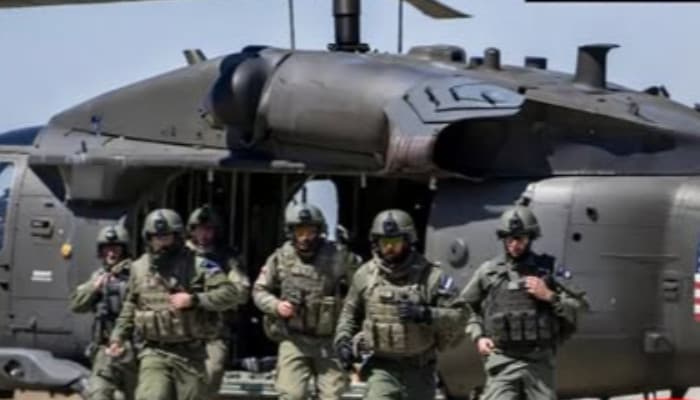
U.S. Deploys 82nd Airborne Division troops to Middle East amid Iran tensions
30 sources compared

Pakistan PM Sharif Offers to Host US-Iran Talks to End Middle East War
17 sources compared
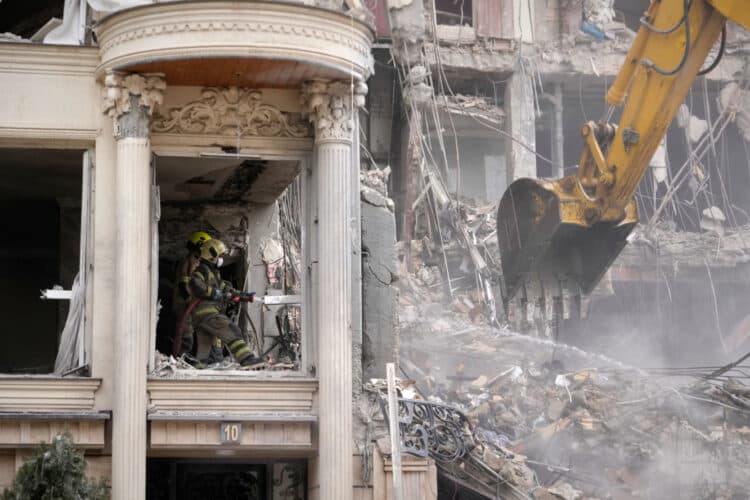
President Donald Trump Pauses Iranian Strikes on Energy Infrastructure for Five Days
12 sources compared
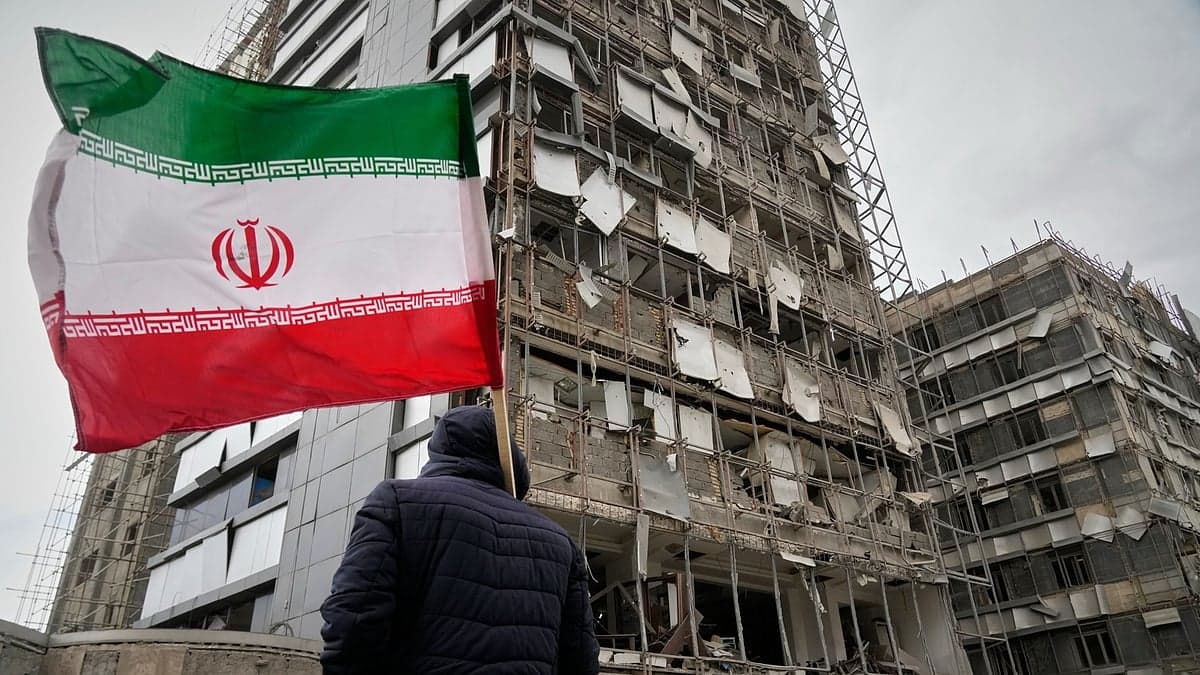
US Reaches Out to Iran via Intermediaries to Explore Ending the War.
15 sources compared