
US Strikes Iran Oil Facility as Trump Says War Ends
Key Takeaways
- Israel reportedly ignored US warnings not to strike Iranian oil depots.
- Trump and CENTCOM warned such attacks could provoke Iran to strike similar sites.
- U.S. redeployed forces and assets toward the Middle East, including Marines and carriers.
War Casualties
The US-Israeli war against Iran, which began on February 28, 2026, has resulted in significant casualties across the Middle East.
“That’s a very big setback for people who don’t have guns,” he said”
At least 2,000 people have been killed in neighboring countries hosting US military bases and in Lebanon where Israel is trading airstrikes with Hezbollah, an Iran-supported militant group.

The conflict has escalated with Pentagon officials reporting that Friday would be the busiest day since the war began, indicating intensifying military operations.
US Central Command has designated an investigating officer to examine a strike on a school in southern Iran that killed at least 175 people, many of them children, highlighting the civilian toll of the ongoing conflict.
Strait of Hormuz
Pentagon officials have addressed the critical issue of the Strait of Hormuz, with Defense Secretary Pete Hegseth asserting that Iran's firing on ships is the only thing prohibiting transit through the vital waterway.
Hegseth emphasized that the strait will not remain contested, stating "We're working with you to make sure that energy flows."

However, Air Force Gen. Dan Caine, chairman of the Joint Chiefs of Staff, characterized the environment as "tactically complex" and indicated that the military is studying options to ensure safe passage while pursuing current objectives.
The US military has designated an investigating officer outside of Central Command to examine the school strike, with Hegseth maintaining that "We don't target [civilians], Iran does."
Military Operations
The military operations have seen intense fighting with Pentagon officials reporting that Friday would be the busiest day since the war began nearly two weeks prior.
Chairman of the Joint Chiefs of Staff Air Force Gen. Dan Caine revealed that when soldiers were asked what they needed from leadership, their response was simply "more rounds, sir."
Caine emphasized that "Our joint force will continue today against the enemy from the land, sea, and air," indicating comprehensive military engagement across multiple domains.
The human cost of the conflict was underscored by Hegseth's recognition of four airmen killed in the crash of an aircraft refueling tanker, whom he called "heroes" and said their sacrifice was necessary.
Economic Impact
The conflict has had significant economic impacts, with oil prices rising to near $99 per barrel shortly before the stock market opened on Friday.
Despite an India-flagged oil tanker sailing out of the east of the Strait of Hormuz carrying gasoline bound for Africa, analysts warned this development would do little to ease the global supply crunch.

In the United States, gas prices have increased significantly, with the national average reaching $3.644 per gallon as of 8:30 AM ET, representing a 24% increase from the previous month.
Some western regions are experiencing prices well over $4 per gallon.
Hegseth clarified that President Donald Trump does not want the US to be involved in "democracy building" or "nation building" in Iran, distinguishing the current approach from previous administrations.
More on Iran

Israel strikes Iran's Pars gas field as Tehran vows revenge
14 sources compared
Trump threatens to blow up South Pars gas field if Iran attacks Qatar again
10 sources compared
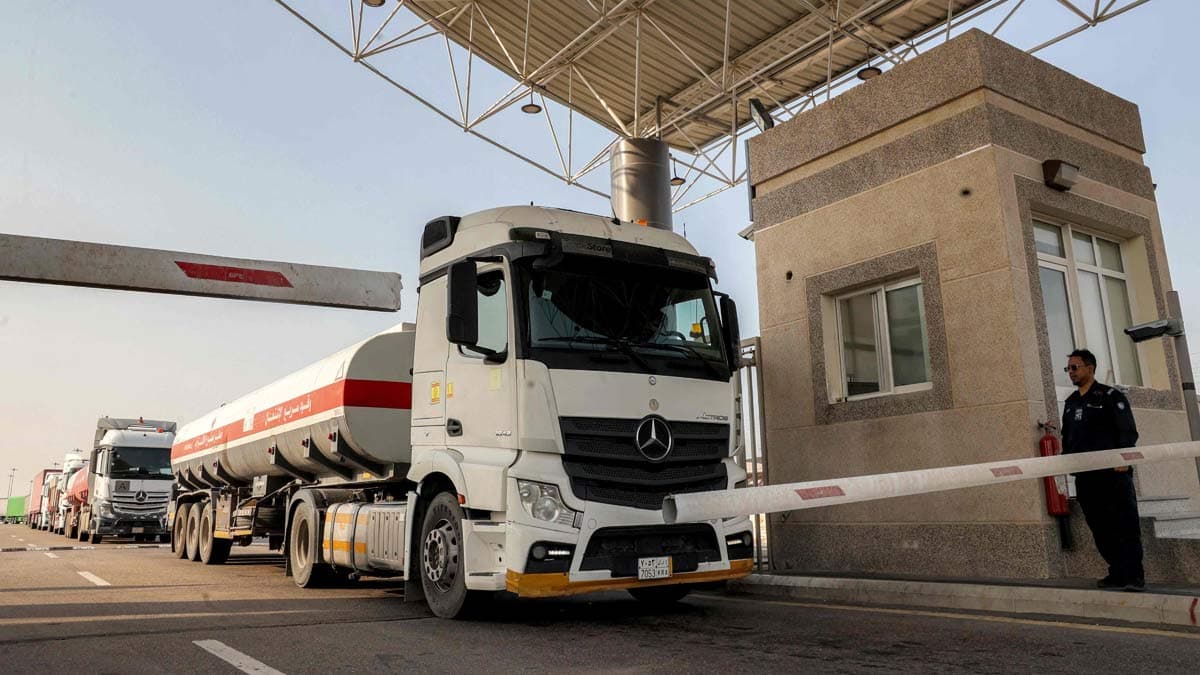
UAE Halts Habshan Gas Facility Operations After Debris From Intercepted Missiles
10 sources compared

Iran Threatens Gulf Energy Facilities After Israel Strikes South Pars Gas Field
11 sources compared