
US Strikes Iranian Anti-Ship Missile Launchers Near Strait of Hormuz.
Key Takeaways
- US conducted bunker-buster strikes against Iranian anti-ship missile launchers near the Strait of Hormuz.
- Officials say the launchers threatened the flow of shipments through the waterway.
- The strikes followed the resignation of the director of the U.S. National Counterterrorism Center.
US Military Strikes
The United States military conducted targeted strikes on Iranian anti-ship missile sites along the Strait of Hormuz.
They utilized 'multiple 5,000-pound deep-penetrator munitions on hardened Iranian missile sites' near Iran's coastline.
According to U.S. Central Command, these Iranian antiship cruise missiles 'posed a risk to international shipping in the strait.'
The strikes represent a significant escalation in the ongoing military confrontation between the U.S. and Iran.
This operation reflects the Trump administration's broader strategy to disrupt Iran's military capabilities in the strategically vital waterway.
The strait handles approximately 20% of global oil and natural gas trade passes.
Political Response
House Speaker Mike Johnson defended the military operation while acknowledging ongoing challenges in securing the critical waterway.
Johnson, who is close to Trump, insisted that the U.S. military operation against Iran would be winding down quickly.
He emphasized that 'securing the strait remains an issue' despite claims of progress.
He publicly called on allies to step up and assist with the security mission.
Johnson stated 'We ask our allies to step up and acknowledge that reality and help us out.'
The speaker dismissed concerns about lack of public congressional hearings.
He claimed members had 'adequate access to private classified briefings' despite growing criticism about transparency.
Trump's Criticism
President Trump expressed significant frustration with the lack of international support for the military operation.
He particularly criticized NATO allies whom he described as providing only 'one way street' support.
Trump wrote on social media that despite 'almost every country strongly agreed with what we are doing,' the U.S. was not receiving adequate assistance.
He emphasized that 'Iran cannot be allowed to have a nuclear weapon' as a key justification for the military action.
Trump lamented that the U.S. spends 'Hundreds of Billions of Dollars per year protecting these same Countries'.
He criticized allies for 'will do nothing for us, in particular, in a time of need.'
The President's remarks reflect broader tensions within the alliance about burden-sharing for Middle East security operations.
Humanitarian Impact
The military operations have triggered a humanitarian crisis across the Middle East.
Millions have been displaced and global food security threatened by disrupted supply chains.
According to Lukas Gehrke, director of the International Organization for Migration in Brussels, more than 1 million people are displaced in Lebanon alone.
About 100,000 mostly Syrian refugees have fled into Syria where an additional 250,000 may soon need food and medicine.
Inside Iran, fighting has damaged approximately 55,000 civilian structures including 30,000 homes.
This has forced mass displacement with over half a million cars tracked heading north.
The World Food Program warns the conflict could push 45 million more people into acute hunger if the war lasts through June.
This could set 'global hunger levels to an all-time record' and create 'the most severe disruption since Covid and the Ukraine war back in 2022.'
Iranian Response
Iran has responded to U.S. military actions with intensified attacks across the region.
They are targeting diplomatic and military installations while disrupting maritime traffic in the critical waterway.
The UAE's defense ministry reported intercepting 10 Iranian missiles and 45 drones in one busy night.
Israel's military announced new airstrikes targeting Iran's capital, Tehran.
The Lebanese army confirmed one soldier died from wounds sustained in an Israeli airstrike on a southern village.
Iranian forces launched rockets and at least five drones at the U.S. Embassy in Baghdad early Tuesday.
Iraqi security sources described this as 'the most significant attack since the start of the U.S.-Israel war with Iran on Feb. 28.'
These attacks have effectively halted traffic through the Strait of Hormuz.
Approximately 20 vessels have come under attack since the conflict began.
This severely impacts global energy markets and supply chains.
More on Iran

Israel strikes Iran's Pars gas field as Tehran vows revenge
14 sources compared
Trump threatens to blow up South Pars gas field if Iran attacks Qatar again
10 sources compared
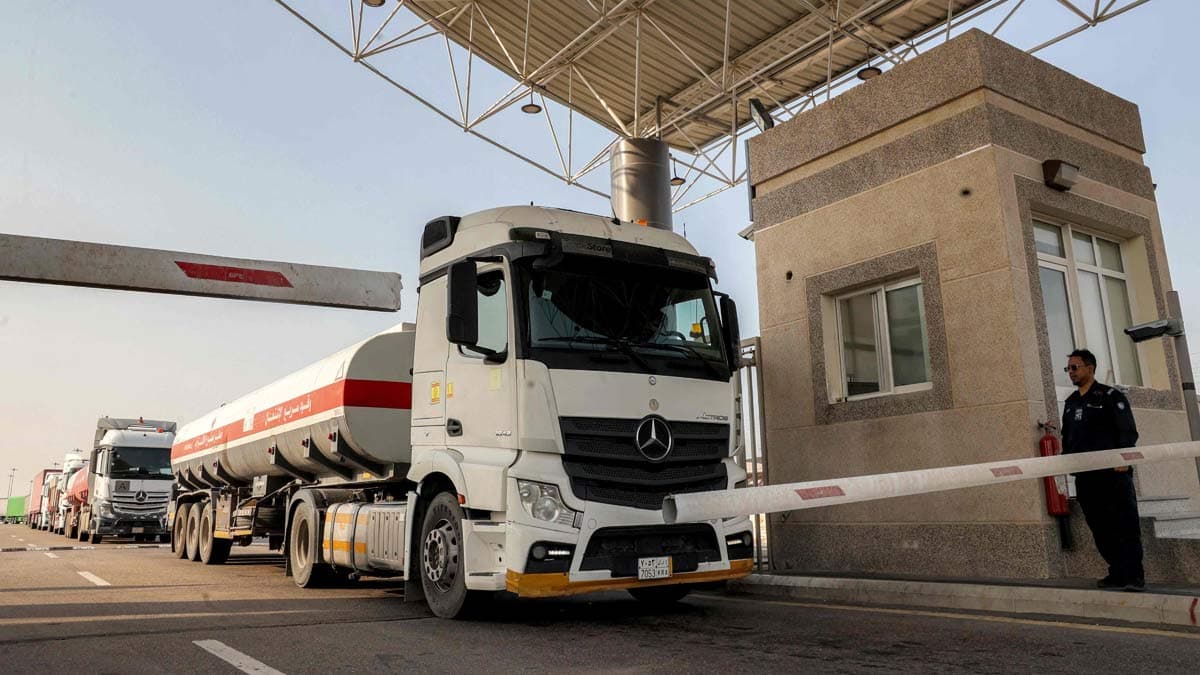
UAE Halts Habshan Gas Facility Operations After Debris From Intercepted Missiles
10 sources compared

Iran Threatens Gulf Energy Facilities After Israel Strikes South Pars Gas Field
11 sources compared