
U.S. Strikes Iranian Coastal Missile Sites Near Strait of Hormuz with 5,000-Pound Bunker-Buster Bombs
Key Takeaways
- US strikes hardened Iranian missile sites near Strait of Hormuz with 5,000-pound bombs.
- CENTCOM reported multiple 5,000-pound deep-penetrator munitions used against underground facilities.
- Strike aims to degrade threats to international shipping through the Strait of Hormuz.
Military Operation Details
U.S. military forces conducted significant strikes on Tuesday, March 17, 2026, targeting hardened Iranian missile installations located along Iran's coastline near the strategically vital Strait of Hormuz.
“The US Central Command announced that it had dropped 5,000-pound (about 2,268-kilogram) deep penetrator bombs on Iranian missile sites near the Strait”
According to U.S. Central Command (CENTCOM), these precision strikes employed multiple 5,000-pound deep penetrator munitions against underground missile facilities housing anti-ship cruise missiles that posed direct threats to international maritime traffic.

The operation represents a major escalation in the ongoing tensions between the U.S. and Iran, coming after Iran had effectively closed the critical waterway through which approximately 20% of global oil supplies pass.
The strikes specifically targeted missile systems that had been disrupting commercial shipping through the world's most important energy export route.
Advanced Weaponry Deployed
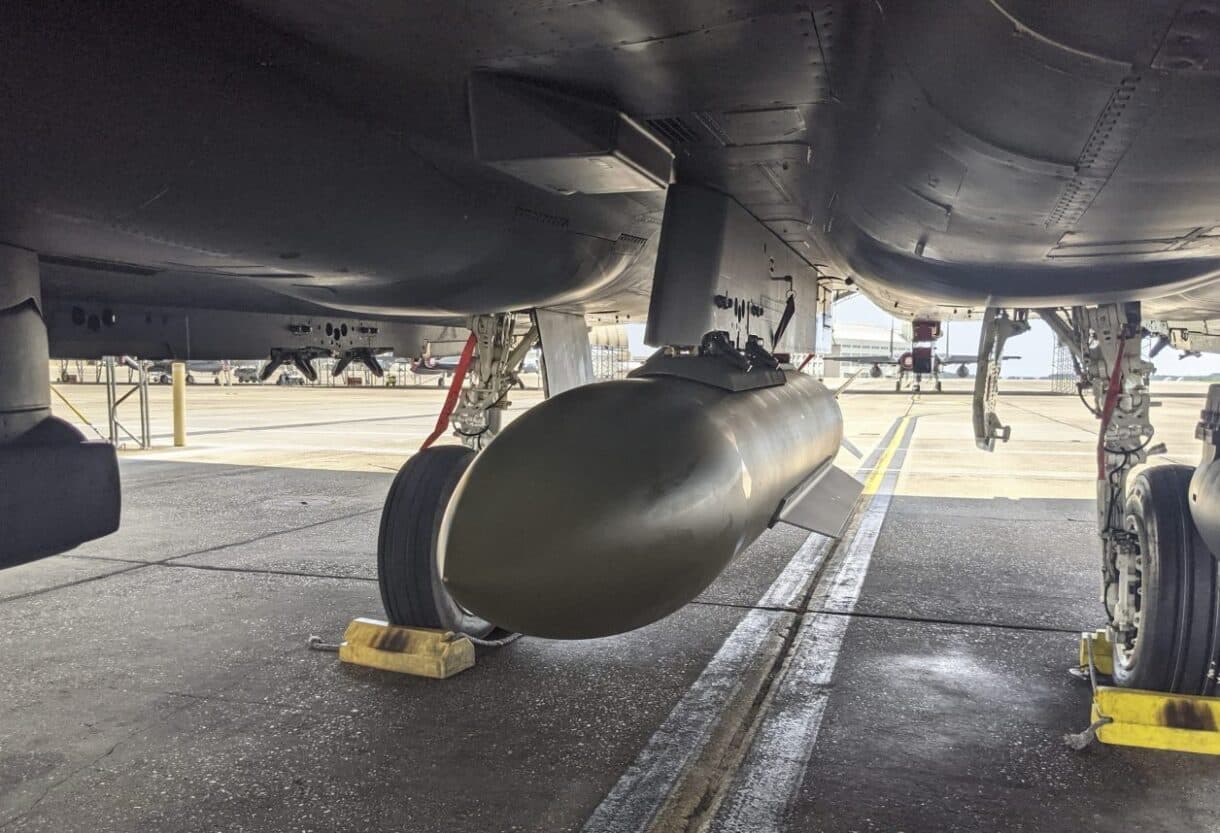
The precision strikes utilized advanced GBU-72 Advanced 5K Penetrator bombs, specialized bunker-buster munitions designed to penetrate deeply buried and heavily reinforced targets.
These 5,000-pound weapons, costing approximately $288,000 each according to a 2022 Air Force Times report, represent a significant technological advancement over earlier bunker-busting systems.

Unlike conventional munitions, the GBU-72 penetrates the surface before detonating, making it particularly effective against fortified missile storage sites and command centers protected by reinforced concrete.
The bomb combines the BLU-138 penetrator warhead with GPS-based guidance systems and can be deployed from both fighter jets like the F-15E Strike Eagle and bomber aircraft, though it remains less powerful than the 30,000-pound GBU-57 Massive Ordnance Penetrator used in prior strikes on Iranian nuclear facilities.
Strategic Objectives
The strategic objective of the strikes was to degrade Iran's capability to threaten vessels in and around the Strait of Hormuz and potentially reopen the critical energy corridor that has been effectively closed since the US-Israeli war on Iran.
“WORLD The US military struck Iranian underground missile sites near the Strait of Hormuz using 5,000-pound GBU-72 bunker-buster bombs, aiming to neutralise threats to international shipping”
U.S. officials indicated that the targeted missile installations represented a serious threat to international shipping and maritime security in the region, as part of Iran's broader coastal defense network designed to disrupt or deter traffic through the vital waterway.
CENTCOM Commander Admiral Brad Cooper explicitly stated that 'the US will continue to degrade Iran's ability to threaten vessels in and around the Strait of Hormuz,' emphasizing Washington's commitment to maintaining freedom of navigation in the Persian Gulf.
The operation marks a clear shift toward directly targeting maritime threats, as commercial shipping through Hormuz remains near a standstill despite a recent lull in attacks.
International Response
President Donald Trump has called on many nations to help police the Strait of Hormuz after Iran responded to US-Israeli attacks by using drones, missiles, and mines to effectively close the channel for tankers, which has choked global energy flows and hiked oil prices across the world.
However, many US allies have firmly rejected Trump's request for military assistance, with several NATO member countries stating they have no immediate plans to send ships to help unblock the strait.
Trump has expressed significant frustration with NATO, describing their refusal as a 'very foolish mistake' and lamenting that 'everyone agrees with us, but they don't want to help.'
The President also stated that the United States does not require assistance from any other country, including Japan, Australia, and South Korea, while simultaneously pressuring allies to help prevent Iran from acquiring nuclear weapons.
This diplomatic friction highlights the challenges facing the U.S. in building international consensus for military operations in the region.
Regional Escalation
The strikes near the Strait of Hormuz occur amid a broader surge in hostilities across the Middle East, with the conflict continuing to escalate beyond the immediate maritime security concerns.
“Trending: West Asia war Trump official resigns Ali Larijani death Netanyahu death rumours Afcon title advertisement How deadly are the 5,000-pound bunker-busting bombs that US fired near Strait of Hormuz”
Iranian forces have threatened retaliation following the separate Israeli airstrike that killed security chief Ali Larijani, who had been effectively in charge of Iran's regime survival, regional policy, and defense strategy.

Israel has vowed to also target Iran's new supreme leader Mojtaba Khamenei, who has not appeared in public since being chosen to succeed his father, and Prime Minister Benjamin Netanyahu has again called for the end of the Islamic Republic.
Meanwhile, Iran informed the International Atomic Energy Agency that a projectile struck near the Bushehr nuclear power plant on Tuesday evening, though no damage or injuries were reported.
These developments indicate that while the U.S. strikes focus on maritime security, the broader Middle East conflict continues to intensify with multiple fronts and potentially devastating consequences.
More on Iran

Israel strikes Iran's Pars gas field as Tehran vows revenge
14 sources compared
Trump threatens to blow up South Pars gas field if Iran attacks Qatar again
10 sources compared
UAE Halts Habshan Gas Facility Operations After Debris From Intercepted Missiles
10 sources compared

Iran Threatens Gulf Energy Facilities After Israel Strikes South Pars Gas Field
11 sources compared