U.S. Strikes Iranian Radar Sites After Intercepting Drones; Iran Fires Missiles at Kuwait and Bahrain
Key Takeaways
- US strikes Iran's coastal radar sites after intercepting drones
- Iran fires missiles at Kuwait and Bahrain, largely intercepted
- Ceasefire remains fragile as US-Iran exchanges continue in Gulf
Gulf strikes test ceasefire
The U.S. and Iran traded strikes in the Gulf as the ceasefire between Washington and Tehran faced further strain, with the U.S. saying it struck coastal radar surveillance sites in Iran after intercepting four Iranian one-way attack drones launched toward the Strait of Hormuz.
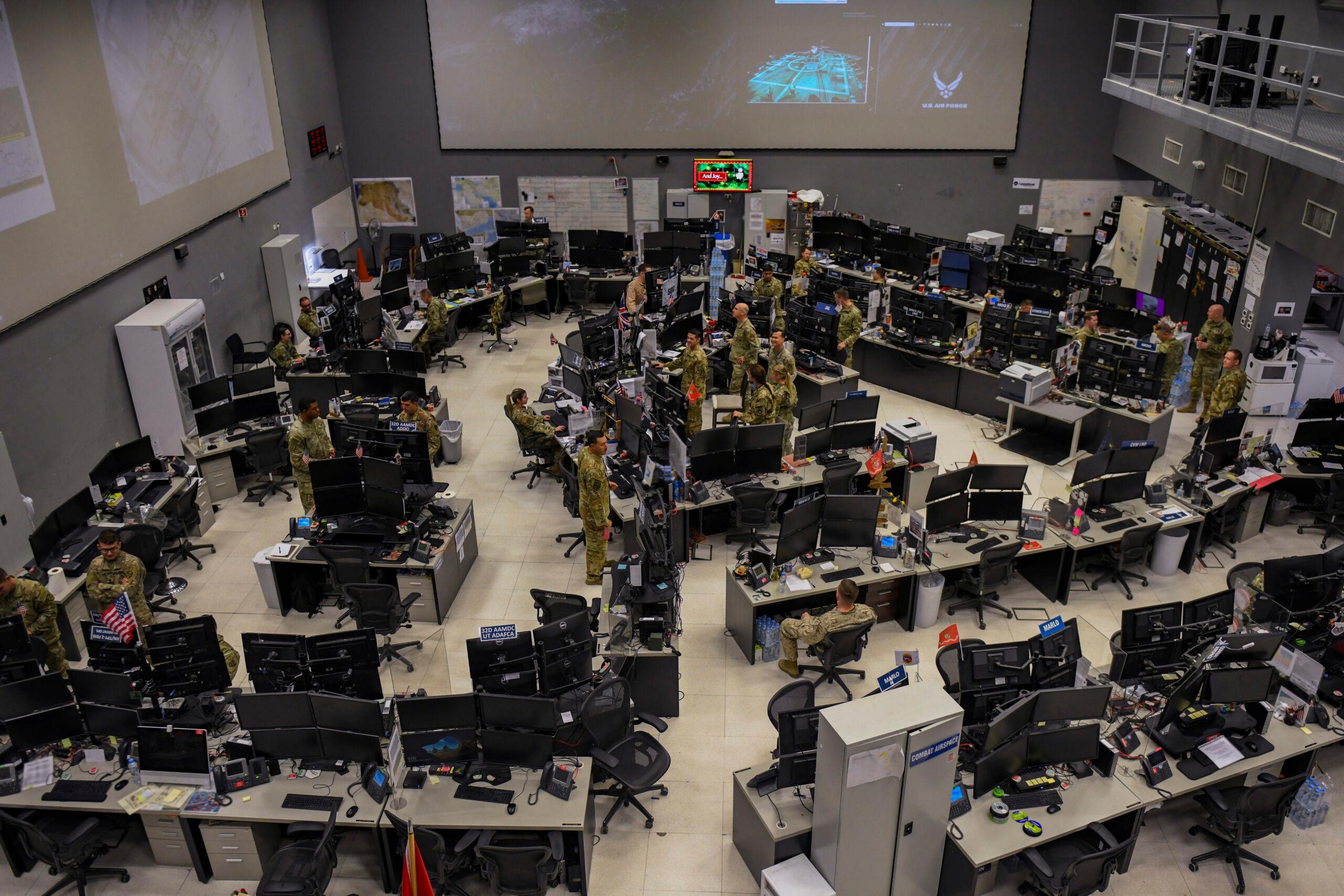
“The command center that ran America’s air campaigns in the Middle East for over two decades took a direct hit during the U”
Iran responded by firing ballistic missiles at Kuwait and Bahrain, with the U.S. saying it intercepted six of the seven missiles and that the seventh did not reach its intended target.
Kuwait’s Ministry of Defense said it “detected and dealt with” seven ballistic missiles inside Kuwaiti airspace at dawn, while Bahrain said it intercepted and destroyed three missiles and several drones launched from Iran.
The BBC described the exchange as “a latest test of ceasefire,” saying the U.S. targeted Iranian drones and radar sites and Iran fired missiles at U.S. bases in the Gulf.
Iran’s official state broadcaster IRIB said the Islamic Revolutionary Guard Corps launched overnight attacks targeting a US air base and other US facilities in response to what it described as the US military’s “hostile actions.”
Deadlock and blame
As negotiations continued through mediators, Iran accused the U.S. of violating the fragile ceasefire after the U.S. reported it shot down four Iranian one-way attack drones and struck radar sites in Goruk and on Qeshm Island.
Iran’s Foreign Ministry said the attack constituted a “clear violation” of the 8 April ceasefire and an act of military aggression against Iran’s sovereignty and territorial integrity, while the U.S. said the drones posed an immediate threat to regional maritime traffic.

A senior U.S. official told Air & Space Forces Magazine that multiple Iranian missiles struck the Combined Air Operations Center at Al Udeid Air Base, Qatar during the early weeks of the war, rendering it inoperable, and the facility was not in use at the time with no injuries reported.
In a separate diplomatic thread, Pakistani Interior Minister Mohsin Naqvi arrived in Tehran on Saturday for further negotiations on behalf of the United States, with Tasnim News agency reporting he would meet Iranian Foreign Minister Abbas Araghchi.
CBS News reported an adviser to Iran's supreme leader told CNN that negotiations are “at a deadlock” and “the ball is in Trump's court,” urging the U.S. to unfreeze billions in Iranian assets.
Assets, readiness, and risk
The dispute over sanctions and assets remained central as U.S. officials pressed for a deal, with Fox News quoting Gen. Jack Keane saying the U.S. has “no plans to offer concessions” that would unfreeze assets during negotiations with Iran.
“US and Iran exchange strikes in Gulf in latest test of ceasefire The shaky ceasefire between the US and Iran has been tested further, with American forces targeting Iranian drones and radar sites, and Iran firing missiles at US bases in the Gulf”
Fox News also reported that the Trump Treasury Department’s Office of Foreign Assets Control (OFAC) issued a fresh round of sanctions on Iranian liquified natural gas (LNG) networks targeting “Iran’s shadow fleet, shadow banking networks, and access to global trade,” with Treasury Secretary Scott Bessent saying so in a statement.
In parallel, the White House said President Donald Trump “isn’t going to rush into a bad deal” with Iran as negotiations continue over Tehran’s nuclear program, with Anna Kelly adding that Iran can never possess a nuclear weapon.
NBC News said Trump told Kristen Welker in Chippewa Falls, Wisconsin that Iranian leaders have not yet reached a deal because they’re “strong” and “proud,” but that “they’ve got no choice” except to reach an agreement.
Beyond the immediate exchanges, the Guardian reported that the World Food Programme (WFP) said millions of people were being pushed into hunger due to the knock-on effects of the Iran war, primarily due to soaring energy and food prices.
More on Iran
U.S. Strikes Iran After Trump Says Ceasefire Is Over, Iran Hits U.S. Allies
22 sources compared
Israeli-American Attack Killed Ayatollah Ali Khamenei as His Body Was Buried in Mashhad
23 sources compared
United States Strikes Hit Bushehr as Iran Says 14 Killed in Past Two Days
17 sources compared

Iran Launches More Strikes After US Attacks Hit Southern Iran, US Central Command Says
36 sources compared