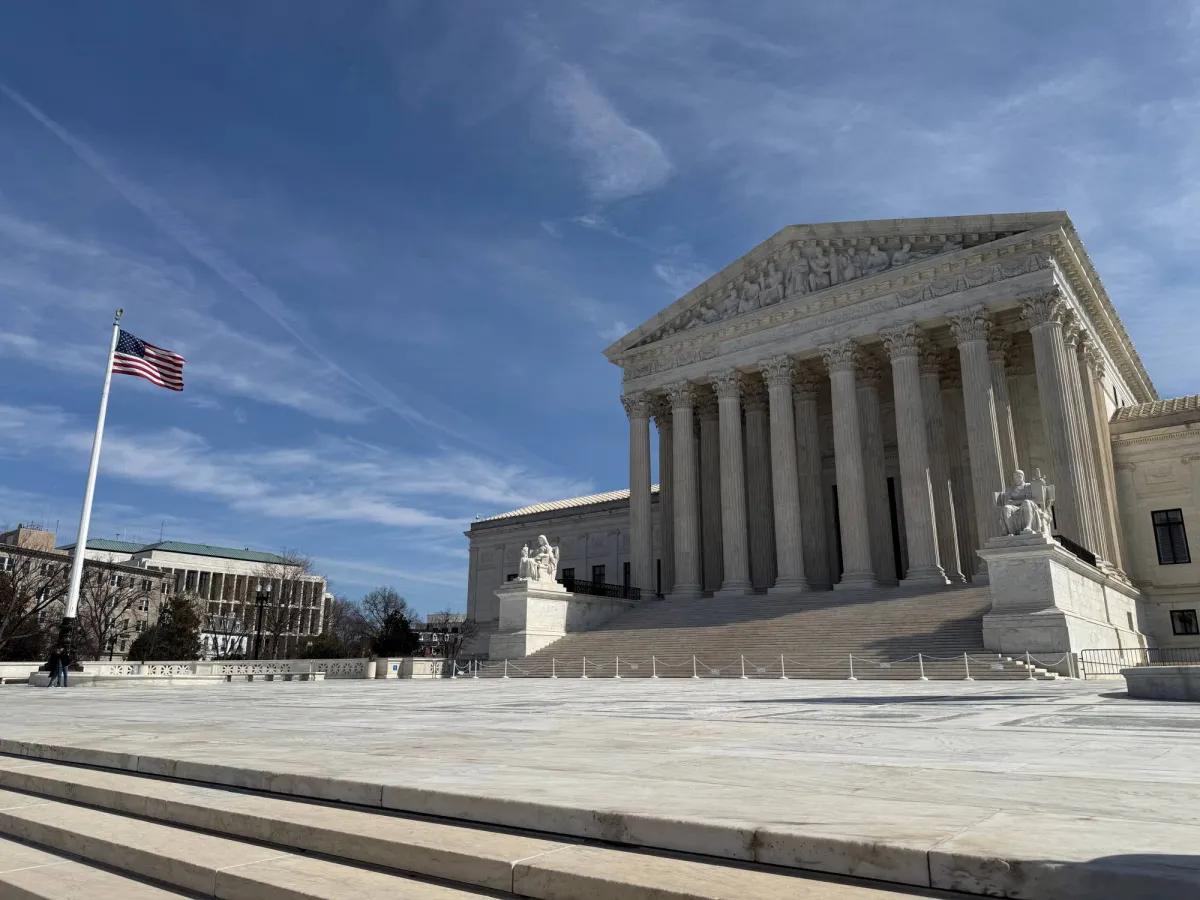
U.S. Supreme Court Considers Trump Administration Bid To Revoke TPS Protections For Haitians And Syrians
Key Takeaways
- Supreme Court hears arguments on ending TPS protections for Haitians and Syrians.
- Ending TPS could strip hundreds of thousands of Haitians and Syrians of status.
- High court splits; conservatives appear sympathetic to administration's stance.
Supreme Court hears TPS fight
The U.S. Supreme Court on Wednesday grappled with the Trump administration’s effort to revoke deportation protections for Syrian and Haitian immigrants under Temporary Protected Status, in cases that could determine whether protections remain in place while the court considers the legality of the terminations.
CBS News reported that the Supreme Court “on Wednesday grappled with the temporary deportation protections for Syrian and Haitian immigrants,” describing the dispute as “a closely watched immigration case that could have implications for hundreds of thousands of people authorized to work and live in the U.S.”

NBC News said the hearing concerned “the White House’s push to remove legal protections of Haitian and Syrian immigrants in the United States,” and that if the administration wins, it could “continue with its plan to strip temporary protected status, or TPS, from about 350,000 Haitians and 6,000 Syrians.”
PBS, citing Associated Press, said the government was appealing lower court orders that blocked the Department of Homeland Security from quickly ending TPS for Haiti and Syria, and that “in the meantime, the protections remain in place.”
Associated Press similarly framed the argument as a test of “how the justices will assess the legality of the president’s far-reaching crackdown,” with several conservative justices appearing “to be leaning in favor of the Republican administration’s argument that the law limits what courts can do.”
The stakes were described in terms of scale and timing: AP said that if the justices agree with President Donald Trump, “authorities potentially could strip protections from up to 1.3 million people from 17 countries,” while PBS warned that the outcome could expose people to possible deportation.
The court’s posture also mattered procedurally, with CBS noting that the high court “left the programs for the two countries in place while it considers the case,” after previously saying it would “roll back the protections for Syrians and Haitians.”
How the cases began
The dispute before the Supreme Court traces to then-Secretary of Homeland Security Kristi Noem’s decisions to end TPS for Syrians and Haitians, after consulting with other agencies and reviewing conditions in the two countries.
CBS News said the cases “stem from then-Secretary of Homeland Security Kristi Noem's decisions to end TPS for roughly 6,000 Syrians and 350,000 Haitians,” and it added that “Syria's designation was set to end last November and Haiti's in February.”

CBS further reported that immigrants from the two countries had “roughly 60 days from Noem's announcement to when their deportation protections would expire,” and that TPS holders filed “two lawsuits challenging the administration's terminations as unlawful.”
NBC News described the same core numbers and said Noem concluded “that Haiti and Syria no longer met any of the conditions for protected status, saying conditions in both countries had improved.”
PBS and Associated Press both emphasized that the litigation followed lower-court blocks, with PBS saying the government was appealing orders that blocked DHS from quickly ending TPS and that “The government is appealing lower court orders that blocked the Department of Homeland Security from quickly ending temporary protected status.”
Associated Press added that the administration appealed after judges in New York and the District of Columbia “agreed to delay the end of protections,” and it quoted a judge finding that “hostility to nonwhite immigrants” likely played a role in the decision to end protections for Haitians.
The procedural question at the center of the case was whether courts can review the steps and analysis that lead to termination, not just the final outcome.
Arguments over consultation and race
During oral arguments, the justices focused on whether the administration followed the TPS statute’s consultation requirements and whether courts could examine the process.
CBS News reported that oral arguments centered on whether the Trump administration satisfied “the requirements of the TPS law when deciding to scrap the protections for Haitians and Syrians,” specifically whether “the secretary of homeland security engaged in adequate consultation with the State Department.”
CBS quoted Justice Amy Coney Barrett pressing Ahilan Arulanantham on whether consultation could be treated as a “box-checking exercise,” asking, “If consultation between agencies is a
paragraphs2?
More on USA

Trump Says U.S.-Iran Memorandum Will Be Signed Sunday, Strait of Hormuz Reopens
10 sources compared

Donald Trump Says U.S.-Iran Deal Will Sign Sunday, Reopen Strait of Hormuz Immediately
23 sources compared

Judge Angel Kelley Orders Trump Administration To Restore National Park Signs By July 3
24 sources compared

Trump Says US Killed Tren de Aragua Leader Niño Guerrero in Joint Strike With Venezuela
34 sources compared