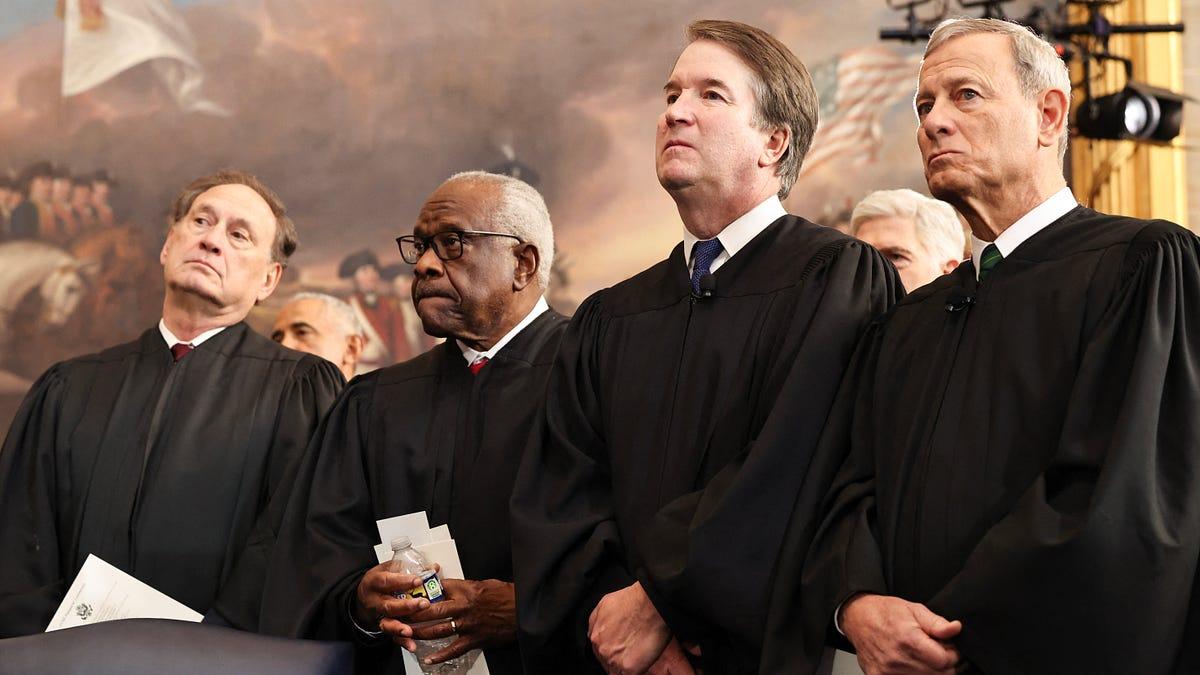
U.S. Supreme Court Lets Louisiana Republicans Redraw Congressional Map Immediately Ahead of Elections
Key Takeaways
- Court struck down Louisiana's congressional map as unconstitutional racial gerrymander.
- The ruling expedites the mandate, letting Louisiana redraw maps ahead of midterms.
- The decision weakens the Voting Rights Act and boosts GOP chances.
Callais map takes effect
The U.S. Supreme Court on Monday allowed its last week’s decision in Louisiana v. Callais to take effect immediately, clearing the way for Louisiana Republicans to redraw the state’s congressional map ahead of this year’s elections.
“In the United States, the Supreme Court is making headlines again”
CBS News reported that the court’s ruling was 6-3, striking down Louisiana’s U.S. House map as unconstitutional, and said the map “currently includes two majority-Black districts held by Democrats.”
The dispute over timing centered on the usual “32-day” period between when a ruling is announced and when the Supreme Court clerk formally passes the decision down to a lower court, with the court writing that its typical wait period is “subject to adjustment.”
NBC News described the Monday action as “granting an unusual request” that meant “the state doesn’t have to wait the usual 32 days before a Supreme Court ruling is certified and sent back to a lower court.”
Politico similarly said the order “bucked the court’s usual procedure of waiting roughly a month before its ruling becomes official,” and CNN framed the Monday order as clearing the way for Louisiana to redraw a map the court had ruled was an “unconstitutional racial gerrymander.”
In the same Monday order, the Supreme Court expedited the transmission of the Voting Rights Act opinion to a lower court, as the Washington Post said the court granted a request “to expedite the transmission of the Voting Rights Act opinion.”
Alito vs Jackson
The Monday decision triggered a sharp written exchange between Justice Ketanji Brown Jackson and Justice Samuel Alito, with multiple outlets quoting their language about bias and procedure.
CBS News reported that Jackson, one of the court’s three liberals, assailed the Monday action as “unwarranted and unwise” and suggested the court had effectively greenlit Louisiana’s attempts to call off its primaries and push through a new map.

CBS also quoted Jackson’s line that the court should “stay on the sidelines” to “avoid the appearance of partiality,” and added that she wrote, “And just like that, those principles give way to power.”
NBC News described Jackson’s dissent as saying the court’s decision was “tantamount to an approval of Louisiana's rush to pause the ongoing election in order to pass a new map,” and CNN quoted Jackson saying the post-decision “developments have a strong political undercurrent.”
Alito responded in a concurrence joined by Clarence Thomas and Neil Gorsuch, with CBS quoting him calling Jackson’s concerns “baseless and insulting,” and with CNN quoting Alito describing the dissent as “trivial at best” and “baseless and insulting.”
Politico reported that Alito wrote that by suggesting “running out the clock” by following the court’s default procedures may indicate bias “on behalf of those who may find it politically advantageous to have the election occur under the unconstitutional map.”
Louisiana rush to redraw
Louisiana’s political leadership moved quickly to redraw its congressional map after the Supreme Court expedited the decision’s effect, and several outlets described how the state suspended House primaries and shifted election timelines.
Politico said the order came after Louisiana’s GOP Gov. Jeff Landry “suspended the state’s House primaries” days before early voting was set to begin, and said Landry punted the House races until mid-July to allow enough time for the Legislature to draw new maps.
CNN reported that Louisiana “suspended its US House primaries following the high court’s ruling Wednesday,” and said the state was “quickly gearing up to redraw its maps ahead of this year’s midterm elections.”
Bloomberg Law News said Landry “signed an executive order Thursday suspending the state’s primary elections, scheduled for mid-May, while the legislature adopts a new congressional map,” and said a separate lawsuit challenging that order was filed the same day in federal court in Baton Rouge.
The Hill described the timing around Louisiana’s primary as May 16, saying “Louisiana Gov. Jeff Landry (R) delayed the primary so state Republicans could get to work on a new map,” and noted that the lower court said the state would have an opportunity to do so.
Democracy Docket added that a key legislative committee will hold a public hearing Friday and is expected to vote early next week on a new map, citing state Sen. Caleb Kleinpeter (R).
Targeting Black districts
Beyond the map at the center of the Supreme Court case, Democracy Docket reported that Louisiana Republicans were considering a new gerrymander that could target a majority-Black district not at issue in Louisiana v. Callais.
It said lawmakers could vote “as early as next week” on a gerrymander, and described a key legislative committee holding a public hearing Friday and expected to vote early next week on a new map.

Democracy Docket quoted state Sen. Caleb Kleinpeter (R), chair of the Senate and Governmental Affairs Committee, saying GOP lawmakers were poised to pursue a map that reduces Louisiana’s two majority-Black congressional districts down to one.
The outlet said the proposed gerrymander would preserve a Baton Rouge-based district while eliminating a New Orleans-based seat, and it described the likely outcome as “a 5–1 Republican map.”
Democracy Docket also stated that the proposal would not eliminate the district at the center of the Supreme Court case—a Baton Rouge-to-Shreveport district held by Rep. Cleo Fields (D)—but instead target a New Orleans-based one held by Rep. Troy Carter (D).
Politico echoed the Baton Rouge/New Orleans framing, saying Kleinpeter indicated to the Illuminator that the state’s majority Black district would be based in Baton Rouge, which could give Democratic Rep. Cleo Fields an opportunity to return to Congress while squeezing out New Orleans-based Democratic Rep. Troy Carter.
Wider stakes and fallout
The Supreme Court’s expedited action in Louisiana was presented across outlets as part of a broader shift in how the Voting Rights Act’s Section 2 would be applied, with consequences extending beyond Louisiana.
CBS News said the decision narrowed Section 2 of the Voting Rights Act of 1965, and it quoted Alito’s majority standard that maps violate Section 2 only when there is a “strong inference that the State intentionally drew its districts to afford minority voters less opportunity because of their race.”
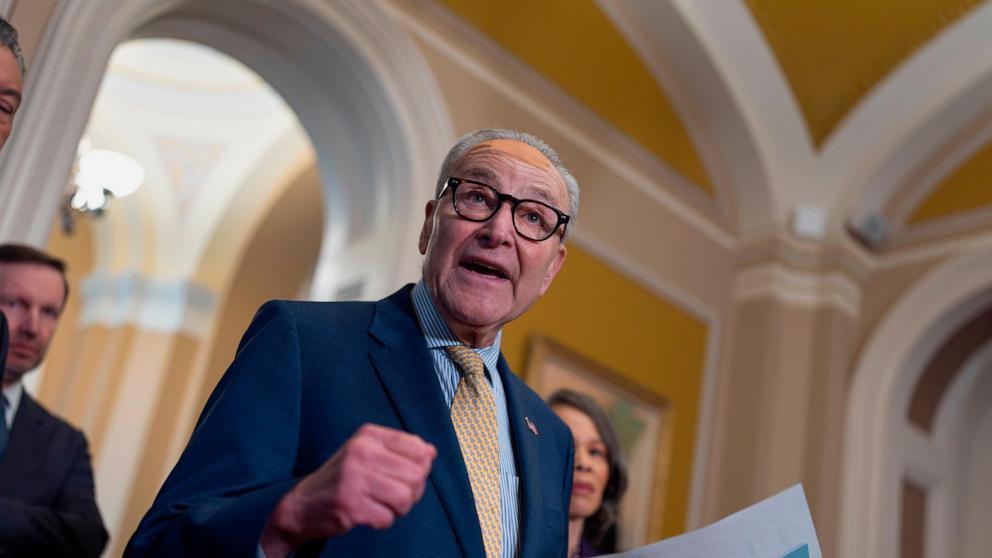
Le Monde described the Wednesday decision as a “setback for the Democrats” and said the court concluded the VRA did not require Louisiana to redraw the current districting to create a second African American–majority district, while also quoting Alito saying the map was unconstitutional and would violate plaintiffs’ constitutional rights.
In dissent, Le Monde quoted Kagan arguing the decision would roll back “the fundamental right to racial equality in elections,” and said she argued Section 2 becomes “a dead letter.”
Outside Louisiana, Politico said the redistricting scramble could grant the GOP an additional House seat and noted that Alabama was among the states where Republicans sought to redraw, while Bloomberg Law News said the expected effect was to “intensify the redistricting arms race across the country.”
Democracy Docket said several lawsuits were filed to prevent the state from nullifying an ongoing election, and it described the state’s primaries as already in flux after Landry suspended them even though absentee voting had begun and early voting was underway.
More on USA
US Attacks Iranian-Linked Cargo Boats in Strait of Hormuz, Killing Five Civilians
14 sources compared

Trump Calls One U.S. Brigade Back From Germany, Testing NATO Unity
10 sources compared

U.S. Sinks 7 Iranian Boats as Iran Launches Missiles and Drones at UAE
10 sources compared

Secret Service Officers Exchange Gunfire With Armed Suspect Near White House, Juvenile Injured
47 sources compared