USA06 November, 20253 min read
US Supreme Court Rejects Trump’s Emergency Tariff Powers, Threatening Global Trade Disruption
This article is an automated aggregation of coverage from news outlets. Our editorials offer in-depth analysis curated by the NewsCord team.
Supreme Court justices questioned Trump’s authority under the 1977 emergency powers law. The case challenges the president’s unilateral imposition of sweeping global tariffs without Congress.

21 outlets told this the same way.
Outlets did split on Trump Interrupted by Protesters at San Antonio Rally for Ken Paxton →
Supreme Court and Tariff Authority
Despite headlines suggesting a rejection, the U.S. Supreme Court has not issued a final ruling yet.
“The US Supreme Court is questioning President Donald Trump’s authority to impose broad trade tariffs using emergency powers.”
Justices across the ideological spectrum have openly questioned whether former President Donald Trump could use the International Emergency Economic Powers Act (IEEPA) to levy sweeping tariffs without Congress.

This raises the prospect that the Court may curb or strike down the program and trigger major trade reverberations.
Multiple outlets report strong skepticism on the bench, echoing lower-court decisions that found the tariffs illegal and applied the major-questions doctrine to require clear congressional authorization.
Analysts warn that if the tariffs are ultimately struck down, the government could face massive refunds and even unwind deals struck under tariff pressure.
Such outcomes would heighten global trade uncertainty that Europe and other partners are already bracing for.
Legal Debate on Tariff Authority
At the core is whether IEEPA’s authority to "regulate ... importation" permits broad, indefinite tariffs as an emergency measure—or whether such levies are taxes reserved to Congress. Several justices pressed the government on statutory limits and precedent, with pointed questions from conservative and liberal members alike.
Lower courts, including the Court of International Trade and an appeals court, have already ruled the tariffs illegal. Some members of the Court also invoked the major-questions doctrine, demanding clear legislative authorization for a policy with sweeping economic and political consequences.

Dispute Over Tariff Details
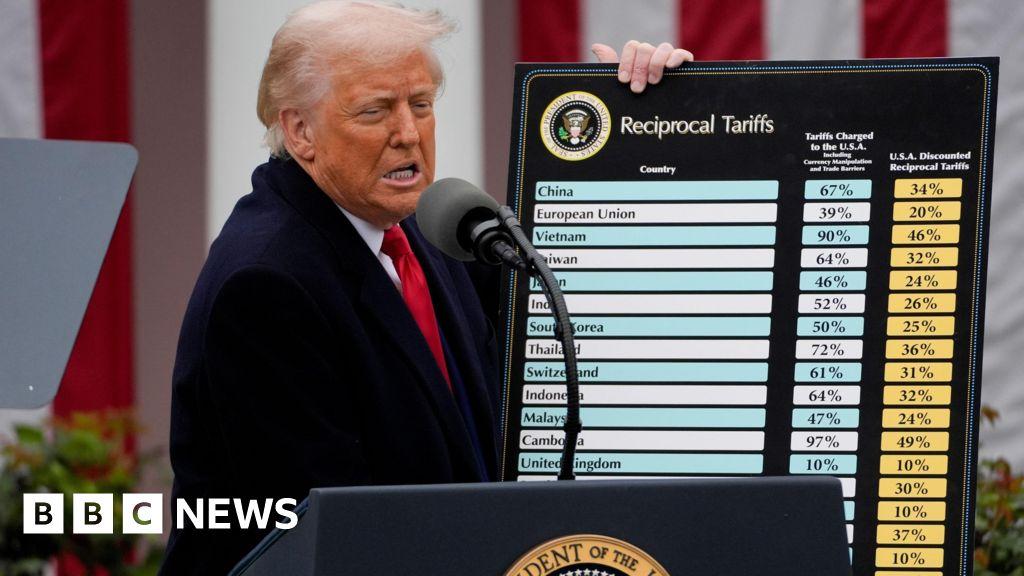
Accounts differ on the scope and timeline of the tariffs in question. One source states the program began in early 2025 and included country-specific measures such as a 50% tariff on Indian products and 40% on Brazilian goods. Another source reports tariffs as high as 125% in early 2025 across multiple countries.
“Trump began imposing tariffs in early 2025 on goods from China, Canada, Mexico, and later expanded them globally, targeting countries with trade surpluses against the U.S.”
A third source notes a 35% rate on certain Canadian goods outside the CUSMA agreement. Yet another account describes more than 100 countries being affected by the tariffs.
This variation highlights uncertainty about the exact details of the policy being examined. It also emphasizes the wide reach of the tariffs, which concerns several justices.
Economic Impact of Tariff Rulings
The potential economic fallout if the Court ultimately rejects the emergency tariffs ranges from massive refunds to renegotiated trade arrangements. Estimates and perspectives vary: one source warns the government might have to refund up to $195 billion. Another source says the decision could affect the legality of $90 billion already collected.
Others anticipate billions in reimbursements and even the cancellation of deals. Outside the U.S., the EU is wary of disruption but also notes that alternative tariff tools could replace struck-down measures. Canada quantifies a GDP hit from uncertainty and cross-border measures.
Divergent Political and Legal Views
Political narratives around the case diverge sharply. Several outlets report Trump’s framing of tariffs as essential to national security and economic leverage. Multiple justices question whether taxing Americans is Congress’s job and whether nearly all trading partners can be labeled security threats.
“Trump has described the case as critical to national defense, warning that without emergency powers, the U.S. would be vulnerable to other countries.”
Coverage also varies on courtroom dynamics. Some highlight a justice citing Nixon-era precedents in partial support of executive flexibility.

Others stress cross-ideological skepticism and the prospect of curbing presidential power. Notably, a few outlets provide little substantive detail, underscoring information gaps alongside the legal uncertainty.