U.S. Supreme Court Still Has More Than Two Dozen Cases To Decide
Key Takeaways
- The Supreme Court docket contains more than two dozen cases awaiting decisions.
- Justices publicly criticize the pace and duration of oral-argument sessions.
- Birthright citizenship and transgender athletes are among the docket's highlighted issues.
Docket nears end
The U.S. Supreme Court has more than two dozen cases still to be decided as the term draws to a close, with justices expected to finalize decisions by the end of June or the beginning of July.
“The Indiana Supreme Court heard arguments in an appeal about Northern Indiana Public Service Company rate increases, with an intervenor arguing that the company failed to provide specific justification”
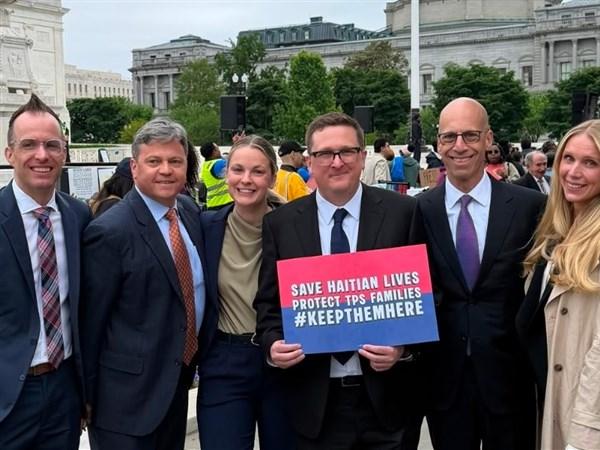
In Trump v. Barbara, justices heard arguments in April over a challenge to Trump’s executive order to end birthright citizenship for children born to noncitizen parents after Feb. 19, 2025, and the Center Square quoted Amy Howe saying, "This is very much a term where Donald Trump is looming over the term."

The Center Square also described Trump v. Slaughter and Trump v. Cook as challenges to the president’s authority to fire members of federal executive boards, including the Federal Trade Commission and the Federal Reserve, and it noted that in March 2025 Trump fired Rebecca Slaughter without including a reason.
For transgender athletes, the Center Square said Idaho and West Virginia banned transgender women and girls from competing in women’s and girls’ sports programs, focusing on Lindsay Hecox in Idaho and Becky Pepper Jackson in West Virginia, and it quoted Howe saying, "I do think the trans athletes have a real uphill battle."
How arguments are run
CNN reported that Supreme Court justices have complained that oral arguments are taking too long, quoting Chief Justice John Roberts saying, "Way too long," and vowing to "look into it" over the summer.
CNN said Justice Samuel Alito added that there was "too little asking real questions," and it described the current format as a compromise that uses free-form questioning followed by a round of "seriatim" questioning.
The article said the Supreme Court schedules 60-minute argument sessions in most cases, but that the average length in the current term clocked in at just under 90 minutes, according to a CNN analysis.
CNN also reported that Justice Clarence Thomas said, "The current approach may run on a bit long, but you cannot say you have not had a chance to say your piece," and it noted he joked, "I don’t play golf. I don’t play cards. I don’t hang out."
What could change next
The Center Square said the Supreme Court is expected to make decisions in these and many more cases before the term ends by July, leaving only a few weeks before decisions are expected to be public.
“Apprentice Reporter Advocates against transgender participation in women’s sports gather outside the U”
On federal firing powers, the Center Square described how the Supreme Court did not allow Rebecca Slaughter to continue in her job while litigation continued after Trump fired her in March 2025, and it said justices did not allow Lisa Cook to be fired while her case continued.
CNN framed the stakes of the oral-argument format by quoting Tonja Jacobi saying, "It’s very important for the court’s legitimacy," and it said shortening the sessions could fall heaviest on the court’s liberal wing.
CNN also reported that the longest argument of the term, at nearly three hours, involved President Donald Trump’s sweeping global tariffs, which the court ultimately struck down, and it said that argument was scheduled for 80 minutes.
More on USA

Ronaldo Salgado Demands Independent Investigation After ICE Officer Kills Lorenzo Salgado Araujo in Houston
14 sources compared

Midtown Manhattan High-Rise Stabilized After Buckling Columns at 235 E. 42nd St
10 sources compared

Andy Beshear Demands Mitch McConnell Health Update After June 14 Hospital Admission
10 sources compared
Trump Says Ceasefire Over as U.S. Forces Launch Second Consecutive Strikes on Iran
12 sources compared