USA03 May, 20267 min read
U.S. Supreme Court Strikes Down Trump’s Reciprocal Tariffs Under IEEPA Authority Ruling
This article is an automated aggregation of coverage from news outlets. Our editorials offer in-depth analysis curated by the NewsCord team.
Supreme Court struck down Trump's reciprocal tariffs, ruling IEEPA requires Congress approval. The decision was a 6–3 ruling, limiting unilateral presidential power on tariffs.
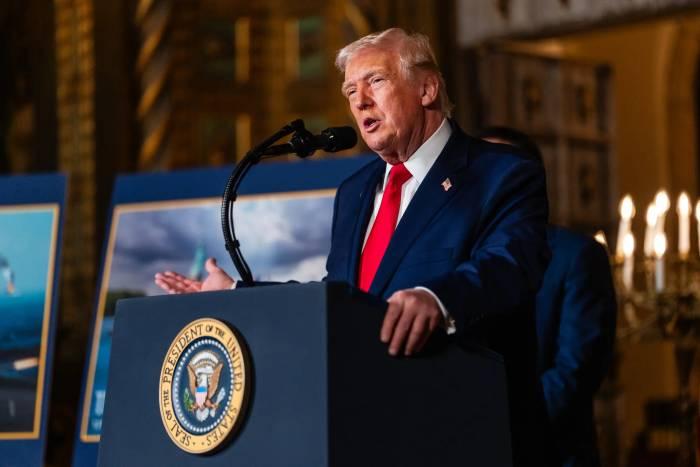
Tariffs Struck Down
The U.S. Supreme Court struck down Donald Trump’s so-called “reciprocal” tariffs imposed last April on most of Washington’s trading partners in a 6-3 decision, ruling that the president did not have authority to invoke the 1977 International Emergency Economic Powers Act (IEEPA) to impose tariffs without Congress’s approval.
Chief Justice John Roberts wrote that “the president must demonstrate clear authorization from Congress” to justify his extraordinary assertion of the power to impose tariffs.

Reuters reported the ruling, and Al Jazeera’s account tied the decision to a lawsuit filed by companies affected by the tariffs and by 12 U.S. states, “most of them Democratic-leaning.”
Le Courrier des Amériques described the decision as “historic,” saying the justices held that Trump overstepped his powers by relying on IEEPA “to impose massive tariffs on imports from around the world.”
In that same 6-3 decision, Le Courrier des Amériques quoted Roberts’ reasoning that the Trump administration “cites no statutory text” authorizing such an interpretation of IEEPA, concluding bluntly that “IEEPA does not authorize the president to impose tariff duties.”
The decision did not void every Trump tariff: Le Courrier des Amériques said tariffs on steel and aluminum “remain in effect,” while two major categories were invalidated, including the “reciprocal” tariffs and “the 25% duties imposed on certain goods from Canada, China, and Mexico” tied to fentanyl trafficking.
The immediate political reaction was swift: Le Courrier des Amériques reported that Trump responded two hours later, saying he was disappointed and would “immediately reimpose tariffs, under different grounds from before, beginning with a general 10% tariff.”
What Comes Next
After the Supreme Court’s invalidation of the IEEPA-based tariff framework, the Trump administration moved quickly to replace the struck-down structure with a new tariff mechanism tied to Section 122 of the Trade Act of 1974.
Vinetur reported that the United States began applying a new global tariff of 15% on imports “this Tuesday,” replacing the 10% initially announced, and said the change came after the Supreme Court invalidated “a large part of the previous tariff framework.”

It described a timeline in which “Last Friday” the president said he would implement a fixed 10% tariff on all trading partners under another law, but then “later stated on his Truth Social account that he would raise global duties to 15% with immediate effect.”
Vinetur said U.S. Customs and Border Protection had informed importers that the initial rate would be 10% for “150 days,” with a specific exemption, before the White House confirmed the 15% rate was now in effect.
The same account said the new tariff took effect “Tuesday at midnight” and was expected to remain in place “about 150 days, i.e., until July 23,” with any extension requiring Congress approval.
In Franceinfo’s account of the post-ruling scramble, the focus shifted from tariff rates to reimbursement, describing that after the Supreme Court ruled certain surcharges illegal, “American importers are waiting for refunds,” with “Tens of billions of dollars” at stake.
Franceinfo added that the Tax Foundation estimated “$160 billion (€135 billion) has been collected by the U.S. federal government between February 2025 and February 2026 through the surcharges,” and quoted Donald Trump saying, “We are going to be in court for five years.”
Refunds, Courts, and Politics
The Supreme Court’s tariff ruling opened a dispute over reimbursement that Franceinfo said could become a long-running legal process, with American companies seeking refunds after paying higher surcharges on imported goods.
Franceinfo reported that “American companies 'are lining up for refunds' after paying higher surcharges on their imports in recent months,” and said the “path looks chaotic” because procedures will depend on decisions by U.S. Customs and Border Protection, the U.S. Court of International Trade in New York, and “a multitude of courts across the country.”
It quoted Donald Trump saying he found it “crazy” that the Supreme Court did not mention refunds in its decision, and again quoted him: “We are going to be in court for five years.”
Franceinfo also said U.S. Treasury Secretary Scott Bessent told reporters that the courts could take “weeks, even months” to organize, while attorney Joyce Adetutu told NPR that despite a “complicated” phase it would be “really difficult not to offer some form of refund” to injured importers.
The article described lobbying and legislative pressure, saying the American Apparel & Footwear Association urged the government and Congress to “speed up” procedures, and that Democratic Senator Andy Kim told CNN his party is working on a law to force the U.S. government to “reimburse” consumers.
It also reported state-level demands, including Illinois Governor J.B. Pritzker sending a letter to Donald Trump demanding “$1,700 per family in his state,” totaling “$8.6 billion,” in the name of inflation created by the higher tariffs.
Franceinfo said states where importers paid the most included California and Texas, citing Axios figures, and added that states could bring the World Trade Organization into a dispute over violations of international trade rules.
Markets React, Then Reprice
The tariff invalidation also triggered immediate market reactions, with TradingView’s account focusing on cryptocurrency volatility following the Supreme Court’s 6-3 decision. TradingView said Bitcoin “jumps then slips back,” reporting that Bitcoin rose “2% above $68,000” before retreating “below $67,000.” It framed the movement as “a fragile dynamic dominated by selling pressure,” and said the pattern was familiar in “recent weeks” where “every bullish impulse, even on major news, meets sellers who wait for the slightest uptick to trim.”
TradingView also contrasted crypto with equities, stating that “the Nasdaq rose 0.6% and seemed to hold its gains by the close,” while “equity investors see more clearly the benefit of removing tariffs.” The same account said Trump called the decision a “disgrace” and promised an alternative plan, maintaining “political uncertainty” that weighed on markets.
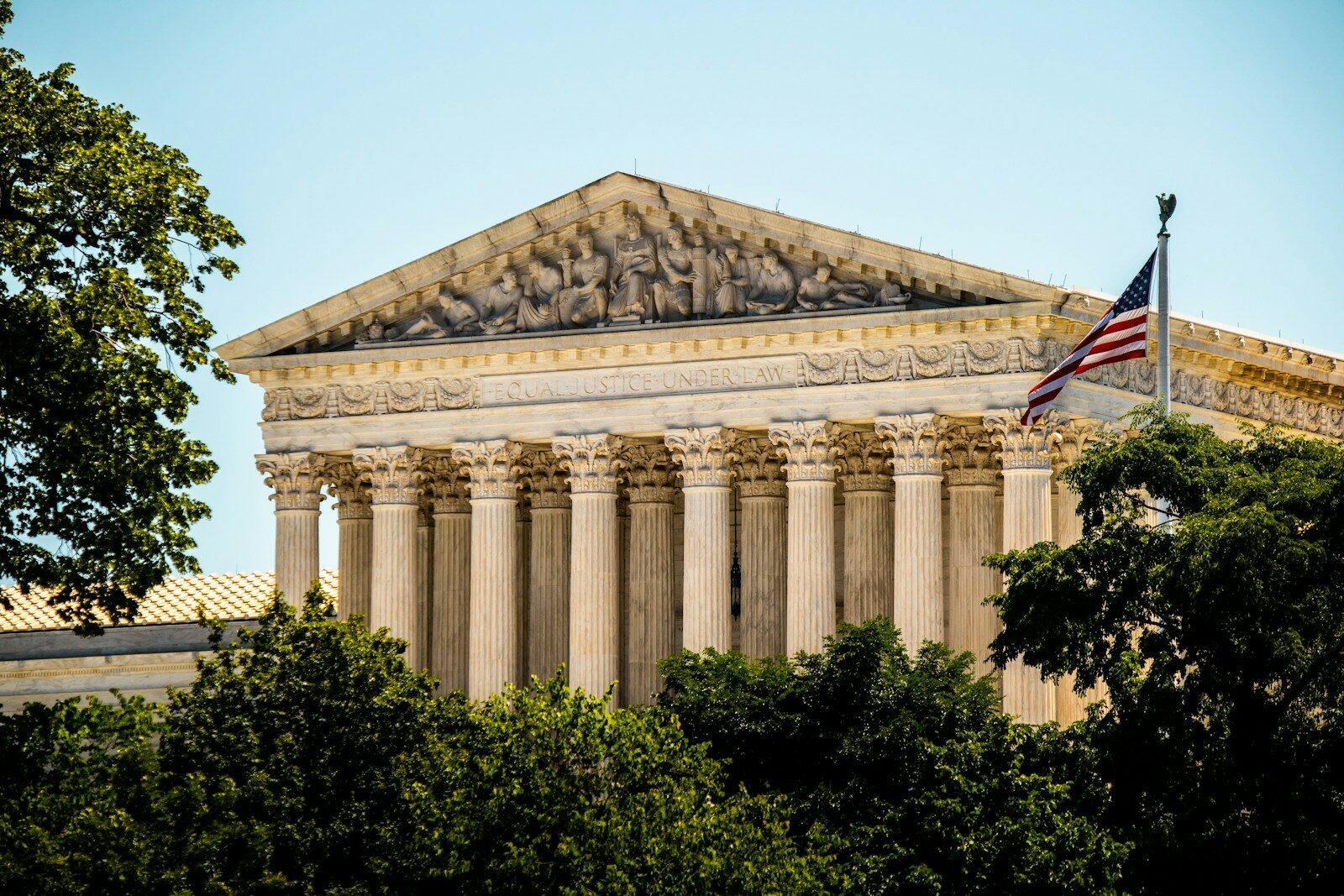
In parallel, CNN’s account of the Supreme Court’s broader approach to precedent provided context for how the Court’s tariff ruling fit into a pattern of decisions that critics say effectively overturn established rules without explicitly doing so. CNN quoted Chief Justice John Roberts telling an audience at Georgetown University Law Center, “I think people have a misunderstanding about how much the current court is overruling precedent,” and quoted Steve Vladeck describing the phenomenon as “stealth overrulings.”
Court, Precedent, and Power
Beyond tariffs themselves, the U.S. Supreme Court’s decision was presented in CNN’s reporting as part of a wider dispute over whether the Court is “overturning precedent” in ways that are formal or practical.
CNN said Chief Justice John Roberts made a rare public appearance at Georgetown University Law Center to defend the Court from criticism that it was “all too eager to kick decades-old precedent to the curb,” and CNN quoted Roberts: “I think people have a misunderstanding about how much the current court is overruling precedent.”

CNN reported that just 10 days after Roberts’ appearance, the Supreme Court let stand President Donald Trump’s firing of two senior labor officials despite a 1935 precedent known as Humphrey’s Executor that protected leaders of independent agencies from dismissal without cause.
CNN described critics’ view that the Court’s Wednesday voting rights decision “effectively overturned decades-old precedent while not explicitly saying it was doing so,” and quoted Justice Elena Kagan’s dissent: “The upshot is that the majority, without any good reason, has overturned Congress’s studied determination — along with this court’s precedents upholding it — about how to rectify racial inequalities in electoral politics.”
CNN also quoted Steve Vladeck, a CNN Supreme Court analyst and professor at Georgetown University Law Center, saying Louisiana v. Callais was “the latest example of a ruling from the Roberts court that, in the same breath, largely neuters a precedent without formally overruling it.”
Vladeck’s quote in CNN emphasized the practical consequences: “When only the lawyers understand what is and isn’t left of a prior decision, that makes it much harder to build the case for why the court, Congress or any other actor should respond.”
CNN then returned to the voting rights dispute, describing how Justice Samuel Alito wrote that “Contrary to the dissent’s assertion, we have not overruled Allen,” referring to Allen v. Milligan from 2023.