Full Analysis Summary
US Role in Gaza Aid and Diplomacy
Haaretz reports that the U.S. military has taken over oversight of Gaza aid delivery from Israel, establishing a coordination center in southern Israel to manage the operation instead of Israel’s COGAT.
Israel remains involved, but the U.S. now makes the final decisions, effectively reducing Israel to a secondary role.
The initial weeks of the U.S. center in Kiryat Gat were described as chaotic and disorganized.
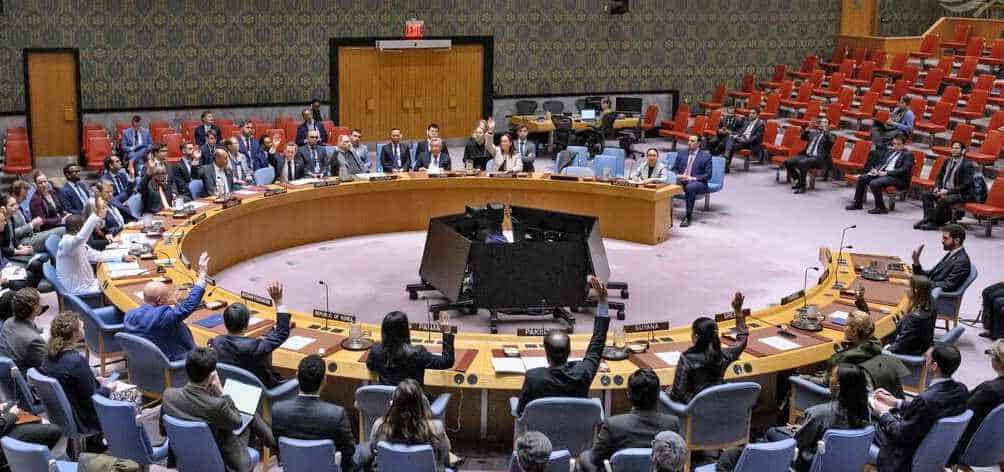
Simultaneously, Washington is pushing the UN Security Council to adopt and formalize President Donald Trump’s Gaza cease-fire plan as international law.
U.S. Ambassador to the UN Mike Waltz warned diplomats that failure to adopt the plan could lead to renewed fighting between Israel and Hamas.
PassBlue places this Gaza initiative within a broader U.S. regional reset, highlighting active U.S. engagement with Council members and regional actors.
Trump’s 20-point plan aims to stabilize Gaza through an International Stabilization Force that would support humanitarian aid, disarm militias, and promote reconstruction.
Coverage Differences
narrative
Haaretz (Israeli) centers on the operational shift and Israel’s downgraded role, emphasizing U.S. final decision-making and early chaos. PassBlue (Other) frames the same development as part of a wider U.S. strategy to lock in Trump’s 20‑point Gaza plan through the UN, highlighting the International Stabilization Force and active diplomatic outreach—details not provided by Haaretz.
tone
Haaretz uses a blunt, internal-operations tone—"chaotic and disorganized"—to describe the U.S.-run coordination center. PassBlue adopts a more strategic, diplomatic tone, spotlighting coalition-building and institutional mechanisms rather than operational dysfunction.
missed information
PassBlue adds specifics about the plan’s architecture (International Stabilization Force; disarmament and reconstruction) and broader diplomatic outreach that Haaretz does not include in its snippet. Conversely, Haaretz details the operational transfer and early chaos, which PassBlue does not mention.
US Efforts on Gaza Ceasefire
Washington’s push at the UN is two-track.
Haaretz says the U.S. is moving to formalize Trump’s cease-fire deal into international law and quotes Waltz warning that failure to adopt the plan could reignite Israel-Hamas fighting.
PassBlue says the U.S. is lobbying Council members and regional partners to endorse a broader 20-point framework that builds on a ceasefire that has faced violations.
Both accounts identify Waltz as the diplomat driving the UNSC effort and depict the U.S. as trying to lock in rules that would shape humanitarian access and security in Gaza.
The U.S. now leads the aid coordination architecture.
Coverage Differences
narrative
Haaretz (Israeli) frames the UN move as converting a cease‑fire deal into binding international law and underlines the risk of renewed war if it fails. PassBlue (Other) positions the same effort within a comprehensive 20‑point stabilization architecture that builds on a ceasefire “that has faced violations,” signaling a different framing of urgency and scope.
missed information
PassBlue includes the mechanism of an International Stabilization Force and describes disarmament and reconstruction tasks, while Haaretz does not; Haaretz uniquely notes Waltz’s private talks with the Palestinian delegation, which PassBlue’s snippet does not mention.
tone
Haaretz’s language stresses operational friction and legal formalization; PassBlue’s tone emphasizes diplomatic momentum and institutional design.
U.S. Role in Gaza Aid Coordination
Haaretz highlights that Israel has been downgraded in the Gaza aid pipeline.
The U.S. coordination center in southern Israel has replaced Israel’s COGAT as the main hub.
The United States now makes the final decisions regarding aid distribution.
Haaretz notes that the startup phase at the new Kiryat Gat center was marked by chaos.
PassBlue links U.S. control of aid access to the proposed International Stabilization Force.
This force is tasked with ensuring humanitarian delivery, disarmament of militias, and reconstruction support.
The aid handover appears to be part of a broader security and governance plan the U.S. is trying to establish through the UN.
Coverage Differences
emphasis
Haaretz (Israeli) emphasizes Israel’s reduced role—“effectively reducing Israel to a secondary role”—and early chaos at the U.S. center. PassBlue (Other) emphasizes the institutional solutions (Stabilization Force, disarmament, reconstruction) and doesn’t describe the U.S. center’s dysfunction.
missed information
PassBlue adds design features of the envisioned force and the link to UN endorsement; Haaretz adds the granular operational location (Kiryat Gat) and COGAT’s displacement—details not in PassBlue.
US Middle East Policy Moves
PassBlue uniquely situates the Gaza aid realignment within Washington’s broader regional moves.
Syria’s new president Al‑Sharaa made a historic visit to the White House after being delisted at the UN.
The Trump administration is considering repealing Caesar sanctions and preparing a U.S. military presence at a Damascus air base to broker a Syria‑Israel security arrangement.
PassBlue also notes that Al‑Sharaa is expected to join the global coalition against ISIS.
Haaretz does not cover this Syria track in the provided snippet, but it details Waltz’s private outreach to Security Council members and the Palestinian delegation on Gaza.
Haaretz highlights the U.S. intention to anchor Trump’s plan in international law.
This underscores that Washington’s Gaza strategy is being paired with wider normalization efforts, which are absent from Haaretz’s operational focus.
Coverage Differences
unique/off-topic coverage
PassBlue (Other) expands beyond Gaza to Syria normalization steps—Al‑Sharaa’s White House visit, possible U.S. deployment at a Damascus air base, sanctions repeal—which Haaretz (Israeli) does not mention in its snippet.
missed information
Haaretz provides details on Waltz’s private talks with Security Council members and the Palestinian delegation and on the legal push to formalize Trump’s Gaza plan; PassBlue’s Syria-focused segment omits these operational specifics.