U.S. Tries Again With Larger Multinational Security Force After Failed Haiti Mission
Key Takeaways
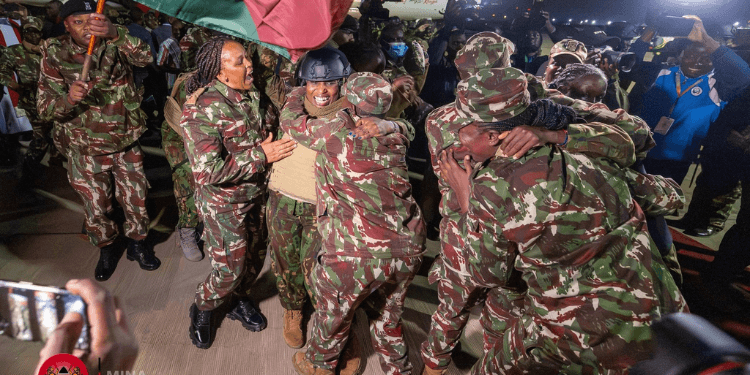
- Kenyan contingent departs; no strategic gains, front described as immobile.
- Chadians begin training as new contingent; mission to resume after failure.
- Cost about $970 million and left Haiti worse off, with no gains achieved.
U.S. backs Haiti security
In 2024, a U.S.-backed security force came to Haiti, and Monique Methellus Paul in Kenscoff, a farming town outside Port-au-Prince, said she was hopeful that a U.N.-approved, Kenyan-led police force would “help push back the gangs” and restore security.
“The Rezo Editorial Port-au-Prince — The second Kenyan contingent packs up and returns to Nairobi with honors, while on the Haitian front the gangs have yielded nothing”
The Washington Post reported that the U.S. “sank $970 million” in a mission that left Haiti worse off, and said it is trying again with a larger multinational security force that could have broader authority to combat rising gang violence.
Paul, a 52-year-old vegetable seller living with her five children, described Kenscoff as spared from the heavily armed criminal groups that occupied most of the capital.
The Washington Post also said the new force could face similar funding challenges as its predecessor, even as it aims to combat violence in the beleaguered Caribbean nation.
Rotation and skepticism
Rezo Nòdwès said the second Kenyan contingent “packs up and returns to Nairobi with honors,” while “on the Haitian front the gangs have yielded nothing.”
The Rezo editorial described the international mission as leaving behind “a sense of immobility, or even retreat,” and said no strategic zone was liberated and no bastion truly retaken.
It added that Chadian contingents are in training in the United States and are announced to take over as early as April, with a stated objective to reinforce a mission expected to reach 5,500 troops.
Rezo Nòdwès framed the rotation as “a simple musical chairs game where the uniforms change, but the gangs maintain the advantage on the ground,” while warning that the reconfiguration may only certify the ineffectiveness of an intervention that has failed to restore public authority over the smallest territorial segment controlled by armed groups.
What comes next
The Washington Post said a larger multinational security force will have broader authority than its predecessor to combat rising gang violence, but could face similar funding challenges.
“Democracy Dies in Darkness By Widlore Mérancourt and Amanda Coletta PORT-AU-PRINCE, Haiti — When the U”
Rezo Nòdwès said that while Kenyan authorities hail a “historic” operation and pay tribute to the police officers who died on mission, neighborhoods under armed control still face kidnappings, shootings, and territorial control.
It reported that the new force is being prepared behind the scenes and that Chadian contingents in training in the United States are announced to take over as early as April, with the mission expected to reach 5,500 troops.
In Port-au-Prince, Monique Methellus Paul’s hope for restored security is set against the editorial’s claim that “nothing changes,” as the same strategy, uncertainties, and constraints persist while gangs maintain the advantage on the ground.
More on USA

Supreme Court Overturns 1935 Precedent, Lets Trump Remove FTC Commissioner At Will
11 sources compared
Senate Ethics Committee Dismisses Complaint Against Arizona Sen. Ruben Gallego
14 sources compared

U.S. Supreme Court Blocks Trump From Firing Fed Governor Lisa Cook, Upholds Other Firings
39 sources compared
Trump Says U.S. and Iran Resume Peace Talks in Doha After Strait of Hormuz Attacks
16 sources compared