
US troops in Iran? What Americans think, and what it would mean
Key Takeaways
- June 2025 airstrikes targeted Iran's nuclear facilities.
- Vice President JD Vance pledged no protracted conflict and no boots on the ground.
- Administration has shifted to not ruling out deploying ground troops in Iran.
Initial stance and potential ground option
We have no interest in a protracted conflict,” Vice President JD Vance said in June 2025, hours after the United States carried out airstrikes on Iran’s nuclear facilities.
““We have no interest in a protracted conflict,” Vice President JD Vance said in June 2025, hours after the United States carried out airstrikes on Iran’s nuclear facilities”
Then he added: “We have no interest in boots on the ground.”
The administration is singing a different tune today, refusing to rule out that prospect more than two weeks into a more extensive war against Iran.
President Donald Trump isn’t downplaying the idea like he once did, and there are increasing strategic reasons to suspect it might be a viable option.
Political risk and deployment considerations
Should Trump go there, it would be both a sign that this war has gone in directions he didn’t seem to anticipate and that is has become a massive political risk.
Polling conducted since the first strikes against Iran last month suggests the idea of troops on the ground is a complete nonstarter for Americans overall — and even a tough sell for the GOP base.
And while recent history suggests that base might warm to the idea, at least somewhat, Trump is pushing his luck with even many of those supporters.
But there appear to be increasing reasons that at least a small amount of ground forces could be deployed on Iranian soil — whether that be to seize Iran’s nuclear materials; to take over strategically important Kharg Island, which the administration recently targeted; or to seize territory around the Strait of Hormuz to help restart the passage of ships carrying oil.
(As CNN has reported, capturing the highly enriched uranium stockpile believed to be deep underground would require a significant troop presence, well beyond a special operations footprint.)
Trump has gotten testy with questions about the possibility in recent days but made clear it’s an option he is reserving, unlike nine months ago.
Deployment and official messaging on troop levels
We also learned over the weekend that the administration is deploying a Marine Expeditionary Unit, a rapid response unit that usually includes 2,500 Marines and sailors, to the Middle East for unexplained reasons.
““We have no interest in a protracted conflict,” Vice President JD Vance said in June 2025, hours after the United States carried out airstrikes on Iran’s nuclear facilities”
US Ambassador to the United Nations Mike Waltz told Fox News on Sunday that “this isn’t going to be another 2003 Iraq. There are not going to be hundreds of thousands of troops occupying urban areas somewhere.”
But he said the military is providing options to Trump “to have forces that are trained, equipped, in position and ready for whatever he chooses to do as commander in chief.”
Public opinion and GOP caution on ground troops
And Trump isn’t downplaying the possibility as much as he did two weeks ago, when he described it to the New York Post as a “probably don’t need them” or an “if they were necessary”-type situation.
The American people sure seem to hope ground troops are not needed.
A CNN poll conducted shortly after the war began showed Americans opposed sending ground troops by a 5-to-1 margin, 60%-12%.
Similarly, a later Quinnipiac University poll put the margin at nearly 4-to-1 among registered voters: 74%-20%.
In both polls, even Republicans — who have in recent months returned to their more hawkish ways from the early 21st century — opposed the idea by double-digits.
Just 27% of Republicans favored the idea in the CNN poll; just 37% of registered GOP voters did so in the Quinnipiac poll.
And those numbers make sense in context. Polls of Trump’s previous military moves — the June Iran strikes and his ouster of Venezuelan President Nicolás Maduro in January — suggested a decent-sized minority of Americans were OK with brief military strikes but often not much more.
And opposition to boots on the ground in Venezuela in January was similar to where it is today in Iran.
That could certainly change.
We’ve seen before how Republicans who previously opposed the idea of military action can shift their views once Trump pursues those actions.
But it’s also pretty clear that the GOP support for Trump’s war against Iran, such as it exists, is wide but shallow.
The CNN poll showed 77% of Republicans supported the early strikes, but only 37% did so “strongly.”
More on Iran

Israel strikes Iran's Pars gas field as Tehran vows revenge
14 sources compared
Trump threatens to blow up South Pars gas field if Iran attacks Qatar again
10 sources compared
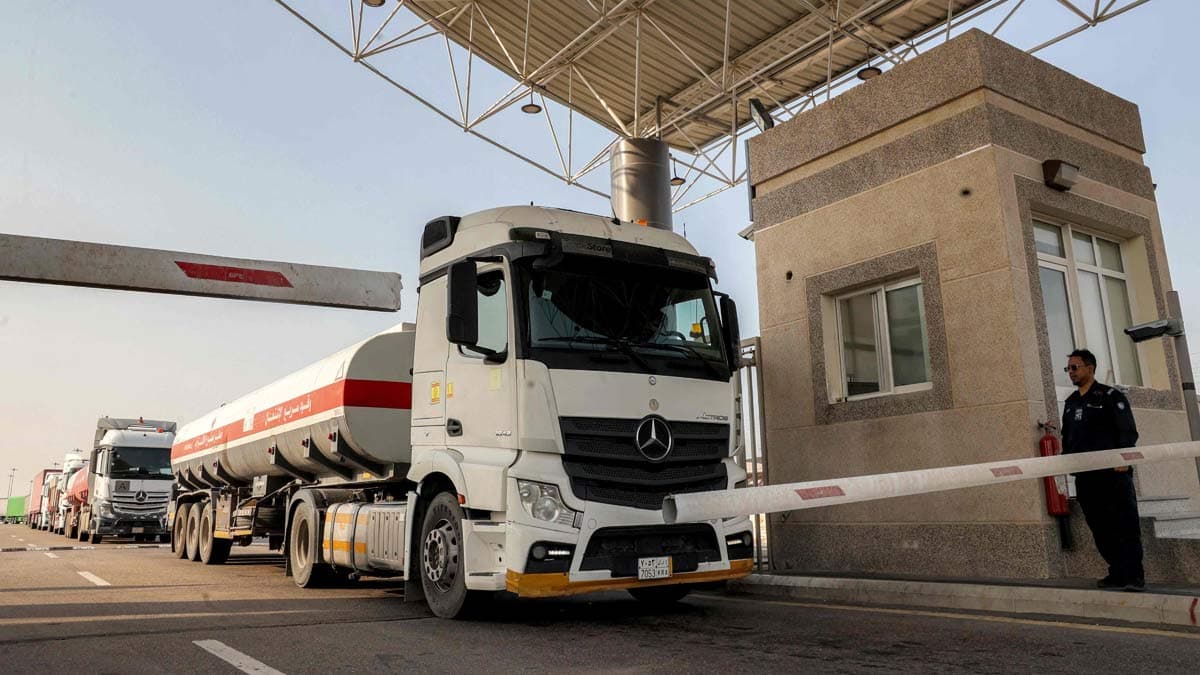
UAE Halts Habshan Gas Facility Operations After Debris From Intercepted Missiles
10 sources compared

Iran Threatens Gulf Energy Facilities After Israel Strikes South Pars Gas Field
11 sources compared