US Uses 'Just-Shoring' to Secure Critical Minerals, Deepen Resource Grabs, Undermine Equitable Clean Energy
Key Takeaways
- United States is forming a club to coordinate critical-minerals trade outside China
- Policy represents a major shift in Washington's global economic governance vision
- Advocates warn the club will hinder an equitable clean energy transition
Scope and source note
I was provided a single article (Climate Home News) to summarise, so this four-paragraph summary is based solely on that source.
“Nick Dearden is the director of Global Justice Now”
Because no other articles were supplied, I cannot incorporate or cite additional perspectives (for example, West Asian, Western mainstream, Western alternative) as you requested.
If you provide more source articles, I will integrate them.
The summary below therefore strictly reflects the Climate Home News piece and quotes its language directly where indicated.
Just-shoring mineral security
Climate Home News frames the proposed US-led just-shoring club as a significant geopolitical pivot.
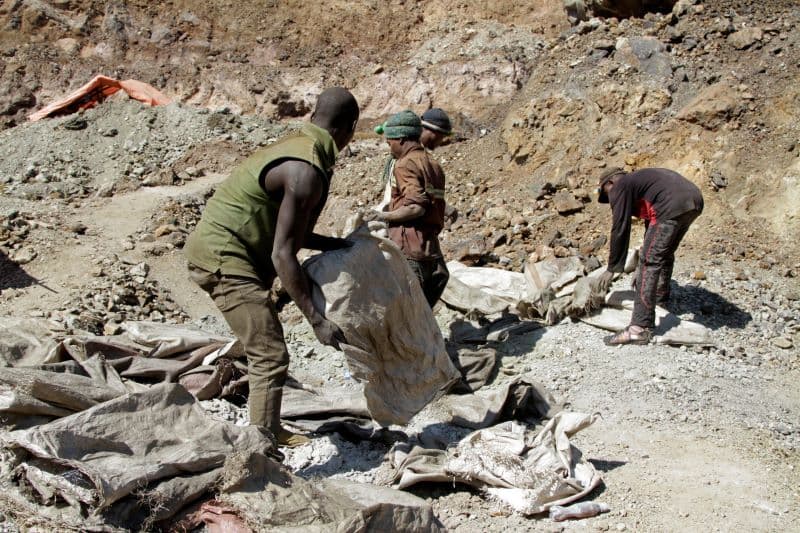
The piece says Washington is prioritising breaking China's dominance and securing minerals for military and high-tech uses over an equitable green transition.
It highlights that key minerals—lithium, nickel, copper and rare earths—are essential for renewables, batteries, military systems and digital infrastructure, and that US promotion emphasised supply security for AI, data centres and defence over decarbonisation goals.
Critical minerals analysis
Global Justice Now's analysis, cited in the article, challenges the premise that rapid mineral expansion is necessary for a green transition and warns the new club risks misallocating resources.
“Nick Dearden is the director of Global Justice Now”
The analysis of the UK's 33 "critical" minerals reportedly found that almost one in five are unnecessary for the IEA's decarbonisation pathways, 15 play only a very small role, and only seven need substantial production increases for a green transition.
The findings suggest the policy conversation should prioritise targeted, equitable mineral use rather than broad securitisation.
US minerals strategy critique
The article warns the US strategy could deepen resource grabs and exacerbate inequality.
It says the proposed trading club risks diverting minerals toward a carbon-intensive military and tech build-up.
The article also warns the club would limit resource-rich countries' ability to refine and add value locally, leaving poorer nations worse off.
Climate Home News relays the critique that a geopolitically driven minerals agenda will undermine equitable development and entrench extractive relationships.
Climate policy priorities
Urgent climate action should prioritise minerals to enable equitable, rapid decarbonisation.
“Nick Dearden is the director of Global Justice Now”
Action should focus on cutting overconsumption in the Global North rather than on securitised supply blocs.
Nick Dearden and Global Justice Now say policy must centre decarbonisation needs and fairness instead of geopolitical rivalry with China.
More on Technology and Science

Chemical odor forces FAA to halt flights across DC-area airports
27 sources compared

Apple Cuts China App Store Commissions to 25% After Regulator Pressure
25 sources compared

FBI Investigates Hacker Who Uploaded Malware-Laced Games to Steam
12 sources compared

University of Cambridge Researchers Urge Tighter Regulation Of AI Talking Toys For Under-Fives
10 sources compared