
U.S. War With Iran Sends Oil Above $100, Spurs Market Volatility
Key Takeaways
- Oil and gas price rises depend on prolonged supply disruptions from the Iran war.
- Oil last exceeded $100 per barrel after Russia invaded Ukraine in February 2022.
- Gasoline prices hit an all-time high of $5.016.
Market jump and volatility
The U.S. war with Iran has sent oil prices soaring above $100 per barrel and triggered broad market volatility, as traders price in the risk of prolonged supply disruptions.
“Skip Navigation Markets Business Investing Tech Politics Video Watchlist Investing Club”
CNBC reports that how high oil and gas prices rise depends on whether the Iran war disrupts supplies for a prolonged period, and describes the situation as a "worst-case scenario" for the global oil market as the conflict engulfs the Middle East with no clear off-ramp.
Crude oil prices "settled up more than 6% on Monday, after surging more than 12% earlier in the day," reflecting acute market reactions to the fighting.
Strait of Hormuz impact
A key driver of the price shock is the near-halt to tanker traffic through the Strait of Hormuz, a critical chokepoint for global seaborne oil exports, as ship owners take precautionary measures.
CNBC notes that tanker traffic through the Strait "has come to a standstill" amid the conflict, and that "about a third of the world's total seaborne oil exports passed through the Strait in 2025," according to energy consulting firm Kpler.
Analysts including JPMorgan's Natasha Kaneva say the war has already produced the "first near total halt to shipping through the Strait in modern history," underscoring the scale of the disruption.
Energy facility attacks
The conflict has expanded to attacks on regional energy infrastructure, increasing the risk of sustained supply losses for both oil and liquefied natural gas (LNG).
“Skip Navigation Markets Business Investing Tech Politics Video Watchlist Investing Club”
CNBC reports that "the Islamic Republic has expanded its retaliatory strikes to include regional energy facilities," and that "Qatar on Monday shut down liquefied natural gas production after two drones hit key facilities."
The article also highlights that "about 20% of global LNG exports come from the Gulf, primarily Qatar, passing through the Strait," a concentration that raises global vulnerability.
Analysts' price scenarios
Market strategists and banks have sketched out steep price scenarios if the conflict persists, warning that storage limits and production shutdowns could force dramatic price spikes.
Bank of America's Francisco Blanch told CNBC that "Brent prices could surge above $100 per barrel...if the regime in Tehran takes a hard line and attacks neighboring energy facilities," and warned a prolonged disruption "could spike Brent prices by $40 to $80 per barrel."
JPMorgan's Kaneva added that a war lasting more than three weeks "would exhaust the Gulf countries' storage capacity...forcing them to shut down production," with Brent potentially hitting $120 per barrel under that scenario.
Consumer and gas impact
The immediate economic impact will be felt at the pump and in European gas markets, with forecasters expecting rapid price transmission to consumers and energy users.
“Skip Navigation Markets Business Investing Tech Politics Video Watchlist Investing Club”
CNBC cites GasBuddy's Patrick De Haan saying "Drivers in the U.S. will likely see gasoline prices start to rise today or tomorrow," and that motorists "should expect an average 10- to 30-cent-per-gallon increase at the pump over the next week."
Meanwhile, "European natural gas futures soared more than 40%," showing sharp contagion across fuels and regions.
More on Iran
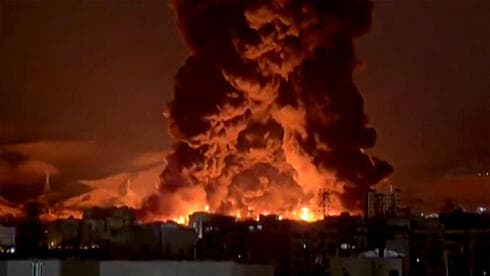
US obliterates military targets on Iran’s Kharg Island, Trump warns
13 sources compared

US Deploys About 2,500 Marines to Middle East After Iran Attacks Gulf Shipping
33 sources compared
FBI Warns of Iranian Drone Plot Based on Unverified Tip; California Says No Credible Threat
10 sources compared

White House Demands ABC Retract Report Claiming Iran Sought To Launch Drone Attacks On California
11 sources compared