
US weighs sending forces into Iran to secure nuclear stockpile, reports say
Key Takeaways
- Trump administration reportedly considering deploying special forces into Iran to secure its HEU stockpile
- Experts say Iran's HEU could be used to make at least ten nuclear warheads
- Iran's HEU stockpile totals 440kg, described as the greatest nuclear threat
Proposed HEU seizure
The Trump administration is reportedly considering the deployment of special forces into Iran to secure its stockpile of highly enriched uranium (HEU), which experts say could be used to make at least 10 nuclear warheads.
“The Trump administration is reportedly considering the deployment of special forces into Iran to secure its stockpile of highly enriched uranium (HEU), which experts say could be used to make at least 10 nuclear warheads”
Preventing Iran from acquiring a bomb is one of Trump’s stated war aims, and the 440kg HEU stockpile represents the greatest nuclear threat as it could be turned into weapons-grade uranium relatively easily.
The US secretary of state, Marco Rubio, has told Congress that "people are going to have to go and get it".
US and Israeli reports say the two countries have discussed how such a mission might be carried out by special forces from either or both militaries.
HEU locations and storage
IAEA director general Rafael Grossi said the watchdog believed that 200kg of Iran’s HEU stockpile was in deep tunnels at its nuclear complex outside the city of Isfahan.
He added that there was another "amount" of HEU in another nuclear centre at Natanz where Iranians have constructed a new fortified and deeply buried facility called Kuh-e Kolang Gaz La, known to western analysts as Pickaxe Mountain.
The HEU is in the form of uranium hexafluoride, which is solid at room temperature but turns into a gas when heated allowing it to be further enriched.
It is believed to be stored in metal canisters each about the size of a scuba diving tank, stored down deep shafts.
Operational challenges
US and Israeli special forces have long trained for missions to extract nuclear materials from hostile environments, and the US has developed equipment, known as the Mobile Uranium Facility, designed to contain and remove HEU.
“The Trump administration is reportedly considering the deployment of special forces into Iran to secure its stockpile of highly enriched uranium (HEU), which experts say could be used to make at least 10 nuclear warheads”
But deploying it along with specialists and a force to protect them would involve major ground operations in at least two sites, both deep in Iran’s interior.
"That would be tough. It is pretty well defended and it’s large and bulky, so you’re not going to just go in and pick it up," said Jeffrey Lewis, a nuclear proliferation expert.
He described options such as landing a C-17, setting up a security perimeter and using cranes, or alternatively "blow it up and make a mess," calling these options "fanciful."
Politics, criticism, risks
Donald Trump acknowledged the challenge and suggested such an operation was not imminent, saying US troops would not be sent in until Iranian defending forces "would be so decimated that they wouldn’t be able to fight on the ground level," and adding "At some point maybe we will" and "We haven’t gone after it. We wouldn’t do it now. Maybe we will do it later."
Administration critics said it was astonishing not to have a plan to address Iran’s nuclear capabilities before the war; Democratic congressman Bill Foster said he had heard nothing about a plan after a classified briefing.
Matthew Bunn of the Harvard Kennedy School said it was "just shocking to launch a military operation like this, justified by the nuclear danger, and not have a plan for dealing with the most urgent part of the nuclear danger," and recommended a postwar deal to dilute or ship out the HEU, noting such solutions were being negotiated in US-Iranian talks brokered by Oman when Israel and US launched their attack on 28 February.
For now, Bunn said the US and Israel appeared to be relying on close monitoring of the site to make sure the canisters aren't removed; Meir Javedanfar said, "As long as it stays in Iran, the plan is that if anyone gets near it, they will be killed. That is the strategy as it stands," while warning the monitoring strategy was not foolproof because "Someone could build a tunnel and go seize it."
Robert Malley, who was the US special envoy to Iran in the Biden administration, said Iran faces a dilemma in the period from decision to acquisition because that is "the zone of maximum danger when you’re likely to be detected," and that if detected "you’re almost certain to be bombed," adding "I’m not saying it’s impossible, but it would be a really very dangerous gamble."
More on Iran
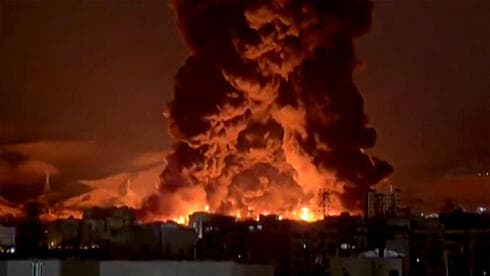
US obliterates military targets on Iran’s Kharg Island, Trump warns
13 sources compared
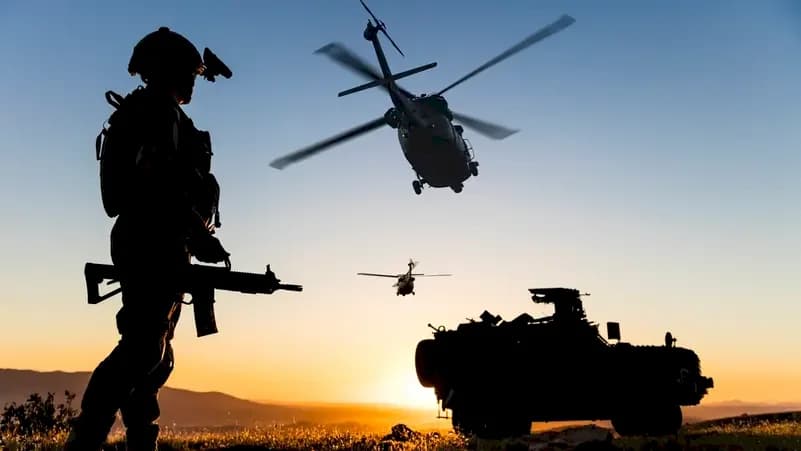
US Deploys About 2,500 Marines to Middle East After Iran Attacks Gulf Shipping
33 sources compared
FBI Warns of Iranian Drone Plot Based on Unverified Tip; California Says No Credible Threat
10 sources compared

White House Demands ABC Retract Report Claiming Iran Sought To Launch Drone Attacks On California
11 sources compared