U.S. Withdraws From Tanf Base in Syria, Reshaping Power Balances and Regional Alliances

U.S. Withdraws From Tanf Base in Syria, Reshaping Power Balances and Regional Alliances

16 February, 202620 sources compared
Syria

Key Points from 20 News Sources

  1. 1

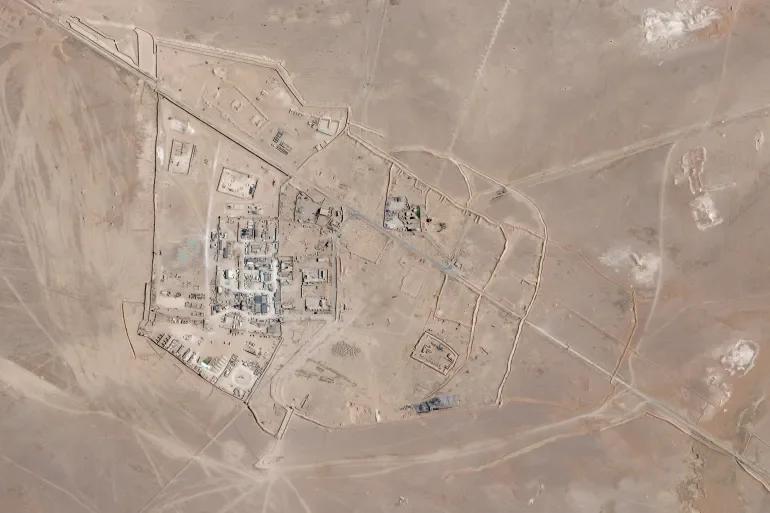
    U.S. forces withdrew from the al-Tanf base near the Jordan–Iraq border.

  2. 2

    Syrian army took control of the al-Shaddadi base after coordinating handover with U.S. forces.
  3. 3

    U.S. pullback reshapes regional power balances and alliances.

Full Analysis Summary

Al-Tanf withdrawal overview

The United States has vacated the Al-Tanf outpost on the Syria–Iraq–Jordan tri-border.

U.S. Central Command described the step as "an orderly, long-planned withdrawal," while regional reporting and Syrian statements framed the move as part of a wider reconfiguration on the ground.

CENTCOM's characterization appears alongside confirmations that Damascus moved into former coalition sites.

Qatar news agency reports "Syrian forces had taken control of the Al-Tanf base a few days earlier following the withdrawal of U.S. troops."

Al Jazeera describes the U.S. drawdown as reducing the American footprint and reallocating resources.

Several outlets present the exit as more than a single base closure.

Al-Jazeera Net calls the exit "both a practical reallocation of forces and a geopolitical cue that will reshape influence, security, and alliances across Syria and the wider region."

Coverage Differences

Contradiction

Sources differ on whether the withdrawal is mainly a U.S. operational choice or a transfer of control coordinated with Damascus. Daily Sabah (West Asian) reports CENTCOM’s line that the pullout was “an orderly, long‑planned withdrawal,” while Qatar news agency (Other) reports the Syrian Defense Ministry saying Damascus seized Al‑Tanf “after the withdrawal of U.S. troops.” Al Jazeera (West Asian) also reports the Syrian army took over al‑Shaddadi “after the U.S. withdrawal—apparently coordinated with Washington,” suggesting coordination rather than a purely unilateral U.S. pullout.

Narrative Framing

Al‑Jazeera Net frames the move as a geopolitical signal that will reshape alliances and influence, while outlets reproducing CENTCOM’s language frame it operationally — a planned consolidation. This reflects differing emphases: strategic cue (Al‑Jazeera Net) versus orderly re‑posturing (Daily Sabah/CENTCOM).

U.S. base withdrawals

Analysts and regional outlets say fewer U.S. outposts change on-the-ground balances and shift deterrence calculations.

Al-Jazeera Net warns the vacuum "can be filled by the Syrian government, Russia, Iran, local militias, or other regional players."

thenationalnews (Western Alternative) reports U.S. forces are "scaling back their Syria mission to focus on training and logistics" and withdrawing from some bases to "reduce the risk of Iranian retaliation."

وكالة صدى نيوز (Other) calls the Al-Tanf handover one of "six U.S. base closures in about a year," saying this repositioning raises "questions about the future security and strategic balance in southern Syria."

Coverage Differences

Tone

Al‑Jazeera Net (West Asian) adopts a strategic and cautionary tone about power vacuums and broader regional realignments, while thenationalnews (Western Alternative) frames the pullback as a deliberate U.S. force‑reduction aimed at defence optimisation and lowering Iran‑related risk. وكالة صدى نيوز (Other) emphasises the pattern of multiple closures and the resulting security questions, a more analytical local focus.

Missed Information

Some outlets emphasise coordination with local actors or handovers (thenationalnews, Al Jazeera), while others focus primarily on the strategic vacuum and do not detail whether transfers were negotiated — leaving ambiguity about the exact process of transfer at individual sites.

U.S. counter-ISIS operations

U.S. officials and CENTCOM say counter-ISIS tasks will continue despite the consolidation, while coverage diverges on whether capability is preserved or weakened.

İlke Haber Ajansı summarises CENTCOM’s line that U.S. forces 'remain prepared to respond to ISIS threats and will keep supporting partner‑led counterterrorism operations.'

Asharq Al‑awsat reports the U.S. struck 'more than 30 ISIS targets in Syria between Feb. 3 and 12.'

Al Jazeera notes CENTCOM reported '10 air strikes on 30 targets between Feb. 3–12' and that U.S. forces 'remain ready to respond to ISIS threats.'

Other outlets warn the consolidation may complicate future strikes if access and local intelligence are reduced.

Coverage Differences

Narrative Framing

CENTCOM‑aligned reporting (Ilke Haber Ajansı, Asharq Al‑awsat) foregrounds continued counterterrorism activity and readiness; in contrast, outlets like Al‑Jazeera Net and Muslim Network TV highlight risks that fewer bases could “create opportunities for armed groups to regroup” and complicate counter‑terrorism unless alternative mechanisms are established.

Regional reporting on Syrian withdrawals

Political fall‑out and local arrangements are prominent in regional reporting, with several outlets linking the withdrawals to an emerging U.S. rapprochement with a new Syrian political order and to a U.S.‑brokered roadmap for northeast reintegration.

thenationalnews reports that Syria "recently joined the U.S.-led anti‑ISIS coalition after a White House meeting between President Donald Trump and President Ahmad al‑Shara."

The Arab Weekly details a January ceasefire and a plan for limited Kurdish autonomy and SDF integration into Syrian structures.

Al Jazeera and The Arab Weekly note transfers of bases such as al‑Shaddadi and limited Syrian deployments into Hasakah and Qamishli.

They caution that many practical details — control of oil fields, crossings, and the exact security architecture for SDF forces — remain unresolved.

Coverage Differences

Unique Coverage

thenationalnews (Western Alternative) emphasises high‑level normalisation — citing a White House meeting and Syria joining the anti‑ISIS coalition — while The Arab Weekly (Other) provides granular coverage of a US‑brokered roadmap, ceasefire and negotiations over Kurdish integration. Al Jazeera highlights operational details such as destruction of materiel during withdrawal, a detail others omit.

Missed Information

Some reports (e.g., albawaba) note missing details — such as who announced handovers and exact timelines — highlighting information gaps in coverage; other sources present more complete narratives about meetings and ceasefire arrangements.

Media reactions and uncertainties

Across the coverage there is palpable uncertainty about longer‑term consequences.

Some outlets treat the move as a pragmatic reallocation that preserves US counter‑terror capacities, while others warn of diminished deterrence and openings for regional actors.

وكالة صدى نيوز frames the evacuation as raising "questions about the future security and strategic balance in southern Syria."

Al‑Jazeera Net warns the withdrawal could "affect U.S. credibility and deterrence."

Muslim Network TV and analysts quoted elsewhere caution that base transfers and policy shifts "could undermine regional stability and complicate future counterterrorism efforts."

Several pieces, for example albawaba, explicitly flag incomplete reporting and omitted details, underscoring the need for further verification as on‑the‑ground dynamics and diplomatic arrangements continue to evolve.

Coverage Differences

Tone

Some outlets adopt a cautiously optimistic framing of pragmatic redeployment and continued counter‑ISIS activity (CENTCOM‑aligned sources and some West Asian outlets), while others adopt a warning tone stressing risks to stability and U.S. credibility (Al‑Jazeera Net, وكالة صدى نيوز, Muslim Network TV).

Missed Information

Several outlets (albawaba, kurdistan24.net as noted) explicitly report missing details about announcements, timelines and exact mechanics of handovers, signalling uneven access to verified information across the reporting pool.

All 20 Sources Compared

Al Jazeera

Syrian army takes over al-Shaddadi base after US withdrawal

Read Original

Al-Jazeera Net

Details of the final moments of the U.S. withdrawal from the al-Shaddadi base in Syria

Read Original

Al-Jazeera Net

The Syrian army takes over the al-Shaddadi base after coordination with Washington.

Read Original

Al-Jazeera Net

Syria after the U.S. withdrawal: 5 questions about influence and remaining forces

Read Original

albawaba

US forces withdraw from Al-Shadadi base in Syria

Read Original

Arab News PK

Syria says has taken over another base from US forces

Read Original

Asharq Al-awsat - English

Syria Says Has Taken Over Another Base from US Forces

Read Original

Daily Sabah

US troops withdraw from key base in Syria after YPG deal | Daily Sabah

Read Original

Daily Sabah

US troops withdraw from key base in Syria after YPG deal | Daily Sabah

Read Original

Enab Baladi

Syrian Army Takes Over al-Shaddadi Base After Coalition Handover - Enab Baladi

Read Original

İlke Haber Ajansı

Syrian army takes control of al-Shaddadi base after coordination with U.S.

Read Original

kurdistan24.net

US Senator Lindsey Graham: We Blocked Syrian Army Advance Toward Kurdish Areas

Read Original

Middle East Monitor

Syrian Army takes over Al-Shaddadi military base in Hasakah after coordination with US

Read Original

Muslim Network TV

Syria says it takes over another US base

Read Original

Oz Arab Media

Syrian Army Takes Over Al-Shaddadi Base Following US Withdrawal

Read Original

Qatar news agency

Syrian Defense Ministry Takes Control of Al-Shaddadi Military Base from US Forces

Read Original

The Arab Weekly

Shaddadi base falls to Damascus amid unresolved tensions in Syria’s northeast

Read Original

The Media Line

Damascus Says It Took Over Ash Shaddadi Base as Coalition Footprint Shrinks in Syria

Read Original

thenationalnews

US withdraws from major base in north-east Syria amid regional volatility

Read Original

وكالة صدى نيوز

Shift in the Balance: Implications of the American Withdrawal from the Tanf Base in Syria

Read Original