USA25 March, 20263 min read
USC Cancels California Gubernatorial Debate Amid Backlash Over Candidate Criteria
This article is an automated aggregation of coverage from news outlets. Our editorials offer in-depth analysis curated by the NewsCord team.
USC canceled the gubernatorial debate amid backlash over excluding candidates of color. USC defended a data-driven eligibility formula by a USC professor using polling and fundraising.
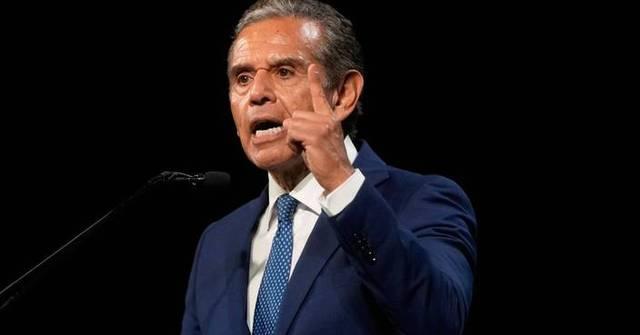
Debate Cancellation
The University of Southern California abruptly canceled its March 24 gubernatorial debate less than 24 hours before the scheduled event. The cancellation came facing intense criticism over a selection formula that excluded all candidates of color from participating. The controversy erupted when USC's 'data-driven candidate viability formula' developed by Professor Christian Grose resulted in six white candidates being invited while four prominent Democratic candidates of color were excluded.
“LOS ANGELES — The University of Southern California canceled its Tuesday evening gubernatorial debate after facing fiery criticism about excluding every gubernatorial candidate of color.”
The university initially defended its methodology but ultimately canceled the debate after failing to reach agreement with co-sponsor KABC-TV on expanding the candidate field. The cancellation came amid growing public outcry and demands for transparency about how the selection decisions were made.

Selection Criteria
The selection criteria that sparked the controversy was a mathematical formula developed by USC Professor Christian Grose that combined polling data and fundraising performance to determine candidate viability. The formula weighted polling more heavily than fundraising and calculated fundraising efficiency by dividing total funds raised by the number of days since each candidate entered the race. This methodology resulted in the exclusion of four established Democratic candidates of color: former Health and Human Services Secretary Xavier Becerra, former Los Angeles Mayor Antonio Villaraigosa, former State Controller Betty Yee, and California Superintendent Tony Thurmond.
Meanwhile, six white candidates were invited: Republicans Steve Hilton and Chad Bianco, and Democrats Matt Mahan, Katie Porter, Tom Steyer, and Eric Swalwell. Critics argued the formula was biased against early entrants and favored newer candidates with wealthy donors.

Backlash and Reactions
The backlash against USC's debate criteria was immediate and multifaceted, with excluded candidates, Democratic legislative leaders, and civil rights organizations condemning what they called a biased and exclusionary process.
“Their unsparing letter added another layer of controversy to the drama that had already been brewing about Tuesday's forum. 'We are writing to demand you open the March 24 gubernatorial debate to all leading candidates,' said the letter sent Monday evening to USC President Beong-Soo Kim by Assembly Speaker Robert Rivas (D-Hollister), Senate President Pro Tem Monique Limón (D-Goleta) and the leaders of the legislative Latino, Black, Asian and Pacific Islander, Native American, LGBTQ, Jewish and women's caucuses.”
The four excluded candidates of color held a virtual press conference where they called the formula 'rigged' and urged all candidates to boycott the debate.
Democratic legislative leaders, including Assembly Speaker Robert Rivas and Senate President Pro Tem Monique Limón, sent an urgent letter to USC President Beong-Soo Kim demanding the debate be opened to all leading candidates and threatening a voter boycott if the university refused.
Former Los Angeles Mayor Antonio Villaraigosa celebrated the cancellation as 'the right call, even if it came late and under pressure,' while Xavier Becerra posted on social media declaring 'We won! We stood up against an unfair candidate debate set-up that prematurely chose winners and losers.'
In contrast, some academics defended the methodology, with 50 public policy and social science scholars from across the country sending a letter supporting Professor Grose's integrity and urging USC to resist political pressure.
Broader Context
The debate cancellation occurred against the backdrop of California's unique top-two primary system and growing concerns about the crowded gubernatorial race potentially resulting in an all-Republican general election. State Democratic Party Chair Rusty Hicks had previously urged candidates without 'viable paths' to drop out to prevent Democrats from being 'locked out' of the November ballot, citing polling data showing Republicans Steve Hilton and Chad Bianco each pulling 17% of the vote. The USC cancellation came weeks after Hicks unveiled poll results showing Hilton, Porter, Bianco, Swalwell and Steyer in close competition, with other candidates trailing behind.
The controversy also raised broader questions about diversity and representation in California politics, with observers noting that California 'is the biggest and the most diverse state in the nation' and the exclusion of candidates of color was 'really just criminal' according to Superintendent Tony Thurmond. The cancellation forced USC and KABC to seek 'other opportunities to educate voters on the candidates and issues' as mail-in ballots for the June 2 primary were set to be distributed in early May.