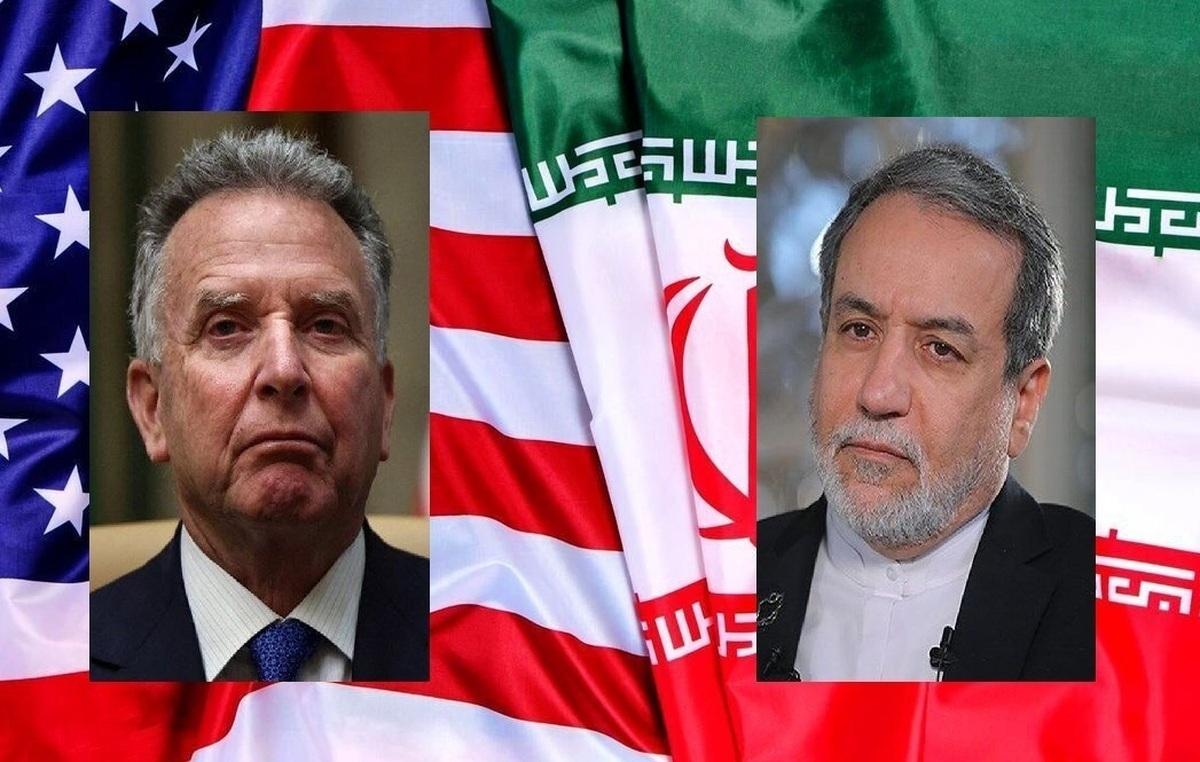
Vali Nasr Says Iran-U.S. Indirect Talks After 40 Days Of Bombing Signal Progress
Key Takeaways
- Tehran's regional influence has grown since the war.
- Indirect talks in Muscat signal reconciliation, possibly Geneva.
- The US seeks a deal and has deployed a naval task force to the region.
Negotiations After 40 Days
Iran and the United States have entered a new phase of indirect talks after “40 days of bombing,” with political scientist Vali Nasr describing the negotiations that began Saturday in Pakistan as a sign that both sides are looking for a way out of the fighting.
“The voice of political scientist Vali Nasr (Tehran, 65), a professor at Johns Hopkins University in the United States, is considered one of the world's leading authorities on Iran, Shiism, the Islamic Republic, and U”
In a video call on Tuesday from the U.S., Nasr said, “I think significant progress was made at the Islamabad meeting,” adding that the talks continued “for 21 hours until 3 a.m.” because “they would not have been talking” if there had not been movement.

Nasr framed the decision to negotiate as an admission of limits, saying, “After 40 days of fighting, Trump’s decision to enter into negotiations with his enemy is, in his view, an admission of failure.”
He also argued that the core obstacle is not only the substance of any agreement but the trust between Tehran and Washington, stating, “The lack of trust is crucial.”
Nasr tied that trust problem to the U.S. record, saying, “The United States, moreover, bombarded Iran in the middle of negotiations [in June 2025 and in February].”
He said the Iranians did not go to Islamabad “just to sign on a dotted line and surrender,” and he described the U.S. blockade of the Strait of Hormuz as a pressure strategy that can backfire on the international community.
“What will happen if the Iranians are willing to survive by eating grass? What if oil reaches 200 dollars a barrel?” Nasr asked, while also warning, “And what if the Iranians also close the Red Sea [with attacks by their ally, the Houthi militia]?”
Muscat Talks and Red Lines
A separate account of earlier indirect negotiations emphasizes that the Iran–U.S. track in Muscat, Oman moved beyond nuclear issues and became a platform for “stabilizing the regional balance of power and expanding Tehran’s role in West Asia.”
The Students’ News Agency report says the indirect negotiations between the United States and the Islamic Republic of Iran in Muscat “went beyond the nuclear issue,” and it describes the Muscat round as “a turning point in the regional balance of power in West Asia.”

The report says the talks were mediated by Oman and attended by senior officials from both sides, and it asserts that Iran “did not enter the negotiating table from a position of weakness.”
It attributes that posture to Iran’s “missile capabilities,” “its advanced nuclear program,” and “a broad network of regional allies,” framing those elements as part of how Tehran “solidified its position as a key power.”
The report says Iranian officials stated that the main goal is “to ensure the continuation of the peaceful nuclear program and the lifting of economic sanctions,” and it quotes Abbas Araghchi, Iran’s deputy foreign minister, saying the talks “have never meant Iran’s retreat from its defensive programs and regional influence.”
The report also says Tehran separated its missile program and regional policies from the negotiations and declared them “red lines,” adding that this “strategic decision shows that Iran does not intend to sacrifice any of its power elements for a nuclear agreement.”
It further warns that nuclear talks are being used as “a tool to consolidate regional power,” while also describing U.S. strategy as “managing regional issues” and moving toward “partial and limited agreements” rather than fully recreating the 2015 nuclear agreement.
Analyst: Reconciliation Over War
EconomiNews’s interview with foreign policy analyst Ali Baghdali presents a view that signals of both war and agreement are being sent from the United States to Iran, and it ties that duality to military posture alongside stated negotiation goals.
“The indirect negotiations between Iran and the United States in Muscat, Oman, went beyond the nuclear issue and became a stage for stabilizing the regional balance of power and expanding Tehran’s role in West Asia”
Baghdali says, “we must understand that with this level of military spending, Trump will not leave the region empty-handed,” but he adds, “this does not necessarily mean war, rather it means extracting maximum concessions from Iran.”
He describes the negotiation timeline as being shaped by prior episodes, saying, “We were on the eve of the sixth round of negotiations when a military strike on Iran occurred,” and he argues that at that moment “we were accused of time-wasting.”
Baghdali also says the United States does not want escalation because “the higher the tension, the more it undermines American investment in the region,” linking that to “Mohammed bin Salman’s ambitious plans.”
He asserts that “Iran and the United States are inclined toward reconciliation rather than war,” and he connects that preference to internal constraints, saying, “On the other hand, we also face internal protests and a rough economic situation.”
In Baghdali’s account, Iran’s domestic pressures include that “The public cannot bear economic stagnation,” while he also points to international political pressures, including “condemnations of human rights” and “Iran’s exclusion from major conferences like the Munich Security Conference.”
He frames Netanyahu’s posture as waiting for political change, saying, “Netanyahu is sitting, waiting for the government in Iran to be toppled,” and he contrasts that with the idea that “toppling a government is not possible without deploying military force.”
European and Regional Stakes
Nasr’s account links the negotiations to broader regional and economic stakes, arguing that U.S. pressure tactics have reached their limits and that Iran has gained influence by thwarting U.S. and Israeli plans.
He said, “It has gained influence by thwarting U.S. and Israeli plans and proving to itself that it is a hard nut to crack,” and he described how Iran “has also taken advantage of catching Israel by surprise, and, in particular, the United States.”
In his view, the war has created a new front through the Strait of Hormuz, saying, “by closing the Strait of Hormuz, which has become a new front that the United States cannot defend.”
Nasr added that while “They can sink Iranian ships, but that doesn’t matter,” Iran can “maintain the blockade from the air with drones,” tying that capability to the bargaining environment.
He also argued that the U.S. blockade increases pressure on the international community, saying, “China, Saudi Arabia and other countries are realizing the way Trump approaches the blockade.”
Nasr described the strategic choice facing Washington as either “try to turn it into something much bigger, such as erasing Iran’s civilization or into a massive air campaign,” or “opt for the only alternative: an agreement.”
The Students’ News Agency report similarly portrays the Muscat track as a stabilization effort for West Asia, saying it “signal[s] the stabilization of a new balance of power in West Asia,” and it warns that “the era of easy isolation of Iran has ended.”
Next Round and Unresolved Questions
While the negotiations are underway, the Students’ News Agency report frames the next steps as uncertain and potentially located in a different venue, stating that “According to some media reports, the next round of talks will be in Geneva.”
“According to EconomiNews, signals of both war and simultaneous agreement are being sent from the United States to Iran: on the one hand, the U”
It also describes the Muscat round as mediated by Oman and attended by senior officials, and it says the talks “showed that Iran did not enter the negotiating table from a position of weakness.”
The report argues that Tehran’s approach is designed to ensure “the continuation of the peaceful nuclear program and the lifting of economic sanctions,” while also insisting that missile and regional policies are “red lines.”
It further says that “Regional analysts believe this stance indicates that nuclear talks are being used as a tool to consolidate regional power,” and it portrays the United States as pursuing “a step-by-step path” that exchanges “limited concessions” without “forming a comprehensive and binding agreement.”
Nasr, in contrast, emphasizes the negotiation’s immediate credibility problem, saying that the lack of trust is “crucial” and that the U.S. bombarded Iran “in the middle of negotiations [in June 2025 and in February].”
He also warns that the U.S. blockade strategy depends on assumptions that may be wrong, asking, “What if the Iranians are willing to survive by eating grass?” and “What if oil reaches 200 dollars a barrel?”
In the EconomiNews interview, Baghdali adds a different uncertainty: he says the U.S. has not clearly defined a decision-making center in foreign policy, arguing, “We do not have a clearly defined center for decision-making in foreign policy.”
More on Iran
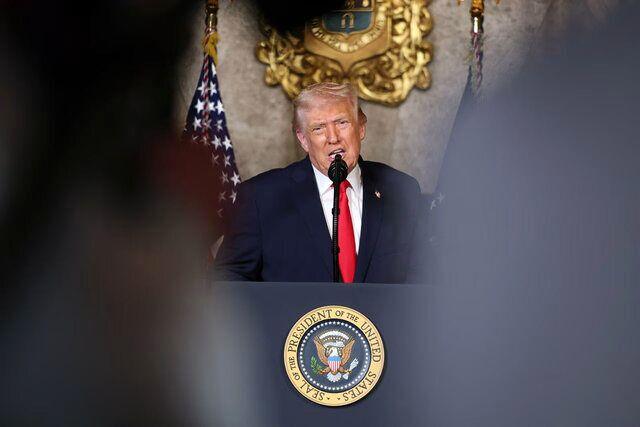
Trump Tells Las Vegas Supporters Iran War Should End Pretty Soon
21 sources compared

US Naval Blockade Near Strait Of Hormuz Pushes Iran Into Broader Conflict Negotiations
11 sources compared

U.S. Implements Naval Blockade on Iran, Halting 13 Ships in Strait of Hormuz
10 sources compared

U.S. Central Command Enforces Iran Port Blockade, Halting Sea Trade Worldwide
28 sources compared