Full Analysis Summary
Venezuelan amnesty bill summary
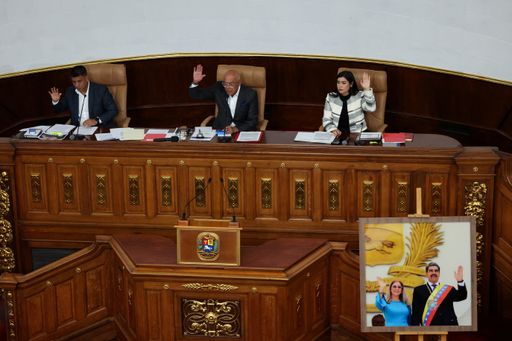
Venezuela's legislature has given initial approval to an amnesty bill proposed by interim president Delcy Rodríguez that could free hundreds of opposition figures, journalists and activists.
TRT World reports that the Assembly's first-reading adoption was unanimous and quotes Rodríguez calling it 'a law for peace and national reconciliation', framing the measure as a step toward healing political divisions.
France 24 describes the draft as the 'Amnesty Law for Democratic Coexistence', saying it would pardon charges often used against dissidents such as 'treason', 'terrorism' and spreading 'hate', while placing explicit exclusions on the most serious crimes.
Folha de S.Paulo reports the text as broader in temporal scope, covering alleged political offenses from 1999-2026 and saying it would free hundreds of detainees and parolees, return assets, cancel Interpol alerts and allow exiles to return.
Together, these pieces portray an initial parliamentary move that proponents present as conciliatory and wide-reaching, with debate over its precise limits and consequences.
Coverage Differences
Tone & framing
TRT World (West Asian) emphasizes unanimous adoption and reconciliation, quoting Delcy Rodríguez calling it “a law for peace and national reconciliation.” France 24 (Western Mainstream) frames the bill as a formal "Amnesty Law for Democratic Coexistence" that pardons many dissident‑related charges but explicitly excludes the gravest crimes. Folha de S.Paulo (Latin American) highlights breadth and concrete remedies—freeing detainees, returning assets, canceling Interpol alerts and allowing exiles back—stressing a 1999–2026 timeframe. These differences reflect each source’s focus: TRT on political messaging, France 24 on legal carve‑outs and historical coverage, and Folha on detailed operative effects and timeframe.
Scope of proposed amnesty
Sources report the scope and legal carve-outs of the bill differently.
France 24 lists specific charges the draft would pardon—treason, terrorism and spreading 'hate'—but says it explicitly excludes serious human-rights violations, crimes against humanity, war crimes, intentional homicide, corruption and drug trafficking.
By contrast, Folha's account, based on a text seen by AFP and Reuters, says the draft would exempt 'violations of human rights' and 'crimes against humanity' but would cover infractions by judges, prosecutors and other officials, a claim that appears at odds with France 24's description.
TRT World focuses less on legal detail and more on political effects, noting the measure would also lift bans on running for office for several opposition figures, including María Corina Machado.
These divergent descriptions create ambiguity about precisely which acts and actors the law would shield.
Coverage Differences
Contradiction / Legal detail
France 24 (Western Mainstream) reports explicit exclusions for the gravest crimes, while Folha de S.Paulo (Latin American) reports the text would "exempt 'violations of human rights' and 'crimes against humanity'"—a direct contradiction on whether such crimes are covered or excluded. TRT World (West Asian) omits these technical exclusions and emphasizes political consequences like lifting bans on candidacy, showing a focus difference rather than a legal position. It's unclear from the sources which account of exclusions is definitive; the discrepancy should be treated as unresolved without the full text.
Assembly reactions to reconciliation law
Political reaction inside the Assembly was emotional and mixed.
France 24 reports lawmakers debated the measure emotionally.
France 24 notes Assembly chief Jorge Rodríguez apologised 'for state crimes since 1999' and that calls for national reconciliation came from across the spectrum.
TRT World emphasizes unanimous first-reading adoption and quotes Delcy Rodríguez’s reconciliation framing.
Folha records gestures by ruling-circle figures.
Delcy said the law should 'heal the wounds' of political confrontation, while her brother Jorge, holding a photo of Hugo Chávez, urged forgiveness and admitted hard compromises, saying 'we will... also swallow frogs.'
These accounts together show both a public push for reconciliation and acknowledgement of contentious compromises behind the measure.
Coverage Differences
Tone & emphasis
France 24 (Western Mainstream) highlights emotional parliamentary debate and an apology from Assembly chief Jorge Rodríguez, portraying a public reckoning. TRT World (West Asian) stresses unanimous adoption and reconciliatory language from Delcy Rodríguez, highlighting political unity. Folha de S.Paulo (Latin American) adds visual and pragmatic detail—Jorge Rodríguez holding a photo of Hugo Chávez and saying “we will... also swallow frogs”—underscoring the negotiated, compromise nature of the process. These portrayals differ in emphasis: public apology and emotion (France 24), official unity and reconciliation messaging (TRT), and pragmatic concessions (Folha).
Detainee release discrepancies
Reports show divergent and ambiguous figures for releases and remaining detainees.
Folha de S.Paulo cites human-rights group Foro Penal as verifying 383 releases since Jan. 8 while saying more than 680 remain jailed, and notes named releases such as Rocío San Miguel (Feb 2024) and Enrique Márquez (early 2025).
Government figures claim nearly 900 releases but provide no detailed breakdown.
France 24 reports that human-rights groups and some opposition figures welcomed the move as key to a post-Maduro transition, even as others call for accountability.
TRT World highlights the law's potential to free hundreds of opposition figures, journalists and activists but gives no detailed release tally.
These differing numbers and emphases leave the overall scale of releases and the identities of beneficiaries unclear from reports alone.
Coverage Differences
Missing / Ambiguity in data
Folha de S.Paulo (Latin American) gives specific figures and named released activists, while France 24 (Western Mainstream) frames reactions by human‑rights groups without providing numeric tallies. TRT World (West Asian) focuses on scope and beneficiaries without numbers. This creates a patchwork picture: Folha supplies hard counts and names; France 24 highlights reception and accountability concerns; TRT omits numeric detail. The disparity underlines uncertainty about total releases and their breakdown.
Draft law implications
Next steps and political implications remain unsettled.
France 24 reports the draft will return for a final vote Tuesday and notes it covers events from the 2002 coup attempt through protests between 2004–2024 and online criticism.
It also observes ongoing talks between the government and an opposition faction seeking new elections.
Folha de S.Paulo says the text awaits a final parliamentary vote date and records government plans such as converting the Helicoide prison into a sports and social center, a symbolic domestic policy move tied to the measure.
TRT World highlights lifting of candidacy bans for figures like María Corina Machado as a practical political consequence.
Collectively, sources indicate a potentially consequential law with contested legal boundaries, notable political symbolism and unresolved questions about accountability and precise coverage.
Coverage Differences
Unique / Off‑topic details and emphasis
France 24 (Western Mainstream) gives calendar and historical coverage detail and highlights negotiations and the bill's exclusions. Folha de S.Paulo (Latin American) adds domestic policy specifics—plans to convert the Helicoide prison into a sports and social center—which is a concrete, locally focused detail not present in the other excerpts. TRT World (West Asian) stresses political effects such as lifting bans on running for office, including naming María Corina Machado. These unique details shape different reader takeaways: legal timeline and context (France 24), social‑policy transformation and named releases (Folha), and political reintegration of opposition figures (TRT).