South America16 July, 20263 min read
Venezuela’s Interim Government Begins Formal Talks With Opposition on August 1
This article is an automated aggregation of coverage from news outlets. Our editorials offer in-depth analysis curated by the NewsCord team.
Interim government and opposition will begin formal talks on August 1. Talks aim to strengthen democracy and chart Venezuela's electoral path.
Talks Start Without Machado
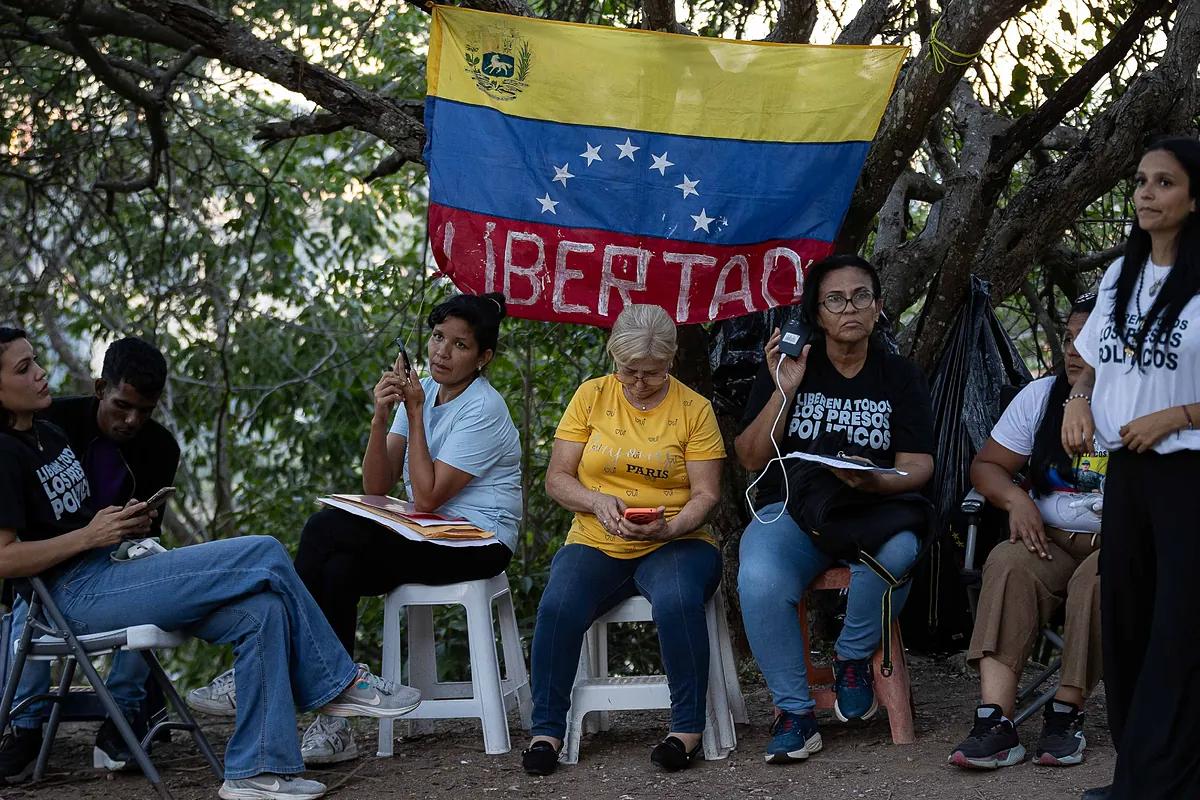
Venezuela’s interim government announced it will begin formal talks with the opposition aimed at “strengthening democracy” in the country, a move backed by the US as Venezuela remains “still recovering from the twin earthquakes that killed more than 4,700 people.” The opposition will not be represented by Nobel laureate María Corina Machado, and instead its main representative will be Dinorah Figuera, who had been living in exile in Spain since 2018 but recently returned to Caracas. The formal talks were first announced by Figuera on Tuesday and later confirmed by the president of the national assembly, Jorge Rodríguez, whose sister Delcy is the country’s acting president.
Rodríguez said a joint working group aimed at strengthening democracy would begin on 1 August with former members of the national assembly elected in 2015, which was then led by Figuera. The US state department praised Figuera’s return and first meeting with Jorge Rodríguez as the beginning of a “roadmap for a political dialogue on a democratic transition,” while the BBC reported the negotiations would begin on August 1 without Machado.
US Role and Opposition Response
The US-backed process has been framed through Washington’s involvement, with the Guardian saying the assembly’s social media account thanked the US for its support and that the joint working group’s priority would be “strengthening the electoral system and restoring guarantees for political participation.” The Guardian also reported that the statement was reposted by US secretary of state Marco Rubio, who it said has in effect been running Venezuela from Washington as a “de facto viceroy.” Opposition leaders reacted to the announcement, with the Guardian saying Machado announced that the parties in the opposition coalition would meet on Wednesday to “define a public position” on the talks.
In parallel, Le Temps described the broader dynamic as the interim government and opposition needing each other, quoting Brian Finucane of the International Crisis Group that “the United States is already three geopolitical crises behind due to Donald Trump's erratic actions.” RFI added that Delcy Rodríguez’s government opened the oil sector to foreign investment and promulgated an amnesty law under Washington’s pressure, while a lecturer-researcher at the University of Avignon said the political elites were “accommodating this new situation” like “a protectorate.”
Sanctions, Elections, and Uncertainty
Even with the formal talks announced, the Guardian said there is still no timetable for new elections, while it reported that rebuilding the electoral system would take at least eight months. The Guardian also tied the political pressure to earthquake anger, saying public anger has been growing over what many see as the government’s botched response to the earthquakes. Ouest-France reported that Venezuelan authorities launched marches in several states to demand the lifting of sanctions, dubbed pilgrimage by interim president Delcy Rodríguez, culminating in a large demonstration in Caracas on May 1.
Ouest-France said the first mobilizations took place in the states of Táchira, Zulia and Amazonas, and it quoted Ana Elsa Contreras saying, “We are asking the United States government to lift all sanctions that have hindered progress and the country’s production.” RFI said the minimum wage in Venezuela remains less than one dollar per month when taking into account the exchange rate between the bolívar and the dollar provided by the Venezuelan central bank, while it quoted Delcy Rodríguez asserting that “hundreds of companies have expressed their interest in investing in the country.”