Full Analysis Summary
Venice climate protest
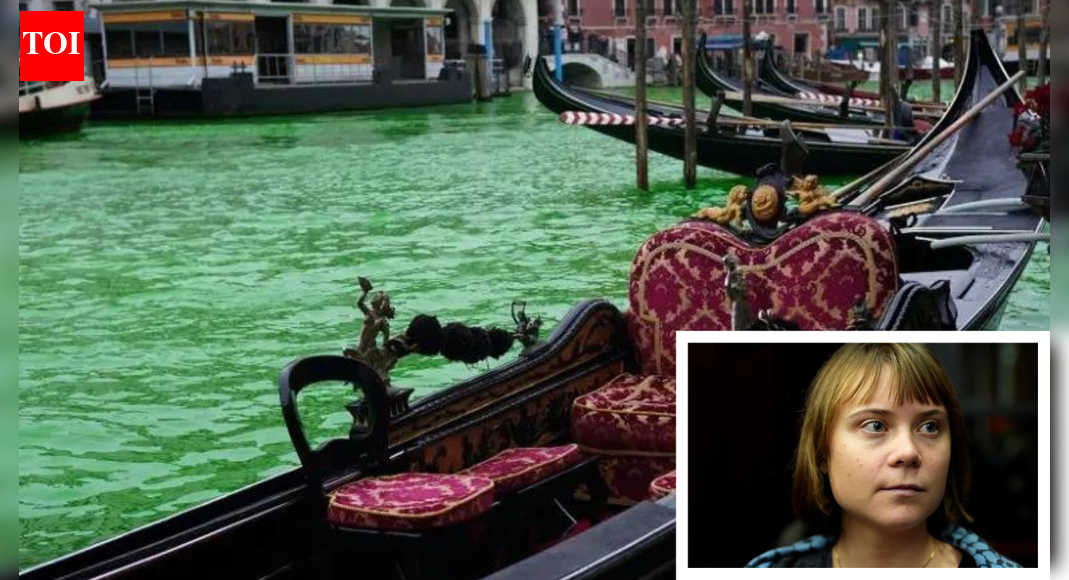
Greta Thunberg and Extinction Rebellion activists staged a dramatic flash-mob protest in Venice.
They poured an 'eco-dye' into the Grand Canal that turned the water green.
Activists unfurled 'Stop Ecocide' banners from the Rialto Bridge and wore red capes and veils to draw tourists' attention.
The group said the dye was harmless.
Kathimerini reported the action as a direct rebuke to world leaders for slow action on climate change, highlighting the visual spectacle and the activists' environmental message.
The Times of India's headlines list for the day did not mention the Venice dye protest, suggesting it did not appear among that outlet's summarized headlines.
Coverage Differences
Missed information / Omission
Kathimerini (Other) directly reports the Venice protest, describing the dye, costumes and banners and quoting activists that the dye was harmless. In contrast, The Times of India (Asian) does not include any mention of the Venice action in its supplied headline summary, which suggests that the ToI snippet either omitted the story or did not treat it as a lead item for its summary. The Kathimerini piece presents first‑hand descriptive coverage and quotes the activists' claims about harmlessness, whereas the ToI snippet provides a list of unrelated headlines and thus fails to report the event.
Reporting on Thunberg ban claim
The available reporting does not provide evidence in these snippets that Venice officials officially banned Greta Thunberg.
Kathimerini focuses on the protest itself and the activists' actions and claims, while the Times of India excerpt lists other headlines and contains no mention of an official ban or legal action related to the dye incident.
Because neither supplied snippet quotes city authorities announcing a ban, any claim that Thunberg was banned by Venetian officials is not supported by the given sources and remains unverified based on the material provided.
Coverage Differences
Contradiction / Unverified claim
The user prompt frames the story as ‘Venice Officials Ban Greta Thunberg,’ but neither Kathimerini (Other) nor the Times of India (Asian) snippets included in the source set report an official ban. Kathimerini reports the protest acts and the activists’ assertion that the dye was harmless, and the ToI headline list does not mention the action at all; thus there is no source evidence here confirming a ban by officials.
Contrast in media coverage
Kathimerini’s coverage emphasizes theatrical protest and environmental messaging, describing costumes, banners and a visually striking dye.
It frames the action as an explicit rebuke to slow climate action by leaders and notes activists’ assertion that the dye posed no harm.
By contrast, the Times of India’s supplied headlines focus on a range of domestic and international items — politics, entertainment, science and sports — and do not include the Venice protest in the excerpt provided.
This editorial difference highlights how outlets may prioritize or omit certain protest actions based on audience interests or editorial judgment.
Coverage Differences
Tone / Narrative emphasis
Kathimerini (Other) uses descriptive language to convey spectacle and a direct climate message — ‘red capes,’ ‘Stop Ecocide’ banners and tourists’ attention — and includes the activists’ safety claim about the dye. The Times of India (Asian) snippet lists many unrelated headlines and omits the Venice protest, indicating a different editorial prioritization. This is a difference of emphasis and selection rather than a disagreement over facts within the available excerpts.
Venice dye protest verification
Kathimerini documents the dye protest in Venice and notes the activists' costumes, banners, and their claim that the dye was harmless.
The Times of India excerpt does not report this event among its listed headlines.
Without additional sources (for example, a direct statement from Venice city authorities or other outlets reporting a ban), any claim that Venetian officials banned Greta Thunberg after the dye incident cannot be confirmed from the supplied snippets and should be treated as unverified.
Coverage Differences
Missing evidence / Verification gap
Kathimerini (Other) provides detailed descriptive reporting of the protest and activists’ claims but does not, in the supplied snippet, report an official ban. The Times of India (Asian) excerpt omits the incident entirely. Because neither supplied source includes statements from Venetian officials about a ban or enforcement action, the claim of a ban is not supported by these sources and remains unverified.