
Vice President JD Vance Accuses Press of Driving Wedge With Trump, Defends Iran War
Key Takeaways
- Vance pushed back against media claims of a split with Trump over Iran policy.
- He said the Trump administration is in complete harmony on foreign policy.
- Defended Trump's Iran war while standing beside him.
Press Wedge Accusation
US Vice President JD Vance found himself defending President Donald Trump's war in Iran while accusing the press of attempting to drive a political wedge between them.
“US Vice President JD Vance on Monday (US local time) pushed back against what he described as attempts to “drive a wedge” between him and President Donald Trump over the war in the Middle East”
During a press conference on March 16, Vance pushed back against questions about his past opposition to foreign military interventions, standing firmly beside Trump as the controversy over Operation Epic Fury and the US-Israel war on Iran continued.

Vance directly addressed journalists, accusing them of trying to 'drive a wedge between members of the administration, between me and the president' as he sought to project unity within the Trump administration despite his historically anti-interventionist stance.
The vice president's comments came amid speculation that his relative silence during the early days of the Iranian conflict indicated potential disagreements with Trump's approach to the escalating tensions in the Middle East.
Anti-Interventionist Shift
Vance's political identity has undergone a significant transformation, particularly regarding his stance on US military intervention in the Middle East.
The Marine Corps veteran had built much of his political reputation around skepticism of overseas conflicts, dating back to his brief deployment in Iraq and including his vocal opposition to military action against Iran as recently as 2023 and 2024.
In a 2023 op-ed, Vance had praised Trump's reluctance to start new wars, describing that restraint as 'the enduring legacy of Mr Trump's first term,' and as recently as 2024 he had warned that a war with Iran would not serve US interests and would be a 'huge distraction of resources.'
However, the current conflict with Iran has forced a marked shift in his public position, as Vance now argues the situation is fundamentally different due to Iran's nuclear ambitions, despite reports suggesting he had privately urged a more aggressive military strategy against Iran while also expressing concerns behind closed doors about a wider war.
Smart President Defense
In his defense of the Iran war, Vance emphasized what he described as a 'one big difference' between current and past US military conflicts, delivering a pointed critique of previous administrations while praising Trump's leadership.
“US Vice President JD Vance on Monday (US local time) pushed back against what he described as attempts to “drive a wedge” between him and President Donald Trump over the war in the Middle East”
'One big difference between now and the past is that 'we have a smart president,' Vance declared, drawing a stark contrast between the incumbent commander-in-chief and his predecessors by adding that 'in the past, we've had dumb presidents.'
The vice president's provocative statement drew an immediate positive reaction from Trump, who was seated nearby and smiled even winking toward someone in the room as Vance made his remarks.
Vance further solidified his support for the ongoing military campaign by asserting that he trusts Trump 'to get the job done' and assuring the public that 'the mistakes of the past aren't repeated,' while also insisting the conflict will not devolve into another 'forever war' similar to the long US campaigns in Iraq and Afghanistan that he had previously criticized.
Past Reservations
The political significance of Vance's shift in stance is magnified by his previous warnings about military escalation and his apparent reluctance to voice public support during the early days of the Iranian conflict.
The vice president had demonstrated his anti-interventionist credentials as early as 2020 when he warned about the risk of 'escalation' following the killing of Iranian commander Qasim Soleimani during Trump's first term, and his private messages that surfaced during last year's 'Signal-gate' controversy revealed he had also expressed doubts about US strikes on Yemen's Houthi rebels.
Vance's relative silence on social media during the initial phase of the strikes caught the attention of supporters who expected him to weigh in quickly, leading to speculation about potential divisions within the administration, though allies of the vice president quickly moved to dismiss such suggestions.
Despite these past reservations, Vance now consistently emphasizes that 'what the president has said consistently, going back to 2015, and I agreed with him, is that Iran should not have a nuclear weapon,' framing his current support for military action as a matter of principle rather than political expediency.
Military Context
As the military campaign against Iran continues, with reports indicating that about 200 American troops have been wounded across seven Gulf countries according to US Central Command spokesperson Timothy Hawkins, Vance has worked to project unwavering support for Trump's foreign policy approach.
“US Vice President JD Vance on Monday (US local time) pushed back against what he described as attempts to “drive a wedge” between him and President Donald Trump over the war in the Middle East”
The vice president has emphasized that members of the Trump administration are in 'complete harmony' on foreign policy, seeking to quell any perception of division despite his well-documented history of opposing military intervention.
Most of the injuries to US service members have been described as minor, with more than 180 already returning to duty, but the ongoing conflict presents a significant test for Vance's political credibility as he balances his anti-interventionist past with his current role as a key defender of the administration's military posture.
Vance's accusations against the press and his strong public defense of Trump's leadership suggest he is prioritizing administrative unity and loyalty over his previous foreign policy positions, potentially reshaping his political identity in the process.
More on USA
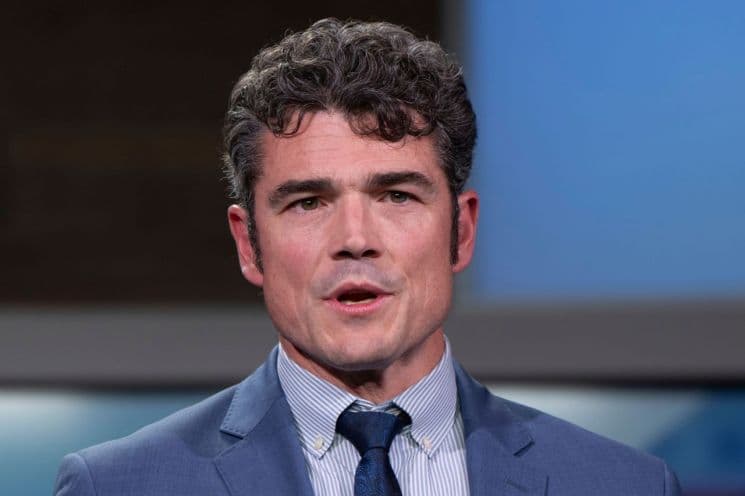
FBI investigates Joe Kent, former National Counterterrorism Center director, for allegedly leaking classified information.
81 sources compared

Lt. Gov. Juliana Stratton Wins Illinois Democratic Senate Primary to Replace Durbin
171 sources compared

Senators Grill Mullin Over DHS Nomination as Intel Officials Testify on Top Threats
91 sources compared

César Chávez Faces Sexual Abuse Allegations, Including Rape of Dolores Huerta and Other Survivors
34 sources compared