Asia15 March, 20262 min read
Vietnam Holds Parliamentary Elections as Communist Party Fields Majority of Candidates
This article is an automated aggregation of coverage from news outlets. Our editorials offer in-depth analysis curated by the NewsCord team.
864 candidates contest 500 National Assembly seats. About 93% of candidates are Communist Party members; independents 7.5%.
Election Overview
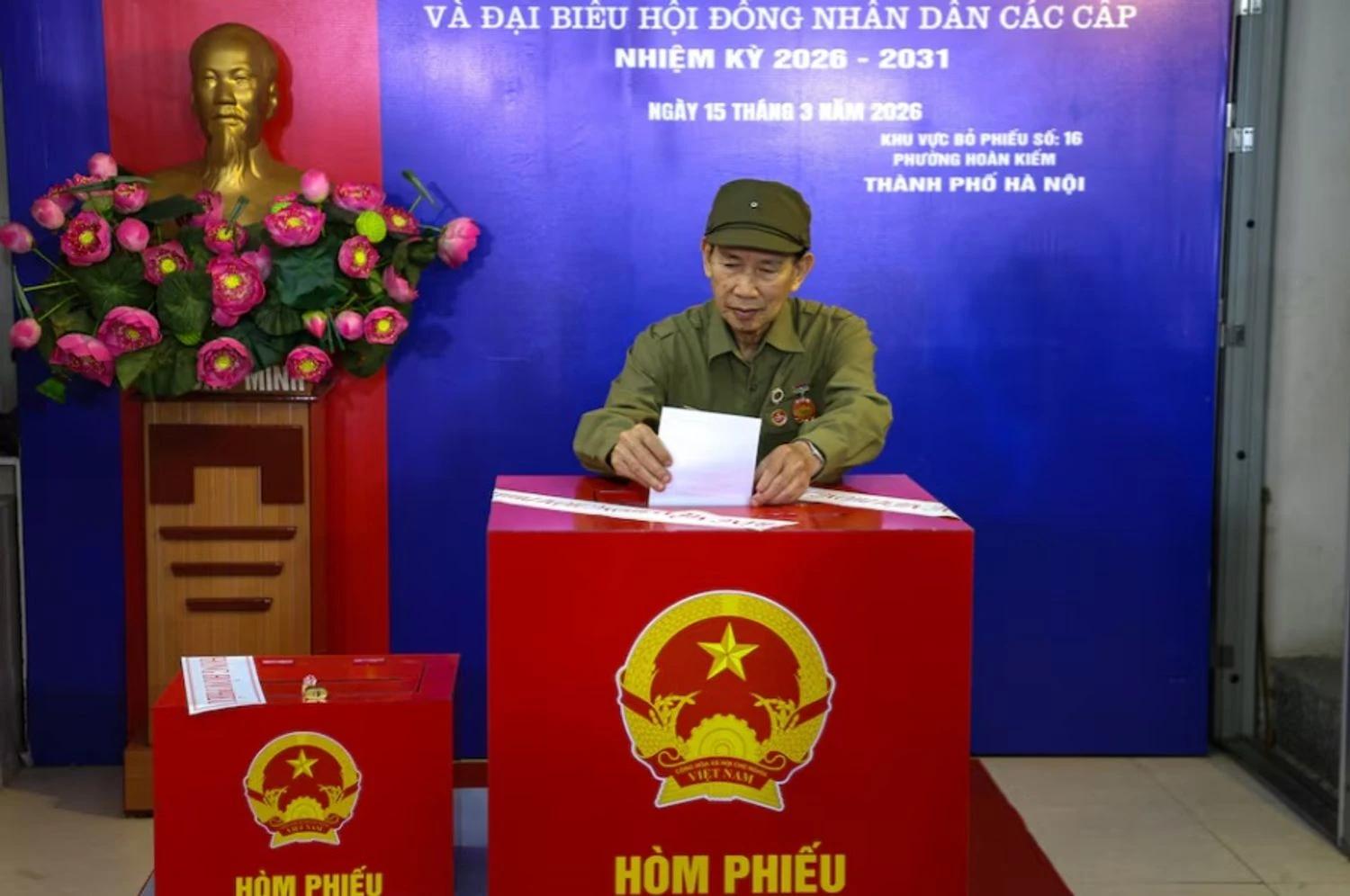
Vietnam conducted parliamentary elections on Sunday with over 73 million voters participating. The elections featured 864 candidates competing for 500 seats in the National Assembly. The Communist Party dominated the candidate landscape, fielding nearly 93% of all candidates.
“Voters in Vietnam are casting their ballots for members of the National Assembly, the country's top legislative body... Nearly 93 percent of the 864 parliamentary candidates in Sunday's election are Communist Party members, while 7.5 percent are independents, according to the national election council, down from 8.5 percent in 2021.”
Independent candidates comprised just 7.5% of the field, down from 8.5% in 2021. These elections represent one of the limited democratic exercises in Vietnam's single-party system. Voters also selected representatives for local councils during the process.

Party Dominance
The Communist Party maintains overwhelming legislative control, holding 97% of parliamentary seats. The party has governed Vietnam unopposed for decades in this political system. The National Assembly primarily functions to ratify Communist Party decisions rather than exercise independent authority.
Communist Party members comprised 864 of the 864 candidates seeking national parliament seats. Independent candidates made up just 7.5% of the electoral field. This composition ensures the party will continue its dominance with virtually no opposition.

Political Structure
The election process reflects Vietnam's unique political structure with Communist Party authority. The National Assembly serves mainly to ratify Communist Party decisions. The assembly lacks authority to overturn major party decisions on personnel appointments.
“The five-yearly elections in the tightly controlled one-party state will see more than 73 million voters elect 500 members of the National Assembly and representatives for local councils. The Communist Party, which has ruled the Southeast Asian nation of 100 million people unopposed for decades, holds 97 percent of the parliamentary seats.”
Legislators have occasionally modified proposed legislation. This creates a system with limited electoral processes within single-party rule. The structure ensures the Communist Party's continued dominance.
Leadership Transition
The new parliament's inaugural session is scheduled for early April. Members will formally approve state leadership positions selected by the Communist Party. During January's party congress, To Lam was confirmed as general secretary.
Nineteen politburo members were chosen to form the primary decision-making council. Party leadership will announce state position nominees before parliament convenes. Lam's expected presidential appointment is considered routine.

This would allow Lam to hold dual influential roles for five years. This structure mirrors China's model where Xi Jinping maintains dual positions.
Business Representation
The candidate field included notable business executives among Communist Party members. This reflects the intersection of political and economic power in Vietnam. Prominent business figures included Nguyen Thanh Tung of Vietcombank, Vietnam's largest bank.
“Notable business executives among the candidates include party members Nguyen Thanh Tung, who leads Vietcombank – Vietnam's largest bank by market value – and Le Hong Minh, chairman of technology company VNG that operates the nation's leading messaging platform Zalo.”
Le Hong Minh, chairman of VNG technology company, was also a candidate. VNG operates Zalo, Vietnam's leading messaging platform. Male candidates represent approximately 55% of those running.
This matches proportions from the last election cycle. The composition shows integration of economic leaders into governance while maintaining party control.