Full Analysis Summary
Commission intelligence cell plan
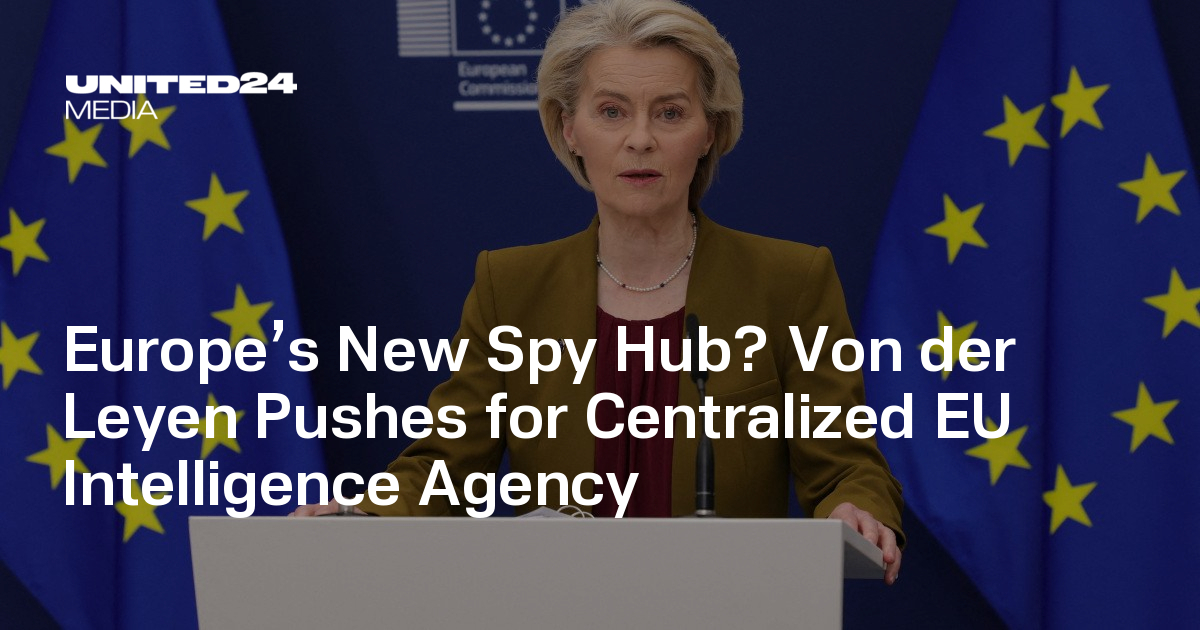
European Commission President Ursula von der Leyen is reported to be pressing ahead with a plan to create a small intelligence cell within the Commission's Secretariat-General.
Several outlets describe the initiative as still 'embryonic' and say it is intended to give the Commission faster access to national intelligence and geopolitical analysis.
The Financial Times coverage, cited and confirmed by Eunews and echoed by El País and UNITED24 Media, says the cell would be based in the Commission HQ (Berlaymont) and is designed to complement existing EU intelligence functions rather than replace them.
Coverage Differences
Narrative emphasis
While Eunews and El País stress the plan is "embryonic" and "intended to complement — not replace — existing EU intelligence analysis," UNITED24 Media frames the same development more squarely as a planned coordination unit driven by geopolitical pressures and the need to better pool data from national spy agencies.
Proposed EU intelligence cell
According to reports, the proposed cell would be modest in size and placed within the Secretariat‑General.
It would be staffed in part by officials seconded from national intelligence services.
The unit is intended to collate and synthesise information for the Commission's strategic needs.
UNITED24 specifically reports it would be staffed by officials seconded from EU intelligence services and would collate and synthesise intelligence for joint strategic purposes.
Eunews and El País likewise note secondments and close cooperation with the EEAS and Intcen.
Coverage Differences
Detail focus
UNITED24 highlights the operational detail that the body 'would be staffed by officials seconded from EU intelligence services' and stresses its role in collating and synthesising intelligence, whereas Eunews and El País underscore the institutional relationships — that the unit would 'complement' the Commission Security Directorate and 'cooperate closely with EEAS intelligence' — raising questions about overlap with the EEAS-run Intcen.
Rationale for security cell
Supporters of the initiative point to heightened threats and shifting geopolitics as its justification.
Both Eunews and UNITED24 cite pressure from Russia and Belarus and concerns about possible reductions in U.S. intelligence support as motivating factors.
UNITED24 explicitly references warnings from former U.S. President Donald Trump about cuts to American security support.
El País adds that the cell would help the Commission prepare security colleges and provide faster geoeconomic analysis for decision‑makers.
Coverage Differences
Attribution of motives
UNITED24 explicitly links the push to specific geopolitical triggers — 'Russia’s invasion of Ukraine and warnings from US President Donald Trump about possible cuts to American security support' — giving a clearer external-pressure framing, while Eunews notes supporters point to 'hybrid threats from Russia and Belarus and the risk of reduced U.S. intelligence support.' El País focuses more on internal Commission needs for 'faster, first‑hand geopolitical and geoeconomic analysis.'
Pushback on intelligence proposal
The proposal has provoked institutional pushback and political scepticism.
Eunews reports that senior EEAS officials and several member-state chancelleries are likely to oppose any move seen as centralising intelligence powers in von der Leyen's hands.
El País highlights concerns about duplication of roles and member states' willingness to share sensitive intelligence.
UNITED24 likewise notes the EEAS fears duplication with Intcen.
Critics have publicly mocked the plan.
Observers point to past similar proposals that failed to materialise.
Coverage Differences
Tone and interpretation
Eunews frames the move as part of a broader political shift — describing critics' concerns that it could 'effectively carving out functions from the EEAS and shaping a more Commission‑led "war cabinet"' — while El País emphasises practical obstacles like states' reluctance to share sensitive data and the historical pattern of similar proposals failing. UNITED24 reports resistance but presents it more as an organisational dispute about duplication with Intcen rather than a sweeping political power grab.
EU initiative status
For now the initiative remains under development with no formal presentation to all capitals, no set timeline, and no agreed structure.
UNITED24 reports the Commission saying the concept is under development and 'discussions are ongoing'.
Eunews notes the plan 'has not been formally presented to all 27 capitals' and El País stresses that 'the proposal has no firm structure yet and member states have not been consulted'.
That combination of ongoing talks, political sensitivity and historical scepticism helps explain why several outlets describe the project as embryonic and uncertain.
Coverage Differences
Status framing
All sources present the plan as nascent, but Eunews points to the formal diplomatic gap ('has not been formally presented to all 27 capitals'), UNITED24 records the Commission framing ('concept is under development, discussions are ongoing, no timeline is set'), and El País underscores the political risk by noting 'similar past proposals have not materialized' and that member states have not been consulted.