USA · 04 May, 2026 · 7 min read
Washington Post Wins Pulitzer Prize For Public Service Scrutinizing Trump Administration Overhaul
The Washington Post won the 2025 Pulitzer Prize for Public Service. The winning work scrutinized the Trump administration’s overhaul of federal agencies.
3 of 4 outlets skipped it: the Seattle Times includes detail that Joseph Kahn said Times reporters were threatened over their work (Pulitzer awards thread)..
4outlets compared
Same story, two versions
tap a side to read it in full
POLITICO
“The Washington Post won the Pulitzer Prize for public service for scrutinizing the Trump administration’s sweeping, choppy cuts and changes to federal agencies”Read the original ↗
These sources are not describing the same narrative event: POLITICO and The Seattle Times report on Pulitzer winners for 2025 work, while La Jornada and Cubadebate report the death of a former Pulitzer winner (Peter Arnett). Any cross-source comparison of details about “the same story” will be misleading because the underlying subjects differ.
Pulitzer winners in 2025
The Pulitzer Prizes for 2025 work were announced Monday, with The Washington Post winning the Pulitzer Prize for public service for scrutinizing the Trump administration’s sweeping, choppy overhaul of federal agencies and The Associated Press winning for international reporting about surveillance.
“The Washington Post won the Pulitzer Prize for public service for scrutinizing the Trump administration’s sweeping, choppy overhaul of federal agencies”
The Seattle Times reported that the Post’s coverage illuminated the administration’s “fast-moving, sometimes opaque drive to reshape the national government,” and that judges credited the Post with detailing “what the cuts and changes meant for individual Americans.”
The same announcement placed the Miami Herald’s Julie K. Brown in line for a special citation for reporting nearly a decade earlier that drew attention to Jeffrey Epstein ’s abuses.
The Seattle Times also said the New York Times won three of the prizes, while the Post and Reuters each won two, and that “less widely known outlets ranging from The Connecticut Mirror to the podcast ‘Pablo Torre Finds Out’ also were recognized.”
In a livestream announcement, prize administrator Marjorie Miller said, “This is always a day of celebration in our communities, but perhaps never more so than today as we face tremendous political and economic pressures,” as the awards were rolled out.
The Pulitzer announcement came in a year when, according to The Seattle Times, the Post cut a third of its staff, CBS News announced it would shutter its nearly century-old radio service, and The AP offered buyouts to over 120 journalists.
The Seattle Times further tied the media environment to political pressure, saying President Donald Trump continued to bash, and sometimes sue, outlets whose coverage he finds objectionable.
Investigations, threats, and newsroom pressure
Beyond the headline categories, the Pulitzer announcement described a set of reporting efforts that were framed as both sweeping and personally consequential for journalists.
The Seattle Times said the AP project spanned three years, “thousands of pages of documents and numerous interviews,” and found that “American companies help lay the foundations of the Chinese government’s system for monitoring and policing its citizens.”
In the same report, executive editor Julie Pace said in an email to staffers, “This was sweeping and deeply impactful reporting, the kind of work that highlights the unique strengths of AP’s global, multiformat newsroom,” and noted she is among the Pulitzer Board’s new members.
The Seattle Times also described how the Post’s winning work included a case involving reporter Hannah Natanson, whose home was searched and devices were seized in what federal authorities say was an investigation into a Pentagon contractor’s handling of classified documents, and it added that “The Post says the seizure violated the First Amendment.”
Reuters’ national reporting was described as looking at how Trump used the federal government and his supporters’ influence to expand presidential authority and target foes, while Reuters’ beat reporting won for work on scam ads, AI chatbots and Meta, which owns Facebook, Instagram and WhatsApp.
The New York Times’ investigative reporting prize was tied to exploring the Republican president’s boundary-pushing approach to the notion of conflicts of interest, and Joseph Kahn said, “We have not, and will not” bow to the pressure, in a statement.
The Seattle Times also said the Post and Reuters each won two, and that the awards came as CBS News planned to shutter its nearly century-old radio service and the AP offered buyouts to over 120 journalists.
Mass shooting coverage and local impact
The Pulitzer breaking news award went to The Minnesota Star Tribune for its coverage of last year’s deadly mass shooting during Mass at a Minneapolis Catholic school, and the announcement emphasized both the scene’s immediacy and the paper’s local proximity.
“Judges praised the “thoroughness and compassion” of the newspaper’s reporting on a scene of carnage in its hometown.”
The Seattle Times said judges praised the “thoroughness and compassion” of the newspaper’s reporting on a scene of carnage in its hometown, and it quoted Kathleen Hennessey, the Star Tribune’s editor and senior vice president, saying, “To me, it’s really a moment to appreciate the power of local journalism.”
The Seattle Times added that one Tribune reporter who lives in the neighborhood heard the gunshots and called 911 before running to the scene, and it noted that an editor at the paper has children who attend the school.
Hennessey also said, “It feels really gratifying to be recognized, but for this newsroom, this is also just still a really painful event,” in an interview.
POLITICO’s version of the Pulitzer announcement provided additional details about the shooting, saying “Two children were killed and more than a dozen others were injured as shooter opened fire during the school’s first Mass of the academic year.”
POLITICO further stated that “The shooter later was found dead of what appeared to be a self-inflicted gunshot.”
The Pulitzer announcement also situated the awards in a broader moment for U.S. journalism, noting in POLITICO that the Pulitzer announcement came “little more than a week after an armed man rushed a security checkpoint and exchanged gunfire with Secret Service agents outside another big event for U.S. journalists.”
Press freedom and a journalist’s legacy
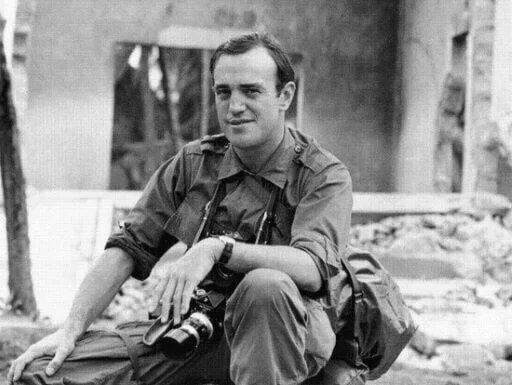
While the Pulitzer announcement focused on 2025 work, the U.S. news cycle also included the death of Peter Arnett, a Pulitzer Prize–winning reporter whose career spanned major wars and whose final days were described in multiple outlets.
La Jornada reported that Peter Arnett, who spent decades “dodging bullets and bombs” to bring eyewitness accounts of war from the rice paddies of Vietnam to the deserts of Iraq, died at the age of 91, and it said he died this Wednesday in Newport Beach, surrounded by friends and family, with his son Andrew Arnett saying so.L
La Jornada also said Arnett was awarded the Pulitzer Prize for International Reporting in 1966 for his coverage of the Vietnam War for The Associated Press, and it described that he was admitted to hospice on Saturday due to prostate cancer.L
Cubadebate similarly said Arnett died this Wednesday at the age of 91, confirmed by his son Andrew, and it placed his death in Newport Beach, California, United States, with family and friends accompanying him during his last moments.
Cubadebate added that he had prostate cancer and that “since last Saturday he had been hospitalized in a medical facility, receiving palliative care.”
La Jornada described Arnett’s 1991 household-name moment delivering live updates for CNN from the first Gulf War, saying that although nearly all Western reporters had fled Baghdad, Arnett stayed and delivered a live report by cellphone from his hotel room as missiles began raining down.L
In that report, Arnett said, “There was a very close explosion near me, perhaps you heard it,” and it added that air-raid sirens sounded in the background.
Arnett’s Gulf War dispatch
The accounts of Arnett’s death also revisited the specific reporting that made him famous, including his Gulf War dispatch from Baghdad in 1991 and his later career controversies.
“Although nearly all Western reporters had fled Baghdad in the days leading up to the U.S.-led attack, Arnett stayed.”
La Jornada said Arnett became a household name in 1991 after delivering live updates for CNN from the first Gulf War, and it described that “Although nearly all Western reporters had fled Baghdad in the days leading up to the U.S.-led attack, Arnett stayed.”L
It said that as missiles began raining down on the city, he delivered a live report by cellphone from his hotel room, and it quoted him speaking in a calm voice with a New Zealand accent moments after the loud roar of a missile echoed over the airwaves.
La Jornada included the quote, “There was a very close explosion near me, perhaps you heard it,” and it added that air-raid sirens sounded in the background while he continued speaking.L
Cubadebate likewise said Arnett stayed in Baghdad, the capital of Iraq, when the United States began bombing the oil-rich country, and it described that communication was becoming complicated and unstable.
Cubadebate said Arnett decided to stay in his hotel room and filed a dispatch by telephone, describing that his frontline report allowed audiences to learn of the start of the war.
It then quoted Arnett telling his interlocutor, “I think that destroyed the telecommunications center,” and “They are hitting the city center.”