
'What if we're left with ruins?': Doubts creep in for Iranians who supported war
Key Takeaways
- Some Iranians who initially supported the war now express growing frustration
- Supporters expected quick regime collapse after killing senior figures, but it hasn't happened
- Tehran residents report nightly explosions disrupting sleep during the second week of conflict
Shifting public mood
Some Iranians who initially welcomed external strikes against their government now express growing fear and doubt about the cost of the conflict.
“- Published "We thought they'd kill all the senior figures and the regime would collapse in days, but we are in the second week now and every night I wake to explosions," a Tehran resident told the BBC”
"We thought they'd kill all the senior figures and the regime would collapse in days, but we are in the second week now and every night I wake to explosions," a Tehran resident told the BBC.
Sama, a 31-year-old engineer in Tehran, said she initially felt hope when the strikes began and even celebrated when reports emerged that Iran's Supreme Leader, Ayatollah Ali Khamenei, had been killed in US-Israeli strikes: "When the strikes started, I thought, this is what the regime cannot survive."
Two weeks into the conflict, Sama said the mood has shifted, with people terrified, worried their neighbourhoods might be targeted, and unable to sleep because of explosions and nightmares.
Displacement and ruin fears
The human cost and displacement are already large and rising, and some Iranians fear lasting ruin even if the government falls.
The UN Refugee Agency (UNHCR) says between 600,000 and one million Iranian households are now temporarily displaced inside Iran as a result of the ongoing conflict, according to preliminary assessments, representing up to 3.2 million people.
Mina, a 28-year-old teacher in a northern city, said she still wants an end to the ruling clerical establishment but fears long-term consequences: "But when you see the massive fires and hear explosions, when you see young children afraid and crying, you start thinking about whether this can ruin the country you love and live in."
Mina said friends who once openly discussed regime collapse have grown more cautious as many senior officials remain in place: "What if we are left with ruins and the same mullahs and the same government? Only more oppressive and more defiant?"
Repression and uncertainty
Many Iranians also report that the conflict has strengthened the government's ability to crack down on dissent and made it harder to communicate with sources inside the country.
“- Published "We thought they'd kill all the senior figures and the regime would collapse in days, but we are in the second week now and every night I wake to explosions," a Tehran resident told the BBC”
The BBC says it has found it increasingly difficult to contact people inside Iran since the conflict began, as authorities have imposed yet another near-total internet shutdown since 28 February.
Fatima, a 27-year-old graphic designer, said external attacks reinforce the government's narrative about "the enemy": "They love this," she said.
"Now they are saying: 'See? We told you it was all the enemy's plan.' Criticism has become treason, and they are using that against their own people."
She said paramilitary forces on the streets have meaningfully increased since the war began and described them as "their thugs on the street looking for excuses to attack or arrest us."
Ali, a 31-year-old shopkeeper injured during protests in January, also warned about instability and uncertainty: "Everyone talks about 'regime change' like it's a simple switch," he said.
"But who will take power? What stops the country from falling into chaos, even if they somehow manage to bring the regime down?"
Support, doubts about allies
Despite fears, some Iranians continue to back outside military pressure as the only realistic path to weaken the government, though doubts about the aims of foreign leaders persist.
Reza, a 40-year-old engineer in Isfahan, said he believes outside pressure is necessary and that weakening the government's military and security apparatus could change the equation: "Even if the system doesn't collapse tomorrow, reducing its power can change the equation."
Milad, a software developer in Khuzestan, said he fears the alternative if the system survives and argued: "I would rather die in these strikes, as long as those who did this to our country die alongside me."
But several interviewees expressed scepticism about the promises of US President Donald Trump, who told Iranians after the war began: "When we are finished, take over your government. It will be yours to take. This will be probably your only chance for generations."
Saeed, who took part in deadly anti-establishment protests in January, said he now doubts Trump's consistency: "There is no other way but war against this regime," he said. "But is this Trump guy really still looking for regime change? Is he serious about finishing the job?"
"I don't even know anymore. He says different things every single day."
More on Iran
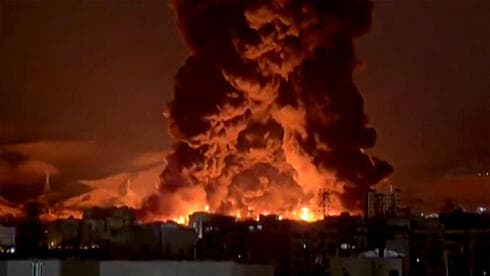
US obliterates military targets on Iran’s Kharg Island, Trump warns
13 sources compared
US Deploys About 2,500 Marines to Middle East After Iran Attacks Gulf Shipping
33 sources compared
FBI Warns of Iranian Drone Plot Based on Unverified Tip; California Says No Credible Threat
10 sources compared

White House Demands ABC Retract Report Claiming Iran Sought To Launch Drone Attacks On California
11 sources compared