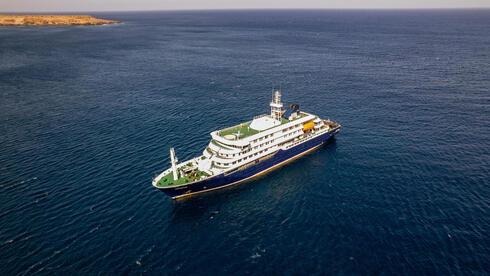
WHO Confirms Hantavirus Outbreak Aboard Dutch-Flagged MV Hondius Off Cape Verde
Key Takeaways
- Three people died on the MV Hondius off Cape Verde amid a suspected hantavirus outbreak.
- The ship, carrying about 150 passengers and crew, awaits disembarkation with evacuations planned.
- WHO confirmed hantavirus on board, reporting two confirmed and five suspected cases.
WHO confirms cases at sea
The World Health Organization confirmed a suspected hantavirus outbreak on the Dutch-flagged MV Hondius, a luxury cruise ship held off West Africa, and said that as of May 4, seven cases of hantavirus have been identified after the suspected outbreak.
CBC reports that WHO said "Seven cases (two laboratory confirmed cases of hantavirus and five suspected cases) have been identified, including three deaths, one critically ill patient and three individuals reporting mild symptoms."
CNN likewise reported that the outbreak killed at least three people and left several others ill, with the WHO saying seven cases had been identified so far, including two confirmed and five suspected.
The ship was waiting for help near Cape Verde, and CBS News described that local officials had not allowed anyone to disembark, while Oceanwide Expeditions said the vessel was waiting for evacuation decisions.
The WHO’s regional director for Europe, Dr. Hans Kluge, said in a statement that "The risk to the wider public remains low. There is no need for panic or travel restrictions," according to both CBS News and CNN.
In parallel, CBC reported that authorities in Cape Verde had not allowed the Dutch-flagged MV Hondius to dock as a precaution, and that around 150 people, including four Canadians, were still stuck on the vessel after three people died and others fell ill.
The BBC added that the outbreak was reported aboard the cruise ship travelling from Argentina to Cape Verde, and that the cruise ship remains off the coast of Cape Verde with 149 people onboard from 23 countries.
Evacuation and route decisions
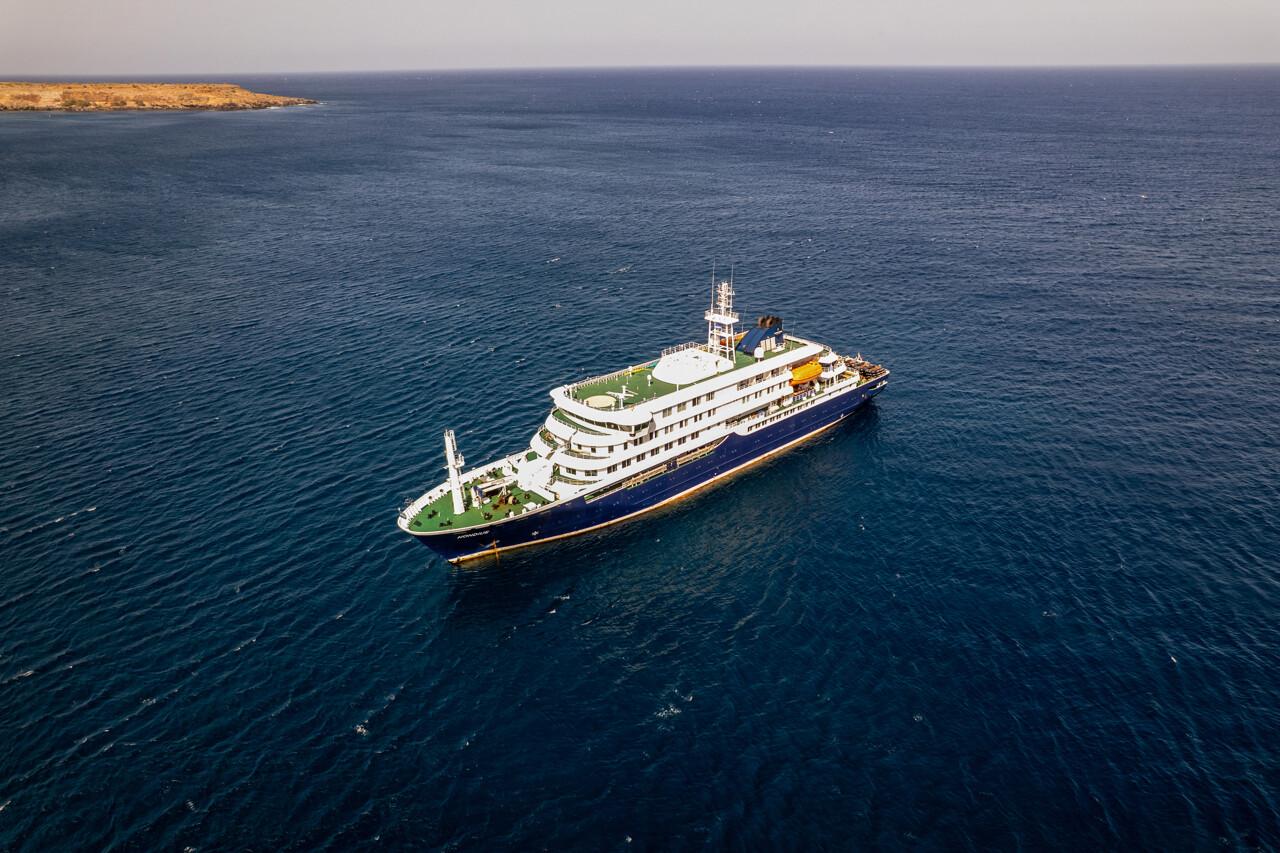
As the MV Hondius remained anchored off Praia, Cape Verde, multiple outlets described a constrained evacuation process that depended on local authorization and medical planning.
CBS News said the ship was waiting for help Monday near Cape Verde, but "local officials had not allowed anyone to disembark," while Oceanwide Expeditions said Cape Verde authorities were assisting even as they prohibited people from leaving the cruise.

CNN reported that the vessel with 149 people on board was anchored off Praia after being refused entry to the port, and that there was no plan yet for disembarking the remaining crew and passengers as Oceanwide Expeditions considered sailing on to Spain’s Canary Islands.
Forbes similarly said the ship was stationary off the coast of Cape Verde and that public health authorities had not given it permission to dock or evacuate the two sick crew members.
NBC News reported that the ship was marooned in the Atlantic Ocean on Tuesday, waiting for two ill crew members to be evacuated for treatment, and that Oceanwide Expeditions said it plans to sail to the Spanish-controlled Canary Islands.
NBC News also stated that the ship could not move until one British and one Dutch crew member, both in stable condition, were airlifted to a hospital in the Netherlands for urgent medical care, and that the evacuation was being organized by the Dutch government.
Franceinfo reported that the Cape Verde National Health Directorate asked the United Kingdom and the Netherlands to send air ambulances "as soon as possible" to carry out "the evacuation of the patients."
Victims, symptoms, and timeline
The reported deaths and illnesses were tied to specific dates and locations across the voyage, with WHO and South Africa’s health authorities providing details that were repeated and expanded across outlets.
CBC reported that three people had died, including a Dutch couple and a German national, and that a Briton who left the vessel was being treated in South Africa.
CBS News described the first victim as a 70-year-old man who died on the ship and whose body was removed in the British territory of Saint Helena, and said the man’s wife collapsed at an airport in South Africa trying to take a flight to the Netherlands and died at a nearby hospital.
CNN added that the first suspected case was a 70-year-old Dutchman who died on April 11 after going into respiratory distress, and that his wife, 69, died on April 26 after testing positive for a variant of hantavirus.
BBC provided a detailed timeline, stating that "11 April: The man developed respiratory distress and died" and that "24 April: He was disembarked in Saint Helena and his wife, also a Dutch national, joined the repatriation."
BBC further said that "26 April: She died in hospital and hantavirus was confirmed" and that "27 April: Another passenger, a 69-year-old British man, became seriously ill and was medically evacuated to South Africa."
On May 2, BBC said a German female passenger died on board with pneumonia, and that hantavirus had not yet been confirmed in this patient.
How it spreads and what’s known
Across the coverage, health officials and researchers emphasized that hantavirus is rodent-borne and that human-to-human transmission is limited, while also acknowledging uncertainty about how the ship’s cases were acquired.
CBC explained that hantavirus can be spread when particles from rodent droppings or urine become airborne, and it said it does not transfer easily between humans.
CBS News described hantaviruses as a family of viruses spread mainly by contact with the urine or feces of infected rodents like rats and mice, and it said there is no specific treatment or cure but early medical attention can increase the chance of survival.
NPR described the disease as a dangerous respiratory virus that can cause hantavirus pulmonary syndrome and said "Detailed investigations are ongoing, including further laboratory testing, and epidemiological investigations."
NBC News reported that WHO experts suspect the Andes variant, which is transmissible from person to person, and it said the WHO said "Some rare human-to-human transmission of the virus may have taken place" in an update.
NBC News also quoted Maria Van Kerkhove saying: "We do believe there may be some human-to-human transmissions happening, among very close contact... that’s our working assumption," and she added that couples sharing rooms meant "that’s quite intimate contact."
CBC included a Netherlands public health perspective through a spokesperson for the Netherlands' National Institute for Public Health and the Environment (RIVM), who said "You could imagine, for example, that rats on board the ship transmitted the virus," while also raising the possibility that infection occurred during a stop in South America via mice.
Divergent framing and public reaction
While the core facts of deaths, confirmed cases, and the ship’s location off Cape Verde were consistent, the outlets diverged in how they framed risk, uncertainty, and the human experience aboard the MV Hondius.
NBC News emphasized WHO’s working assumption about close-contact transmission and reported that the WHO said "The atmosphere on board m/v Hondius remains calm, with passengers generally composed," while also describing strict isolation and hygiene protocols for the 88 passengers and 59 crew on board.
CBC highlighted the emotional uncertainty through Jake Rosmarin’s tearful Instagram video, quoting him: "We're not just headlines. We're people with families, with lives, with people waiting for us at home," and adding that "There is a lot of uncertainty and that is the hardest part."
Newsweek similarly quoted Rosmarin saying in an Instagram video that what was happening was "very real" and that those affected were "not just a story" or "just headlines," but "people with families, people with lives, with people waiting for us at home."
In contrast, Forbes focused on the numbers and the operational status, saying "About 150 people are still onboard" and that "only one patient has tested positive for hantavirus so far," while also describing the evacuation of two symptomatic crew members as the WHO worked to evacuate them.
The BBC framed the outbreak as a question of what is known about hantavirus and provided a mortality figure, stating that "If respiratory symptoms develop, the mortality rate is approximately 38%," according to the CDC, while also describing that the causes of the deaths of the other two passengers were being investigated.
CNN, meanwhile, stressed that health authorities emphasized the outbreak does not represent a public health threat, quoting Hans Kluge: “There is no need for panic or travel restrictions,” and it connected the outbreak to the earlier death of Betsy Arakawa, the wife of Gene Hackman.
What happens next
The next steps described in the reporting centered on evacuation planning, ongoing laboratory and epidemiological investigations, and coordination between WHO, Cape Verdean authorities, and the ship’s operator.
NPR said the WHO was facilitating coordination between WHO member states and the ship’s operators to evacuate two passengers showing symptoms "as well as full public health risk assessment and support to the remaining passengers on board," and it quoted the WHO that "Sequencing of the virus is also ongoing."
NBC News reported that contact tracing was underway to identify those who left the ship during its voyage and those they may have come into contact with, and it said the Spanish Health Ministry would send a team of epidemiologists to the ship to assess people on board.
Franceinfo reported that the Cape Verde National Health Directorate asked the United Kingdom and the Netherlands to send air ambulances "as soon as possible" to carry out "the evacuation of the patients," and it described that medical teams boarded to examine the two infected people.
CBC reported that Oceanwide Expeditions said it was looking into whether passengers could be screened and disembarked on the islands of Las Palmas and Tenerife, and it said it was trying to arrange the repatriation of two crew members with symptoms, along with the body of the German national and a "guest closely associated with the deceased" who does not have symptoms.
BBC said the outbreak was being investigated and that there was no specific treatment or cure, while treatment focused on supportive care, and it described that the confirmed and suspected cases included a 69-year-old British national in intensive care in South Africa and a Dutch woman who died after disembarking in Saint Helena.
In parallel, the WHO’s public-risk messaging remained consistent, with CBS News and CNN repeating Dr. Hans Kluge’s statement that "The risk to the wider public remains low. There is no need for panic or travel restrictions."
More on Technology and Science

Samuel Alito Temporarily Pauses Louisiana Ruling Restricting Mifepristone Mail Access
13 sources compared

Mistral Buys Koyeb, Plans 1.2 Billion Euro Sweden Data Center for Generative AI Cloud
14 sources compared

Jensen Huang Says AI Creates Jobs and Re-Industrializes America at Milken Institute Event
10 sources compared

Sierra Raises $950 Million, Valued Above $15 Billion, Led by Tiger Global and GV
10 sources compared