
Why should you buy stocks even when World War III breaks out? Warren Buffett explains
Key Takeaways
- Warren Buffett advises buying stocks during major geopolitical crises.
- US-Iran conflict rattled global financial markets, triggering equity and commodity volatility.
- Dow Jones fell more than 4% in March 2026 amid Middle East tensions.
Market impact: US-Iran conflict
The escalating US-Iran conflict has rattled global financial markets, triggering volatility across equities and commodities.
“The escalating US-Iran conflict has rattled global financial markets, triggering volatility across equities and commodities”
In the United States, the Dow Jones Industrial Average has fallen more than 4% in March 2026 so far as geopolitical tensions in the Middle East intensified.
The shockwaves of the US-Iran war have also reached Indian stock markets, where the benchmark Nifty 50 index has slipped nearly 4% this month amid concerns over rising crude oil prices and the broader economic fallout of the conflict.
Buffett on crisis investing
A resurfaced video clip from a 2014 interview with CNBC highlights Warren Buffett's contrarian view on investing during periods of extreme uncertainty.
He said he would continue buying stocks even in scenarios such as a potential World War III or a renewed Cold War.
Buffett argued that major wars and crises have often eroded the value of currencies because of inflation and large-scale government spending.
He warned that even if all those scenarios occurred, he would still be buying stocks.
He added that in a very major war the value of money would go down.
He advised that holding cash during a war would be unwise and suggested investors might prefer owning productive assets such as farms, apartment houses, or securities.
Buffett on investing
Buffett cited historical precedent — during World War II stock markets eventually moved higher as economies recovered and businesses continued to grow.
“The escalating US-Iran conflict has rattled global financial markets, triggering volatility across equities and commodities”
He used that example to argue that short-term market reactions can be volatile, but productive assets tend to appreciate over the long run.
He emphasised owning a "piece of the economy" rather than holding idle cash that loses purchasing power to inflation.
The article closes by reiterating that these are Buffett's views as shown in the clip.
It also includes Mint's disclaimer that the views and recommendations are those of individual analysts or broking companies and not of Mint, and it advises investors to check with certified experts before making investment decisions.
More on Iran
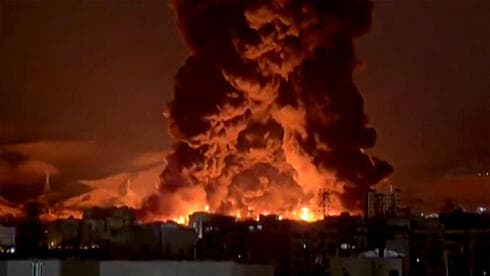
US obliterates military targets on Iran’s Kharg Island, Trump warns
13 sources compared

US Deploys About 2,500 Marines to Middle East After Iran Attacks Gulf Shipping
33 sources compared
FBI Warns of Iranian Drone Plot Based on Unverified Tip; California Says No Credible Threat
10 sources compared

White House Demands ABC Retract Report Claiming Iran Sought To Launch Drone Attacks On California
11 sources compared