Why women’s leadership is central to unlocking the global phaseout of fossil fuels
Key Takeaways
- Osprey Orielle Lake founded and directs WECAN; sits on Fossil Fuel Treaty steering committee.
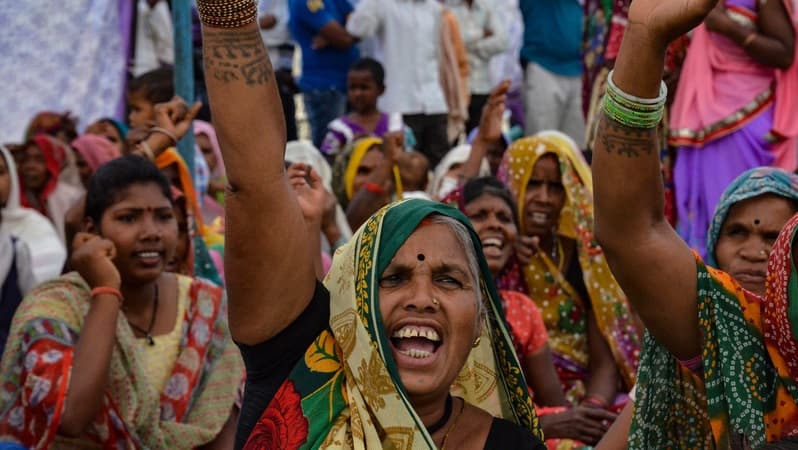
- Women worldwide lead efforts to stop fossil fuel expansion and implement a just transition.
- Nemonte Nenquimo is an Indigenous Waorani woman in the Ecuadorian Amazon.
Women leading climate action
Osprey Orielle Lake is founder and executive director of The Women’s Earth and Climate Action Network (WECAN) and a steering committee member of the Fossil Fuel Treaty, and she argues that women are leading some of the most powerful efforts to stop fossil fuel expansion and implement a just transition.
“Osprey Orielle Lake is founder and executive director of The Women’s Earth and Climate Action Network (WECAN) and a steering committee member of the Fossil Fuel Treaty”
The article highlights Indigenous Waorani leader Nemonte Nenquimo, who led a successful lawsuit against the Ecuadorian government to protect Waorani territory and the Amazon from oil extraction, with Ecuador’s courts ruling in favor of the Waorani and setting a legal precedent.
It also profiles Sharon Lavigne, founder of Rise St. James, who stopped a Formosa petrochemical facility in her parish in Cancer Alley in the Gulf South of the United States and continues to organise communities to stop fossil fuels.
The Fossil Fuel Treaty, founded by Tzeporah Burman—who won the 2019 Climate Breakthrough Award for the Treaty vision—has become a cornerstone of international climate action.
Women and environmental outcomes
The article presents evidence linking women's political representation and inclusion to better environmental outcomes.
Countries with higher representation of women in parliament are more likely to ratify environmental treaties.
A prominent cross-national study found that CO2 emissions decrease by approximately 11.51 percent in response to a one-unit increase in each country’s scoring on the Women's Political Empowerment Index.
Incorporating women into disaster planning or forest management makes projects more resilient and effective.
Persistent gender inequality means women - particularly Indigenous, Black and Brown women and women in low-income and frontline communities - are disproportionately harmed by fossil fuel extraction and pollution while remaining indispensable leaders of equitable solutions.
Climate crisis and fossil fuels
The article warns that the climate crisis is intensifying "at lightening speed," noting that from 2023 to 2025 the world crossed a dangerous threshold by recording the first three-year global average above the 1.5°C guardrail.
“Osprey Orielle Lake is founder and executive director of The Women’s Earth and Climate Action Network (WECAN) and a steering committee member of the Fossil Fuel Treaty”
Lake argues this is an alarm about a narrowing window and says bold, transformative solutions are required rather than incrementalism.
She states that a global phaseout of fossil fuel extraction and production is urgent because coal, oil, and gas remain the primary drivers of the climate crisis and that fossil fuel pollution is responsible for one in five deaths worldwide.
The article notes that at COP28 in Dubai in 2023 governments agreed for the first time to "transition away from fossil fuels," but that the language was historic yet nonbinding and implementation has been severely hindered, with most governments increasing production.
At COP30 in Brazil, the article reports, 80 countries called for fossil fuel language but governments ultimately left without any commitments to a phaseout.
Women-led fossil fuel phaseout
Colombia and the Netherlands are convening the First Conference on Transitioning Away from Fossil Fuels outside formal UN negotiations to advance cooperation toward a managed, equitable phaseout.
Their effort reflects a belief that voluntary alliances of ambitious nations are needed.
WECAN is convening global women leaders at a virtual Women’s Assembly for a Just Fossil Fuel Phaseout on March 31 to advance strategies, proposals and projects.
The assembly will also call for transformative action in Colombia.
The article concludes that women’s leadership must be central to the conference agenda, grounded in equity, justice and care.
It states that a livable future depends on bold action now with women leading the way.
More on Technology and Science

Chemical odor forces FAA to halt flights across DC-area airports
27 sources compared

Apple Cuts China App Store Commissions to 25% After Regulator Pressure
25 sources compared

FBI Investigates Hacker Who Uploaded Malware-Laced Games to Steam
12 sources compared

University of Cambridge Researchers Urge Tighter Regulation Of AI Talking Toys For Under-Fives
10 sources compared