Full Analysis Summary
Chile wildfire devastation
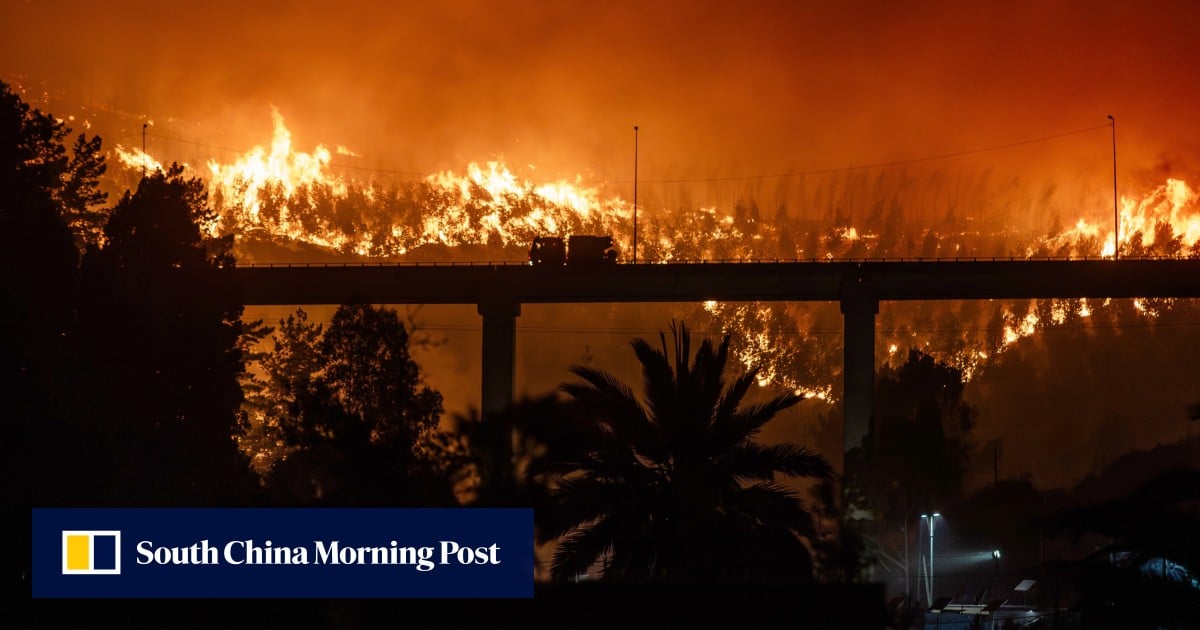
Uncontrolled wildfires have devastated communities in Chile’s Ñuble and Biobío regions, roughly 500 km south of Santiago, leaving charred ruins and causing a high death toll.
South China Morning Post reports the blazes have killed at least 18 people and forced more than 50,000 residents to flee as fires, driven by strong winds and hot weather, burned for two days.
The speed and ferocity of the flames left little time for evacuation, and at least one resident, Matias Cid, said he escaped wearing only the shirt on his back as homes were engulfed.
Coverage Differences
Limited sourcing / inability to compare perspectives
Only the South China Morning Post (Asian) article is available for this briefing, so we cannot identify contrasting narratives, tones, or omissions across other source types (e.g., Western mainstream, Western alternative, local Chilean outlets). That lack of additional sources means we must rely on SCMP's reported facts and quotes without cross-verification or perspective comparison. The SCMP report itself emphasizes the death toll, mass displacement, the speed of the fires, and eyewitness testimony.
Wildfire response and impacts
Emergency response efforts were strained as the wildfires moved rapidly across dry landscapes.
According to available reports, strong winds and hot weather fueled the fires for at least two days, complicating containment and evacuation efforts.
The SCMP article highlights the scale of displacement - over 50,000 people - and the human cost, with at least 18 fatalities, underscoring the challenges facing first responders and local authorities.
Coverage Differences
Missing alternative perspectives
Because only SCMP is available, there is no alternative or local Chilean reporting presented here to either corroborate or challenge SCMP's characterization of emergency response capacity, governmental actions, or international assistance. SCMP reports the environmental drivers and displacement figures but does not present contrasting assessments from other outlets.
Eyewitness accounts of wildfires
The human stories emerging from the burned towns illustrate the suddenness of the disaster.
SCMP includes eyewitness testimony like that of Matias Cid, who recounted escaping with only the shirt on his back as homes were devoured; such accounts convey the immediacy and trauma experienced by residents.
The article's focus on vivid personal testimony complements the numerical toll (18 dead, 50,000 displaced) to provide a picture of both scale and individual loss.
Coverage Differences
Narrative focus (single-source)
SCMP emphasizes both hard figures and personal testimony, but without other source types we cannot determine whether other outlets prioritize different angles (for example, climate causes, governmental accountability, or long-term recovery). The SCMP report balances factual counts with a human-interest element via quotes like Matias Cid's.
Wildfire causes and reporting
Reports emphasize extreme weather as a key driver, noting that strong winds and hot conditions accelerated the fires' spread over at least two days.
This framing suggests a natural-environment explanation for the rapid spread, but without additional sources it remains unclear whether investigations will later identify human causes such as accidental ignition or land-management issues, or systemic factors like climate change and firefighting resource allocation.
SCMP's coverage focuses on immediate causes and impacts rather than assigning longer-term responsibility.
Coverage Differences
Omission / unknown attribution
SCMP reports environmental drivers (strong winds, hot weather) but does not -- in the available snippet -- attribute ignition cause or discuss broader policy or climate attribution. Without additional sources we cannot determine if other outlets emphasize different causal narratives or assign responsibility to policy, land use, or climate trends.
Chile wildfire summary
Available reporting portrays a rapid, deadly wildfire emergency in southern Chile causing significant displacement and loss.
However, this single-source snippet does not allow assessment of broader causes, government response effectiveness, or longer-term recovery plans.
Additional reporting from Chilean local outlets, mainstream and alternative Western sources, and official statements is required to build a fuller, multi-perspective account and to verify numbers and claims.
Coverage Differences
Need for corroboration / single-source limitation
Because only the South China Morning Post snippet is provided, this account must note the limitation: there is no ability to contrast tones, narratives, or factual discrepancies across different source types. SCMP provides immediate facts and human testimony but further sources would be necessary to identify contradictions, additional facts, or varied emphases.