Full Analysis Summary
Gaza winter shelter crisis
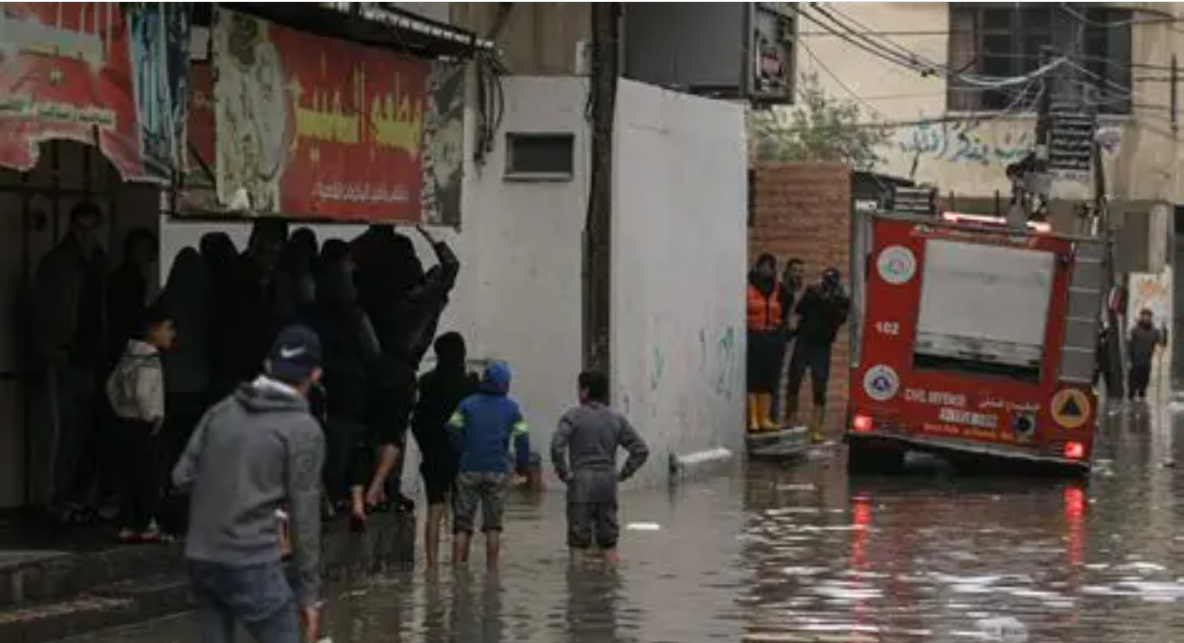
Heavy winter rains have flooded displaced Palestinians' tents across Gaza, destroying belongings, collapsing many makeshift shelters, and leaving thousands exposed to cold, wet conditions.
The downpours have damaged at least 13,000 tents, forcing people to wade through ankle- to knee-deep murky water while they try to salvage mattresses and clothing, and aid groups say winterized supplies are insufficient to meet the scale of the damage.
The UN and aid agencies are scrambling to repair shelters and stormwater infrastructure, but deliveries and response capacity have been severely constrained by Israeli restrictions on humanitarian access, worsening the catastrophe for over one million people in Gaza.
Coverage Differences
Narrative focus
Zoom Bangla (Asian) foregrounds immediate human scenes—collapsed shelters, people wading through murky water, and named injured residents—while Washington Post (Western Mainstream) emphasizes population-level risk estimates and infrastructure repair efforts. ILKHA (Other) stresses geographic hotspots (Khan Younis’ Mevasi) and systemic shortages of winter supplies. Zoom Bangla also notes both sides accusing each other of ceasefire violations, a detail not present in Washington Post’s broader summary.
Attribution of constraints
Both Zoom Bangla and Washington Post explicitly state that Israeli restrictions are hampering relief deliveries; Zoom Bangla quotes that deliveries remain “severely constrained” and even cites Israeli body COGAT saying it is working to bring supplies, while Washington Post frames restrictions as hampering UN and aid agency efforts. ILKHA likewise reports humanitarian access is “severely restricted,” emphasizing lack of waterproofing and reinforced shelter.
Severe shelter damage
Shelter damage is severe and immediate: tents soaked through, bedding ruined, and entire shelters collapsing at night, forcing families to flee.
Zoom Bangla reports people wading through ankle- to knee-deep water and names a resident, Reham al-Hilu, who was hurt when her shelter collapsed.
ILKHA describes thin tent fabric and soaked bedding that force families out at night and identifies children and the elderly as especially at risk amid critical shortages.
The Washington Post highlights that thousands of makeshift dwellings were damaged or destroyed and warns of increased disease risk where shelter and sanitation are failing.
Coverage Differences
Detail vs. summary
Zoom Bangla provides vivid, individual-level details (people wading through murky water; an injured resident named Reham al-Hilu), while Washington Post supplies a summary warning about disease and large population figures. ILKHA bridges these by describing material failures (thin tent fabric, soaked bedding) and naming vulnerable groups (children and the elderly).
Human impact emphasis
ILKHA emphasizes systemic shortages of essentials (heating, food, medicine) and frames camps as unsuitable for long-term occupation, while Zoom Bangla focuses on immediate physical damage and personal injury. Washington Post emphasizes public-health consequences at scale rather than naming individual victims.
Aid access constraints
Aid organizations have tried to pre-position winterized tents and supplies, and thousands of tents and blankets have been distributed, but the response cannot keep pace with damage and rising needs.
Zoom Bangla reports that aid groups began pre-positioning supplies after an October ceasefire, yet deliveries remain severely constrained by Israeli restrictions, and the Washington Post similarly says UN and aid efforts are being hampered by the same limitations.
ILKHA highlights that camps lack waterproofing and reinforced shelter and warns that without urgent and sustained access the humanitarian crisis will deepen rapidly.
Coverage Differences
Responsibility and operational detail
All three sources report restricted humanitarian access, but Zoom Bangla uniquely quotes COGAT as saying it is working to bring in more winter supplies, giving space to an Israeli authority’s response claim. Washington Post frames restrictions mainly as an obstacle to UN and aid agencies’ engineering and repair work. ILKHA emphasizes material gaps (lack of waterproofing, reinforced shelter) and an urgent need for sustained access, which underscores a prediction of rapid deterioration.
Flooding and winter aid risks
Weather forecasts and damaged infrastructure indicate the situation is likely to worsen.
Local outlet ILKHA warns that a new low-pressure system is expected to bring more storms, compounding earlier flooding.
Zoom Bangla reports flooded roadways and sanitation problems, especially around Deir al-Balah, which are making movement and aid delivery more difficult.
The Washington Post notes that over a million people face heightened winter risk and warns that ongoing rain and insufficient shelter will increase disease and exposure-related deaths if access is not expanded.
Coverage Differences
Urgency and forecasting
ILKHA provides explicit meteorological warning—"A new low-pressure system is expected to bring more storms"—and warns of rapid deepening of the crisis. Zoom Bangla provides on-the-ground repercussions (flooded roadways, worsened sanitation) that show how immediate logistics are broken. Washington Post frames urgency through population-level risk and potential disease spread. These emphases shape whether coverage reads as an imminent meteorological threat, a logistics failure, or a public-health emergency.
Reporting on camp crisis
Reporting tone and omissions vary, with Zoom Bangla delivering vivid, human-centered accounts and explicitly noting intermittent strikes and that both sides accuse each other of ceasefire violations.
The Washington Post uses measured, data-focused language about risk and infrastructure and does not include battlefield detail.
ILKHA frames the crisis as systemic, highlighting the camps' unsuitability for long-term occupation, severe shortages of essentials, and warning of rapid deterioration without urgent aid.
None of the provided sources label the situation as 'genocide' or describe systematic killing in the quoted passages; they consistently emphasize humanitarian collapse driven by rain, damaged shelter, and constrained access, and they attribute operational obstruction to Israeli restrictions.
Coverage Differences
Tone and severity
Zoom Bangla's language is immediate and descriptive of suffering and ongoing strikes; ILKHA's language is alarmist about system-wide shortages and rapid deterioration; Washington Post remains formal and focused on population-scale risk and infrastructure. This produces different reader impressions: human tragedy (Zoom Bangla), systemic breakdown (ILKHA), and public-health/infrastructure threat (Washington Post).
Omissions and source perspective
Washington Post omits named injured individuals and local place-level detail like Khan Younis’ Mevasi and Deir al-Balah that Zoom Bangla and ILKHA include; Zoom Bangla uniquely mentions Israeli body COGAT's claim to be working to bring in supplies, showing space for Israeli official response in that coverage. ILKHA includes meteorological forecasting absent from Washington Post's snippet.