
WMO reports record climate imbalance as planetary warming accelerates.
Key Takeaways
- Earth's energy imbalance reached a record high in 2025.
- All-time high greenhouse gas concentrations drive accelerated warming of air and oceans.
- Consequences of warming could last thousands of years.
Record Greenhouse Gas Levels
The World Meteorological Organization has issued stark warnings about unprecedented climate imbalance as planetary warming accelerates to dangerous levels.
““Climate in Emergency”: WMO Warns Earth Is at Its Most Imbalanced State in Recorded History New global report reveals record heat, accelerating ocean warming, and irreversible climate impacts lasting centuries”
Multiple sources confirm that greenhouse gas concentrations have reached record highs not seen in millions of years.
The WMO's State of the Global Climate report reveals that carbon dioxide levels reached 423.9 parts per million in 2024, the highest in at least 2 million years.
Methane and nitrous oxide hit levels not seen in 800,000 years according to the scientific findings.
The annual increase in CO2 concentration was the largest since modern measurements began in 1957.
This surge is driven by continued fossil fuel use, increased wildfire emissions, and weakening natural carbon sinks.
Scientists attribute the climate imbalance to human activities increasingly disrupting natural equilibrium.
The past decade represents a critical turning point in Earth's climate history according to the comprehensive analysis.
Energy Imbalance Accelerates
Earth's energy imbalance has reached unprecedented levels, with the planet now retaining significantly more heat than it releases back into space.
The WMO reports that this imbalance has accelerated to its highest level in 65 years of record-keeping.
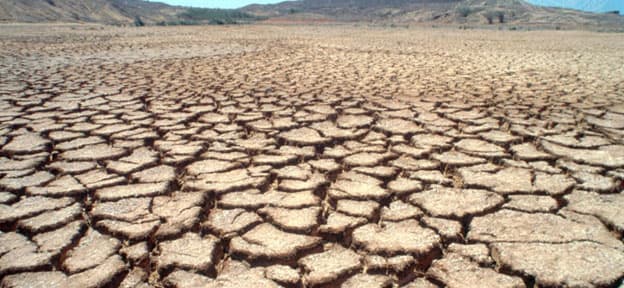
This fundamentally disrupts the planet's natural energy balance.
Under normal conditions, incoming solar energy equals outgoing radiation, but greenhouse gases are preventing heat from escaping.
This causes energy to accumulate in Earth's system at an accelerating rate.
Scientists reveal that approximately 90-91% of this excess heat is being absorbed by the oceans.
The oceans have absorbed energy equivalent to about 18 times annual human energy use each year for the past two decades.
Ocean heat content reached a new record high in 2025 according to the comprehensive analysis.
Ice Loss Accelerates
The cryosphere is experiencing unprecedented shrinkage as ice loss accelerates across the globe.
“GENEVA, Switzerland & SRINAGAR, India, March 23 (IPS) - The global climate system continued its alarming trajectory in 2025, with multiple indicators reaching record or near-record extremes, underscoring the accelerating pace of climate change and its cascading impacts on ecosystems and human societies, according to the latestState of the Global Climate 2025report released by theWorld Meteorological Organisation (WMO)”
Multiple sources document alarming trends in polar and glacial ice.
WMO reports confirm that Arctic sea ice extent in 2025 was at or near record lows.
Antarctic sea ice reached its third lowest level since satellite monitoring began in 1979.
The Arctic maximum daily extent in 2025 was noted as the lowest annual maximum in the observed record.
Glacier loss continues unabated according to the comprehensive findings.
The 2024-2025 hydrological year recorded one of the five most negative glacier mass balances since 1950.
Eight of the ten worst years for glacier loss have occurred since 2016.
This rapid ice melt is directly contributing to accelerating sea-level rise.
Sea levels have increased by 11 cm since satellite measurements began in 1993 and are rising at an accelerating rate.
Record Temperature Trends
Global temperatures have reached alarming levels with 2025 marking the second or third warmest year on record.
2025 was approximately 1.43°C above pre-industrial levels according to the comprehensive analysis.
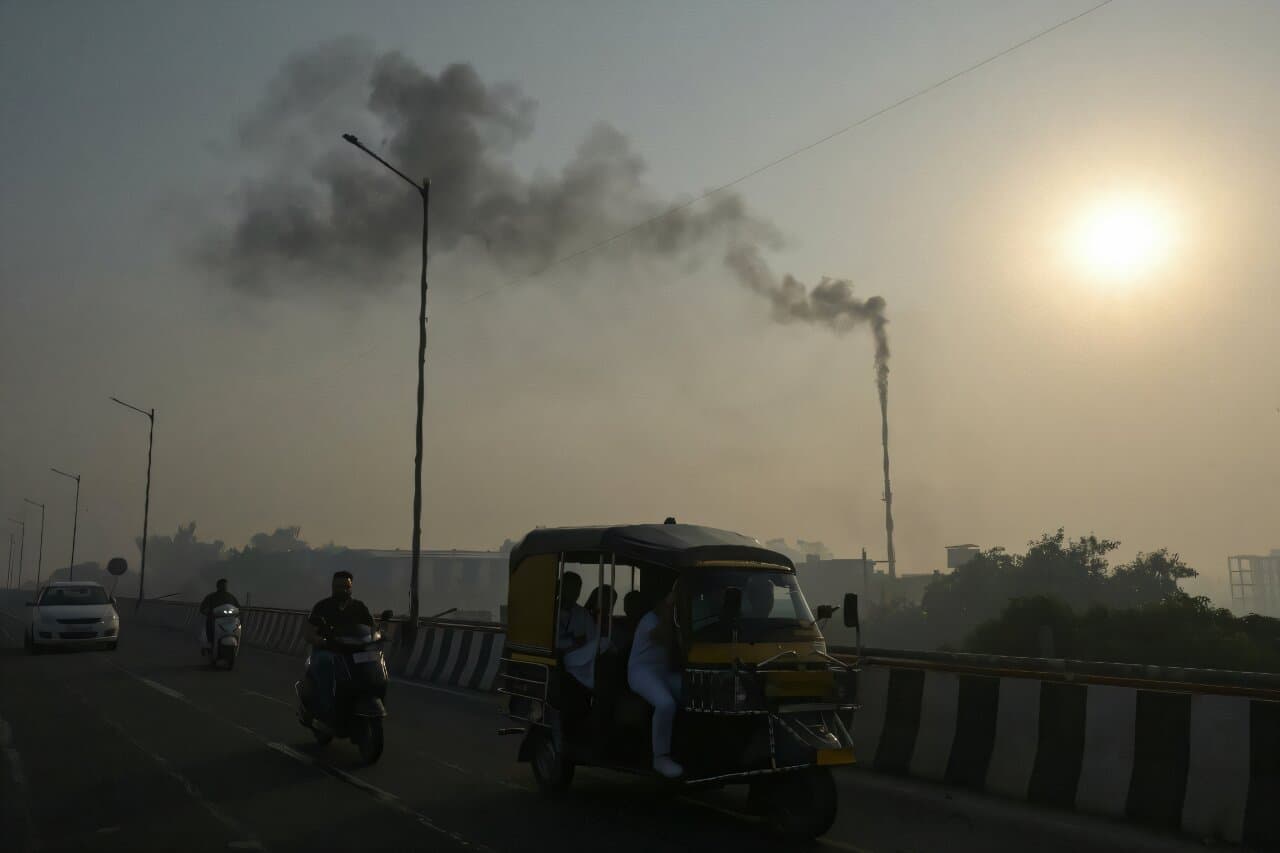
The past eleven years, from 2015 to 2025, have all ranked among the warmest years ever recorded.
This represents an unprecedented period of sustained warming.
Despite slightly cooler conditions in 2025 compared to the record-breaking 2024, the overall warming trend remains unequivocal.
The shift from El Niño to La Niña conditions contributed to the slight cooling in 2025.
Nearly 90% of the ocean surface experienced marine heatwaves during 2025 even under La Niña conditions.
These widespread marine heatwaves are disrupting ecosystems and damaging fisheries.
The rate of ocean warming has more than doubled since 2005.
Heat is increasingly being transferred to deeper ocean layers, creating long-term climate commitments that will persist for hundreds to thousands of years.
Extreme Weather Impacts
The accelerating climate crisis is manifesting in increasingly severe extreme weather events.
“Planet trapped record heat in 2025: UN The amount of heat trapped by Earth reached record levels in 2025, with the consequences of such warming feared to last for thousands of years, the UN warned Monday”
These events are causing devastating human and economic impacts worldwide.

The 2025 report documents a surge in extreme weather including intense heatwaves, flooding and heavy rainfall, droughts, tropical cyclones and storms, and wildfires.
These events resulted in thousands of deaths according to the comprehensive analysis.
Millions of people worldwide have been affected by extreme weather events.
Economic losses amount to billions of dollars.
Beyond immediate damage, extreme weather is triggering cascading global risks.
These risks include food insecurity, displacement, and economic instability.
The report highlights emerging climate-health connections.
Dengue fever has become the world's fastest-growing mosquito-borne disease with half the global population at risk.
Heat stress affects 1.2 billion workers globally.
Scientists warn these impacts represent long-term climate commitments with consequences persisting for centuries to millennia.
More on Technology and Science

UN Says 2025 Heat Will Last Thousands of Years
11 sources compared

UN Warns 2025 Heat Record Will Endure for Thousands of Years
14 sources compared

Hawaii Suffers Its Worst Floods in Over 20 Years, Prompting Thousands to Evacuate
46 sources compared

Kona Low Storms Strike Oʻahu and Maui, Hawaii Faces Worst Flooding in 20 Years
24 sources compared