Protests01 May, 20266 min read
Workers March on May 1 Across Istanbul, Paris, Buenos Aires, and Northern California
This article is an automated aggregation of coverage from news outlets. Our editorials offer in-depth analysis curated by the NewsCord team.
International Labour Day protests occur in Istanbul and the Bay Area. Rising energy costs and war-related economic strain fuel demonstrations worldwide.

May Day protests worldwide
International Labour Day gatherings and marches unfolded across multiple countries on May 1, with workers using the day to link workplace demands to broader political and economic crises. In Istanbul, Turkiye, the Al Jazeera report said “roads around Taksim Square were closed to make way for marches during the day,” and it added that “Later on Friday, demonstrators clashed with police.” In France, workers’ unions used the slogan “bread, peace and freedom” as they called for protests in Paris and other cities, according to Al Jazeera.
The same report described demonstrations in South America “including in Chile, Bolivia and Venezuela,” and it said that in Argentina “angry workers protested on Thursday in the capital of Buenos Aires over President Javier Milei’s recent overhaul of long-held labour protections.” In the Philippines, Josua Mata of the SENTRO umbrella group told the media that “Every Filipino worker now is aware that the situation here is deeply connected to the global crisis,” while Renato Reyes of Bayan said, “There will be a louder call for higher wages and economic relief because of the unprecedented spikes in fuel prices.” Across the Atlantic, the Indybay feature framed May Day 2026 as confronting “War and Autocracy,” while listing planned actions in Northern California including San Francisco, San José, and Oakland.
Palestine’s labor crisis
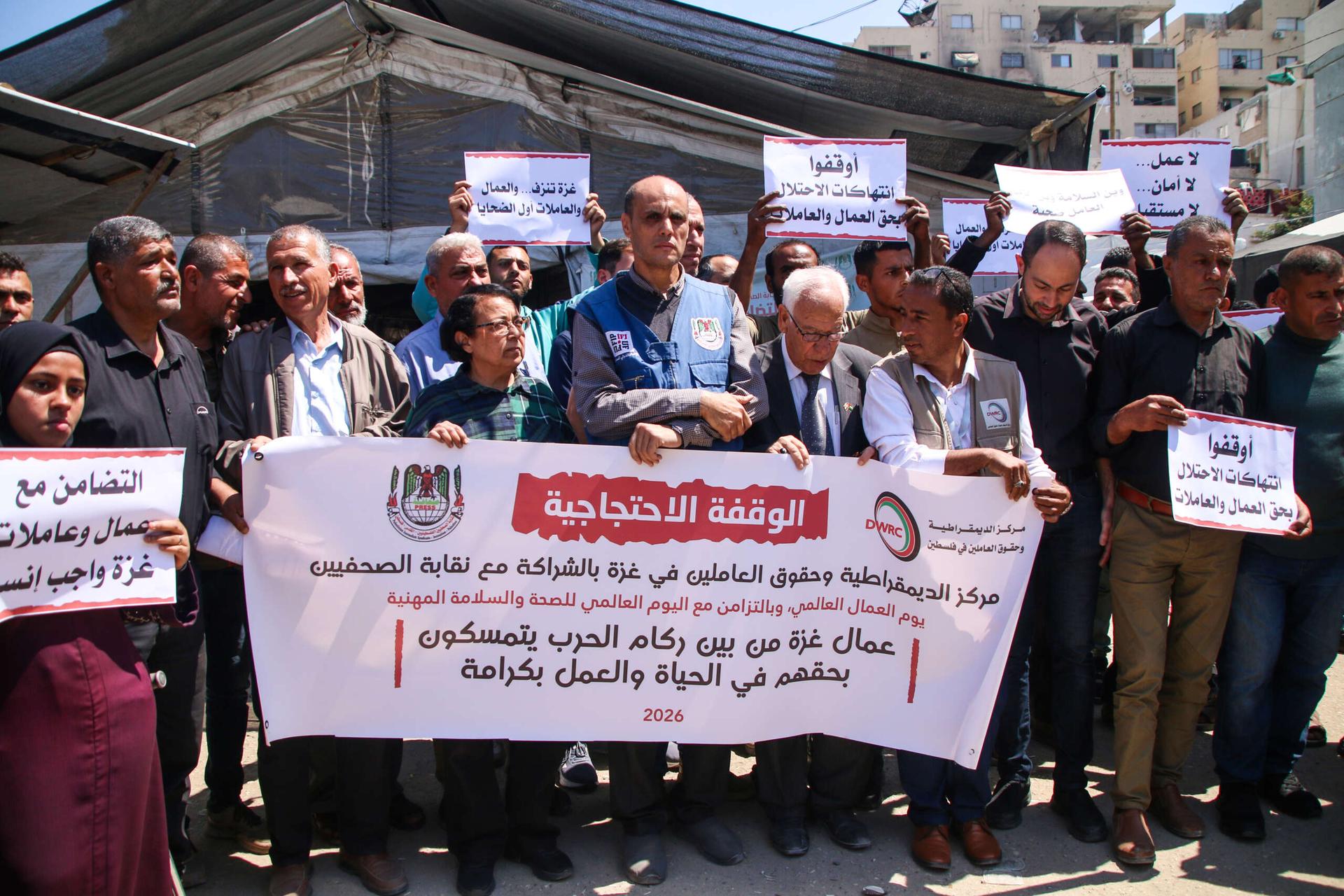
In Palestine, May Day was described not as a celebration but as a reflection of a worsening labor market, with the Truthout report tying the day to unemployment levels and the collapse of economic activity. Truthout said that “the unemployment rate in Palestine stands at around 27.5 percent,” and it added that unemployment “rises sharply among young people to nearly 40 percent,” meaning “roughly one in every three young people is unable to find a job.” The same report said that in the Gaza Strip, “unemployment has reached alarming levels of around 78 percent,” describing “a widespread collapse in economic sectors and the halt of many productive activities.”
It quoted a Ministry of Labor official explaining that the Palestinian labor market faces “unprecedented challenges due to severe economic deterioration” and “a declining ability to create new job opportunities amid the widespread closure of productive sectors and damage to many economic facilities.” Truthout also described how the ministry is working “within limited capacities” on “temporary employment programs” and “vocational training,” while saying those efforts “remain insufficient in the face of the scale of the current crisis.” In Al Jazeera’s coverage of Labour Day, Palestinian workers “have cancelled May Day events because of the economic crisis caused by Israel’s genocidal war on Gaza and poor conditions on the ground,” and it cited the Palestinian General Federation of Trade Unions saying “about 550,000 workers across Gaza and the West Bank have no income.”

Voices: solidarity and lived impact
Multiple reports carried direct voices from workers and labor leaders describing both immediate conditions and the political meaning of May Day. Truthout featured Ayman Abu Salama, a “28-year-old top engineering graduate from the Islamic University of Gaza,” who said, “I’ve applied to dozens of jobs, but I haven’t received any real response so far,” and added, “I feel stuck in the same place, despite all the effort I put into my studies.” He told Truthout that “the recent war and the widespread destruction of infrastructure and facilities in the Gaza Strip have led to a significant decline in job opportunities,” and he said he was “still searching for a job without success, despite submitting numerous applications.”
In the same Truthout piece, Ghassan Abu Zayed was described as a goldsmith and workshop owner whose “lost his source of income and his home as a result of shelling,” and the report said he had established his workshop “about 25 years ago.” Al Jazeera’s Labour Day coverage included trade union messaging that linked workplace rights to international conflict, quoting the European Trade Union Confederation: “Working people refuse to pay the price for Donald Trump’s war in the Middle East.” It also included Josua Mata’s statement that “Every Filipino worker now is aware that the situation here is deeply connected to the global crisis,” and Said Iqbal of the Indonesian Trade Union Confederation warning, “Workers are already living pay cheque to pay cheque.”
How outlets frame the day
The sources diverged in how they emphasized the day’s causes and the scale of mobilization, even when they shared the broad theme of workers’ rights. Al Jazeera foregrounded global demonstrations and public-order friction, describing scuffles in Istanbul and police clashes, while also emphasizing labor leaders’ calls for wages and economic relief amid “rising energy costs.” It quoted the European Trade Union Confederation and then moved through country-by-country examples, including Argentina’s protests against President Javier Milei’s labor overhaul and France’s “bread, peace and freedom” slogan.
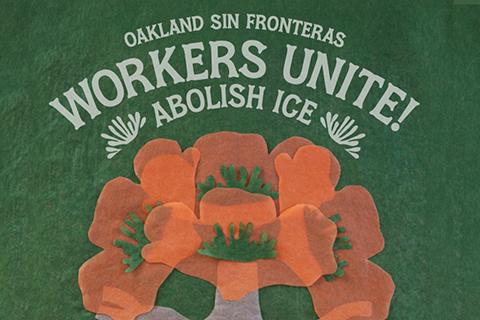
Truthout, by contrast, centered Palestine’s labor market statistics and individual stories, using unemployment figures like “around 27.5 percent” and “around 78 percent” and focusing on how “Labor Day this year is not an occasion of celebration.” The BDS Movement statement framed May Day as a call to “end complicity in Israel’s ongoing genocide and apartheid,” and it explicitly urged unions to “Escalate BDS pressure to end all state, corporate and institutional complicity in Israel’s illegal occupation, apartheid and genocide.” Indybay presented May Day as a confrontation with “War and Autocracy,” listing planned actions in Northern California that included stopping “weapons shipments to Israel” and targeting “General Dynamics” in Healdsburg, where it said the company “builds guidance systems for the 2000-pound bombs being dropped across the Middle East.”
What’s at stake next
Across the reporting, the stakes of May Day protests were presented as both economic survival and political accountability, with multiple sources pointing to future pressure campaigns and ongoing mobilization. Al Jazeera said fears of a global recession were looming over Labour Day rallies, and it described workers’ rights coalitions calling for “urgent action to curb extreme wealth,” including demands to “impose higher, fairer taxes on the wealthiest and limit excessive executive pay.” It also reported that the International Trade Union Confederation said “at least four CEOs of major corporations each pocketed more than $100m in pay and bonuses last year,” while many workers faced “potential job cuts,” and it linked those concerns to calls for urgent government action.
In Palestine, Al Jazeera said the Palestinian General Federation of Trade Unions reported “about 550,000 workers across Gaza and the West Bank have no income,” and it described the cancellation of May Day events as a sign of the depth of the crisis. The BDS Movement statement laid out a forward-looking program for unions, calling for “Adopting ethical procurement policies (EPP) and, where applicable, ethical investment policies (EIP)” and urging “Peacefully disrupting and blocking the transfer of military, energy and other dual-use supplies to Israel.” In the United States, the Wisconsin Examiner commentary described May Day walkouts as part of a broader effort to resist repression and theft of public resources, quoting Andy King of FIRM: “Workers’ rights and immigrants’ rights are the same,” and listing demands including “no more funding for ICE and Border Patrol” and “permanent protections and a pathway to citizenship for immigrants.”