Full Analysis Summary
Shipments from occupied settlements
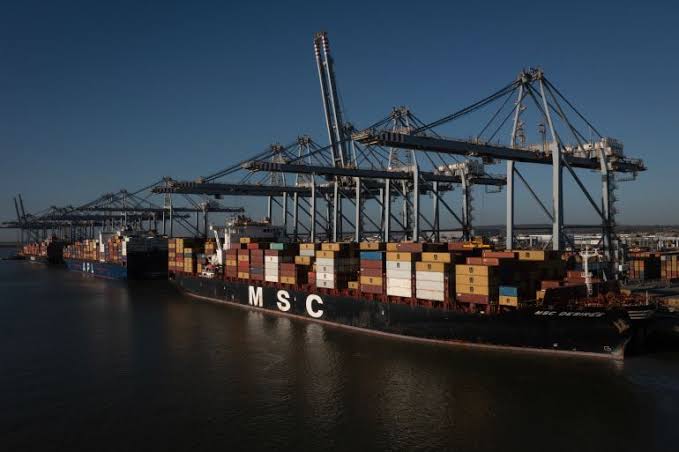
Multiple investigations show the Mediterranean Shipping Company (MSC), the world's largest container line, has regularly moved goods originating in Israeli settlements in the occupied West Bank into European and US markets.
A joint probe by Al Jazeera and the Palestinian Youth Movement found MSC "facilitated at least 957 shipments to the US, of which 529 transited European ports," including consignments that list settlement names and ZIP codes.
Reporting by iwcp.net similarly found MSC handled "at least 14 direct shipments from Ravenna, Italy, to addresses in settlements in 2025" and indicated other European ports have transited hundreds of settlement-linked consignments.
vocal.media noted investigators told regulators that MSC’s Mediterranean routes "have been used to move goods originating in Israeli settlements in the occupied West Bank into EU markets."
Coverage Differences
Detail and scale emphasis
Al Jazeera gives specific shipment totals and port-by-port breakdowns (large-scale numeric accounting), while iwcp.net highlights direct Ravenna shipments and broader patterns across several European ports, and vocal.media emphasizes the regulatory claim that Mediterranean routes were used to move settlement goods into EU markets—reflecting Al Jazeera’s data-driven exposé, iwcp.net’s investigative patterning and vocal.media’s regulatory/diplomatic framing.
Legal guidance on settlement shipments
The shipments occur against clear legal and policy warnings.
Both iwcp.net and Al Jazeera reference a 2024 International Court of Justice advisory opinion and United Nations guidance urging third states and companies to prevent trade that supports Israel's occupation.
Al Jazeera also notes that critics regard the settlements as illegal under the Fourth Geneva Convention.
EU rules and court precedent require special labelling or exclusion of settlement goods from preferential tariffs.
Vocal.media cites a 2019 European Court of Justice ruling that requires settlement goods to be clearly identified.
Campaigners say these legal obligations are routinely undermined by opaque logistics and incomplete enforcement.
Coverage Differences
Legal framing and specifics
iwcp.net foregrounds the 2024 ICJ advisory opinion and EU-level policy pressure (including nine EU states asking the Commission to act) and provides economic impact figures; Al Jazeera emphasizes the Fourth Geneva Convention and UN Human Rights Council guidance as legal bases for critics’ claims; vocal.media highlights the 2019 ECJ ruling on labelling. The three sources therefore converge on legal risk but emphasize different legal instruments and enforcement levers.
Shipping firms' public defenses
Reports differ in how they describe MSC's defense of its conduct.
Al Jazeera and iwcp.net record MSC saying it complies with legal frameworks, cooperates with Israel's ZIM, and absorbed higher insurance costs after October 2023 instead of charging surcharges.
Vocal.media quotes MSC saying it complies with applicable laws, operates as a neutral carrier, relies on exporter and authority documentation, and denies knowingly transporting prohibited goods.
Al Jazeera and iwcp.net also report that Maersk is reviewing its screening processes.
Critics interviewed by these outlets argue logistics firms have a duty to carry out due diligence, especially in conflict-affected or disputed areas.
Coverage Differences
Company response nuance
Al Jazeera and iwcp.net both report MSC’s emphasis on legal compliance and absorbed insurance costs, while vocal.media highlights MSC’s claim to rely on exporter and authority documentation and its denial of knowingly transporting prohibited goods. This shows Al Jazeera and iwcp.net foreground corporate concessions about risk and cooperation, whereas vocal.media highlights MSC’s neutral-carrier defense and reliance on external documentation.
Enforcement and data transparency
Enforcement gaps and data opacity are central themes.
Al Jazeera cautions that its findings are partial because much trade data is not publicly available and that Spanish and Italian authorities did not respond to requests.
iwcp.net notes that despite EU rules and requests from nine EU states for Commission action, the European Commission has not acted and enforcement is left to political will.
vocal.media underscores that unclear origin labelling and opaque, multi-stage supply chains complicate customs checks and risk misleading consumers.
Campaigners are therefore pushing for stronger customs scrutiny, more transparent cargo data and legal measures to prevent settlement trade from bypassing EU rules.
Coverage Differences
Focus on enforcement and data availability
Al Jazeera emphasizes limitations of available trade data and non-response from national authorities; iwcp.net stresses the political dimension and the Commission’s inaction despite member-state pressure and existing EU rules; vocal.media focuses on the practical customs and labelling challenges that allow settlement-linked goods to enter markets. Together they portray both structural data gaps and political reluctance.
Shipping to settlements
Human-rights advocates say shipping to settlements is a rights and ethical violation that helps sustain Israel’s occupation and damages the Palestinian economy.
Al Jazeera records critics arguing that trade with settlements sustains the occupation and invokes the Fourth Geneva Convention.
Iwcp.net quantifies economic impacts, citing a UN estimate that settlements generate about $30 billion a year for Israel and reporting roughly $170 billion in cumulative Palestinian economic damage from 2000–2024.
Vocal.media emphasizes the ethical duty of logistics firms to conduct due diligence and calls for transparent cargo data and stronger customs checks.
Although the sources differ in emphasis—legal and international-law framing, quantified economic harm and EU politics, and practical due-diligence and consumer-labeling concerns—they converge that current commercial practices are problematic and require stronger enforcement or corporate responsibility.
Coverage Differences
Framing of harm
Al Jazeera foregrounds legal and humanitarian framing (Fourth Geneva Convention and calls to prevent trade), iwcp.net provides quantified economic impact figures and EU political responses, and vocal.media foregrounds corporate duty-of-due-diligence and consumer deception. Each source thus stresses a different route to address the issue—legal sanctions, political measures, or corporate transparency—and the combination underscores both moral and material stakes.