China24 January, 20262 min read
Xi Jinping Orders Investigation Into Top General Zhang Youxia
This article is an automated aggregation of coverage from news outlets. Our editorials offer in-depth analysis curated by the NewsCord team.
Zhang Youxia serves as vice-chairman of the Central Military Commission Defense Ministry opened investigation alleging serious violations of discipline and law

9 outlets told this the same way.
Chinese military leadership probe
China's Defence Ministry publicly announced on Jan. 24 that General Zhang Youxia, a vice‑chairman of the Communist Party's Central Military Commission (CMC), and General Liu Zhenli, chief of the CMC's Joint Staff Department, have been placed under investigation for "serious violations of discipline and the law."
“China’s top-ranking general Zhang Youxia, long seen as President Xi Jinping’s trusted deputy, has been placed under investigation for ‘grave violations of discipline and the law,’ the Defense Ministry announced.”
That phrase is commonly used in China to signal internal party probes rather than immediate criminal charges.

Officials gave no further details, and state notices (via Xinhua) framed the moves as party disciplinary actions.
The announcements mark one of the most consequential public probes of senior military leaders in recent years and immediately stripped the CMC of two high-ranking operational figures.
Changes in China's military leadership
Zhang Youxia is one of the highest-ranking serving military officers. He is a vice-chair of the CMC and a Politburo member. He is a rare senior leader with actual combat experience who was retained past the normal retirement age.
Liu Zhenli served as chief of staff of the CMC's Joint Staff Department and oversaw joint operations and combat readiness. Their public removal follows earlier high-profile purges and expulsions of senior officers. These actions have left the CMC with fewer members who hold operational portfolios and battlefield experience.
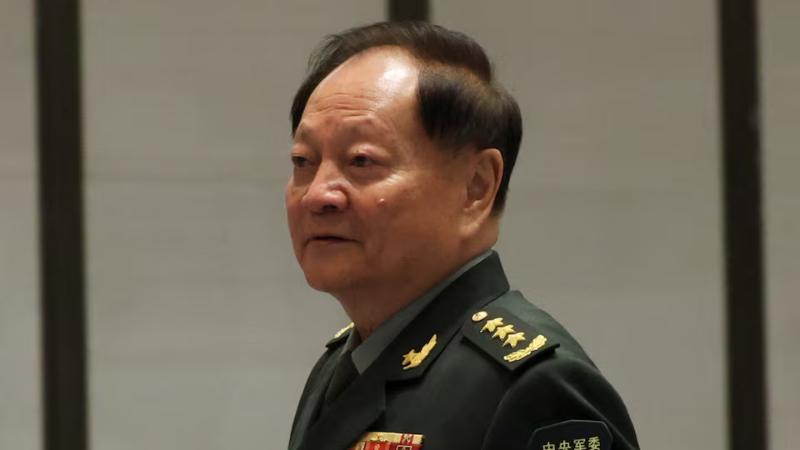
PLA leadership shake-up
Analysts across the coverage view Zhang's investigation as part of a wider pattern: a multi-year purge of senior PLA figures under President Xi Jinping that authorities present as anti-corruption but that observers often interpret as consolidation of political control.
“Since 2012 the drive has disciplined more than 200,000 officials; recent related actions include last October’s expulsion of vice chair He Weidong and the 2024 expulsions of two former defense ministers.”
Several outlets list prior removals, including high-ranking expulsions in 2023-2025, and note that all six uniformed commanders appointed to the CMC in 2022 have now been removed, underscoring the scale of the shake-up.
PLA silence and consequences
Officials' silence on specifics is notable. State statements used standard party language but offered no allegations or evidence. This pattern typically signals internal party punishment and often marks the effective end of an official's career.
Analysts and regional papers warn this could degrade short-term operational expertise within the PLA as experienced officers are removed and replaced. Beijing frames the moves as necessary discipline and reform.
&w=1920&q=75)
U.S.-China defense concerns
International observers noted the announcement against a backdrop of growing U.S. concern about China’s military modernization.
“The article notes related recent purges and expulsions of senior officers (including a vice-chairman, He Weidong, and two former defense ministers in 2024). It also mentions separately that the U.S. released a National Defense Strategy identifying China as a military power to be deterred (while saying regime change is not the U.S. aim) and that Ukraine condemned Russian strikes that cut heat to 6,000 buildings amid peace talks in Abu Dhabi.”
Some outlets also flagged the U.S. National Defense Strategy’s language on deterring China as a military power.

Others connected the personnel changes to Beijing’s timelines for force development, particularly Taiwan-related readiness.
Observers underscored how domestic disciplinary actions are being watched for their regional and strategic implications.