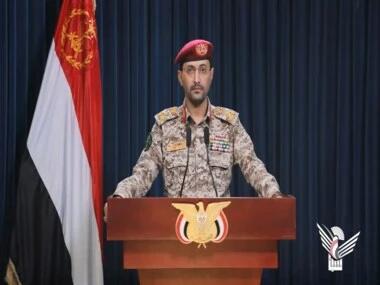
Yemeni Armed Forces Warn Saudi Arabia After Confronting Saudi Warplanes Near Sana’a Airport
Key Takeaways
- Yemeni Armed Forces repelled hostile Saudi warplanes near Sana’a airport.
- Forces blocked an Iranian civilian aircraft from landing at Sana’a.
- Saudi defense ministry intercepted a ballistic missile toward Riyadh amid Iran-linked escalation.
Sana’a warning and blockade
Yemeni Armed Forces said they delivered their first operational warning message to Saudi Arabia after confronting a formation of hostile Saudi warplanes and foiling an attempt to prevent an Iranian civilian aircraft from landing at Sana’a International Airport.
“Saturday, 04/07/2026 ArEnFrEs [](http://almanar”
In a military statement delivered by Armed Forces Spokesman Brigadier General Yahya Saree, the forces said any reckless act against the Yemeni people will be met with a comprehensive and direct response targeting Saudi airports and vital interests on land and at sea.

The statement said the operation was carried out at 5 a.m. on Friday, when Yemeni forces confronted a violation in Yemeni airspace as the Iranian civilian aircraft, carrying more than 200 passengers including stranded individuals, wounded, and patients, attempted to land at Sana’a International Airport.
The Armed Forces said the airport continues to remain under an unjust blockade imposed by the aggression coalition on both the airport and the country for nearly 11 years, and they affirmed they will no longer accept the continuation of this blockade on the airport.
The statement added that the forces announced the continuation of flights between Sana’a and Tehran to break the blockade and ease the suffering of the oppressed Yemeni people, regardless of consequences and repercussions.
Houthis threaten wider conflict
Yahya Saree, the Houthis’ military spokesperson, said in a video statement posted on X that the rebels were ready for direct military intervention in case of a new alliance with the United States and Israel against Iran, or in carrying out hostile operations against Iran or any Muslim country from the Red Sea.
The Israeli army said it detected a missile launch from Yemen on March 28, describing it as the first such launch in a month of war in the Middle East, and the Houthi rebels claimed the attack targeted military sites in Israel.
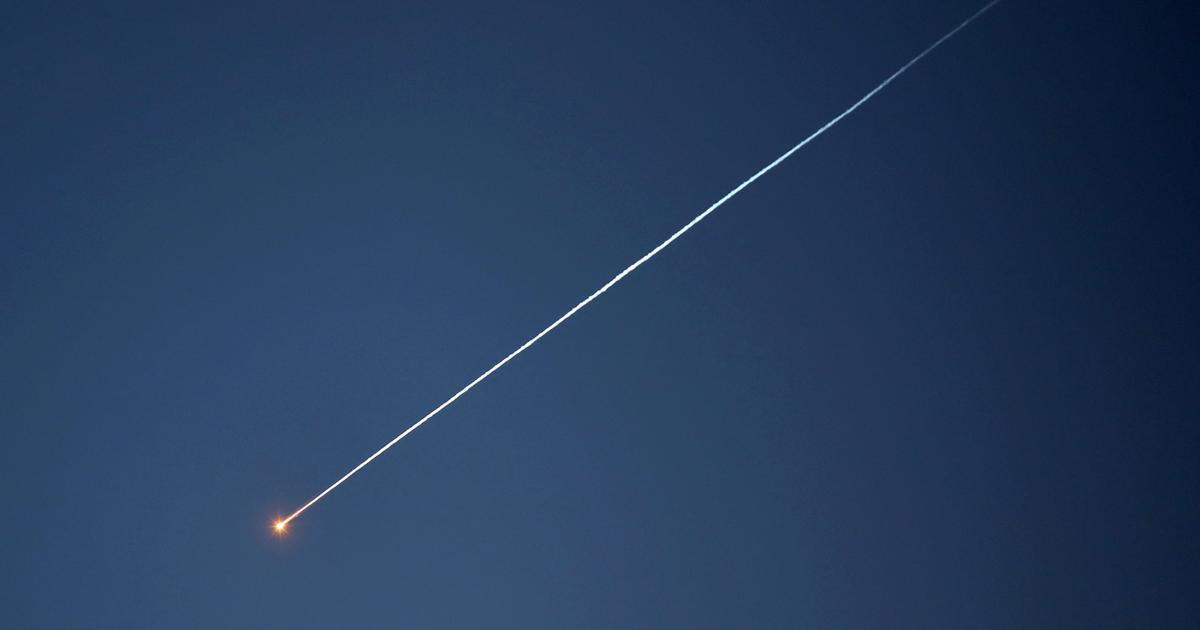
The CNews report said Saudi Arabia intercepted a missile aimed at the Riyadh region, with the Defense Ministry saying on X that a ballistic missile fired toward the Riyadh region had been intercepted and destroyed.
Courrier international reported that sirens sounded in Beersheba and in the surrounding communities of the Negev, in southern Israel, after Israeli air-defense systems were activated to intercept the threat.
Le Monde.fr did not describe the Yemen missile episode, but it reported that the United Arab Emirates announced the end of the activities of the last counterterrorism teams present in the southwestern state on the Arabian Peninsula, after Saudi Arabia set a 24-hour deadline for their withdrawal.
Regional shifts and escalation risks
Le Monde.fr reported that the United Arab Emirates announced on Tuesday, December 30, the end of the activities of the last counterterrorism teams present in the southwestern state on the Arabian Peninsula, while stating the decision was taken on its own initiative and in coordination with relevant partners.
“It is a first since the start of the war in the Middle East, and it could have "disastrous consequences" in the region, warns the Spanish newspaper El País in its live updates feed”
The same report said the Saudi-led coalition announced it had carried out strikes on the port of Mukalla, capital of Hadramaut province, recently captured by the separatist movement of the Southern Transitional Council (STC), and that the bombardments targeted a large quantity of weapons and combat vehicles destined for the separatists.
Le Monde.fr also said the limited military operation caused no casualties, according to the official Saudi news agency SPA, and that the United Arab Emirates denied stoking the conflict by saying the Emirati cargo landed in Yemen contained no weapons.
In a separate development tied to the broader regional conflict, lanouvellerepublique.fr reported that the Houthi rebels, allied with Iran, claimed on Saturday, March 28, 2026, their first attack against Israel since the start of the war in the Middle East a month earlier.
The article said the foreign ministers of Pakistan, Saudi Arabia, Egypt and Turkey would meet on Sunday and Monday in Islamabad to discuss the war in the Middle East, and that the Iranian president, Massoud Pezeshkian, welcomed these mediation efforts led by Pakistan.
More on Yemen

Yemen’s Houthis Threaten Saudi Airports After Airspace Intrusion Accusation
19 sources compared

Iran Strikes Cargo Ship Off Oman, UN Pauses Strait of Hormuz Evacuation Plan
19 sources compared
Iran Launches Drone And Missile Attacks On Bahrain And Kuwait, Threatens Complete Halt In Talks
34 sources compared

Yemeni Government and Houthis Agree to Exchange Nearly 3,000 Prisoners in Oman Talks
25 sources compared