Full Analysis Summary
G20 response to Ukraine plan
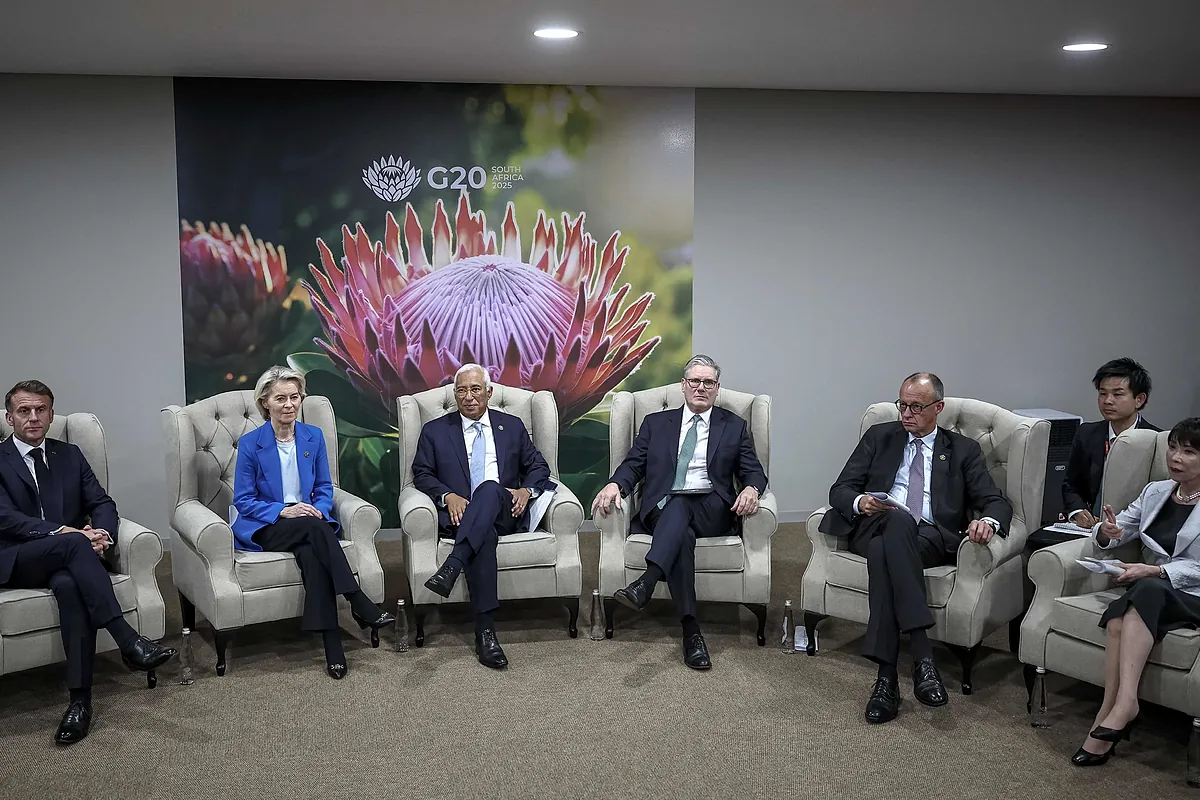
At the G20 summit in Johannesburg, leaders confronted Donald Trump’s 28-point peace plan for Ukraine.
Zelenskiy’s strongest allies pushed back decisively against key elements of the proposal.
El Mundo reports that many Western and allied countries found certain measures unacceptable.
Among the contested provisions were point 21, which would effectively recognize Crimea, Luhansk and Donetsk as Russian, and a limit on Ukraine’s armed forces to 600,000.
Critics said these elements would threaten Ukraine’s territorial integrity and future security.
The article frames the gathering as a diplomatic effort focused on preserving Ukraine’s sovereignty while engaging with a high-profile U.S. proposal.
Coverage Differences
Missing sources / inability to compare perspectives
Only El Mundo (Western Mainstream) is provided. Because no other source types (e.g., West Asian, Western Alternative) are included, I cannot contrast how other outlets framed the same events; any cross-source differences cannot be validated. Within the El Mundo piece itself there is a contrast between the majority Western resistance to key points of Trump’s plan and the minority (Hungary) signalling support, which the article reports rather than endorses.
European diplomatic stance on Ukraine
El Mundo describes a coordinated diplomatic response led by European Council President António Costa and involving Spain.
About a dozen countries convened to welcome the idea of seeking peace while explicitly rejecting territorial changes imposed by force.
Leaders from France, Germany, the UK, Italy, Canada, Japan, several Nordic countries and the Netherlands voiced concerns that limits on Ukraine's military would leave it vulnerable.
This signaled a collective emphasis on deterrence and on the UN Charter as guiding principles.
Coverage Differences
Tone and emphasis within a single source
El Mundo emphasizes Western unity in rejecting forced territorial changes while also reporting internal divergence—e.g., naming Hungary’s support for Trump’s plan—so the piece simultaneously projects a consensus among many allies and acknowledges exceptions. Because no other outlet is provided, I cannot compare whether other source types assign different moral language (e.g., stronger condemnations or more conciliatory framing).
EU divisions and coordination
The coverage highlights internal EU dynamics and notable bilateral contacts.
El Mundo reports that a smaller grouping of EU leaders—Emmanuel Macron, Friedrich Merz and Keir Starmer—also conferred ahead of the larger meeting, reflecting high-level coordination.
At the same time, the article points out Hungary’s deviation by signalling support for the U.S. plan and urging EU backing for it, illustrating fractures within the EU’s stance that could complicate unified policy toward Russia and Ukraine.
Coverage Differences
Narrative focus / internal divergence
El Mundo reports both the formation of a cohesive front (smaller EU leaders’ meeting) and the existence of dissent (Hungary’s support). With only El Mundo available, I can report that the article presents these internal EU tensions but cannot compare how other outlets might amplify either unity or division.
G20 territorial consensus
El Mundo reports that despite the absence of a U.S. representative at the summit, the G20 produced a consensus declaration, though Argentina opposed some of the wording.
The article frames this as a diplomatic outcome that reaffirmed norms against territorial acquisition by force even as high-profile individual proposals were debated.
It also reports subsequent diplomatic activity tied to Trump’s plan.
Coverage Differences
Tone on diplomatic outcome vs. plan-specific debate
El Mundo distinguishes between the G20’s consensus text—which it reports warned against using force to annex territory and was approved by Russia and Saudi Arabia—and ongoing debate about Trump’s specific proposals. The source reports both the consensus declaration and continued maneuvering (e.g., external talks), but I cannot cross-check alternative portrayals since only El Mundo is provided.
Post-summit diplomacy
El Mundo reports that U.S. officials Marco Rubio and Steve Witkoff traveled to Geneva to discuss Trump's plan with Ukrainian representatives, indicating diplomatic negotiations and lobbying would continue beyond the Johannesburg declaration.
The article portrays a layered diplomatic scene, with a public G20 consensus on territorial norms existing alongside parallel channels where controversial elements of the plan would still be debated.
Coverage Differences
Coverage of immediate follow-up activity
El Mundo reports external bilateral and private diplomatic activity (the reported trip to Geneva by Rubio and Witkoff) showing that negotiations over Trump’s plan were active beyond the public summit. Without other source types to compare, I can only note that El Mundo 'reports' these moves rather than presenting them as established policy shifts.