Ukraine War23 February, 20262 min read
Zelensky Accuses Putin of Starting World War Three
Ukrainian President says Russia’s full-scale invasion has already started World War III Ukrainian President rejects ceding occupied territory as part of any ceasefire

26 outlets told this the same way.
Outlets did split on Russian Attack Kills At Least 33 On Two Buses In Kramatorsk →
Zelensky on World War III
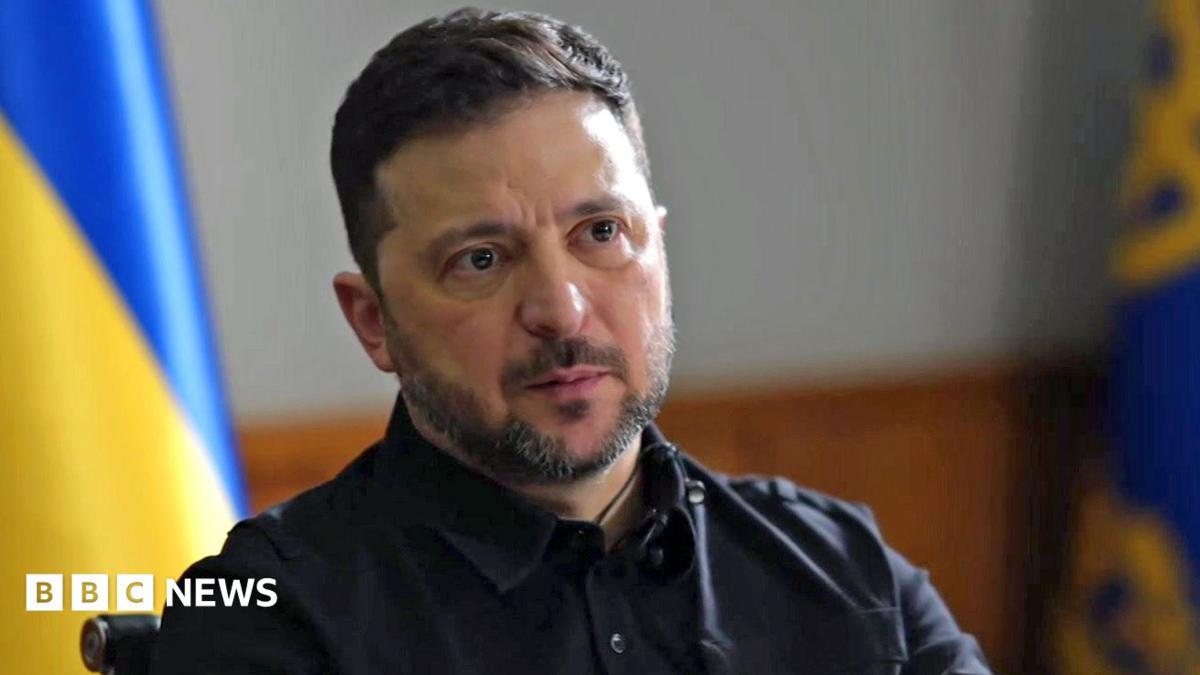
Ukrainian President Volodymyr Zelensky told the BBC he believes Russian President Vladimir Putin "has already started" World War III. He argued the conflict must be checked through sustained military pressure and tougher economic measures. Multiple outlets report Zelensky framed the war as an existential, global threat.
“Zelensky: Putin ‘has already started’ World War III; only military counterattack and tougher economic pressure can stop him.”
He insisted a short ceasefire or territorial concessions would only let Moscow regroup. He stressed that Ukraine remains the frontline preventing a broader war.

He presented diplomacy and pressure as "parallel tracks". He called for continued Western support to stop further expansion.
Zelensky on territorial concessions
Zelensky firmly rejected proposals to cede occupied Ukrainian territories — naming parts of Donetsk, Kherson and Zaporizhzhia — and warned that concessions would 'abandon' residents, split Ukrainian society and only give Russia a temporary pause to rebuild. Zelensky explicitly pushed back on pressure from figures including Donald Trump to 'come to the table fast' and insisted any electoral or security arrangements made under duress must be backed by durable, institutional U.S. guarantees. Several sources record Zelensky saying restoring Ukraine's 1991 borders remains the long-term aim, while acknowledging that immediate full retaking would carry huge human costs.
Zelensky's military requests
Across reports Zelensky emphasized urgent military needs — above all stronger air defences — and requested the ability to produce advanced systems domestically under license. Outlets including Arise News, Awaz The Voice and Kyiv Post say he singled out Patriot batteries and licences for manufacture, and tied Ukraine’s capacity to defend civilians and keep essential services running to closing the sky. He repeatedly linked the need for weapons to long-term U.S. guarantees that survive changes in American leadership, urging Congress to institutionalize support.
Battlefield dynamics and costs
Reporting also highlights current battlefield dynamics and the wider costs of the war. Several sources note Russian advances since January 2024 and cite figures or estimates about occupied territory, while others emphasise the economic and human toll of reconstruction.
Metro and Kyiv Post report Moscow occupies around one-fifth of Ukraine; Sky News highlights energy, aid and reconstruction costs and carries an analyst warning the war could continue through 2026. These accounts converge on the need for sustained external support to enable Ukraine to regain territory without catastrophic civilian losses.
U.S. support debate
Coverage records political friction around U.S. support, with several outlets relaying Zelensky’s criticism of his past U.S. meetings.
“Trump urged Kyiv to ‘come to the table, fast.’”
He insists that guarantees be legislated by Congress so they outlast any single president.

Some outlets record his uncertainty about running in postponed elections and stress legitimacy conditions for any vote under martial law.
Tabloid and regional pieces highlight immediate pressures from U.S. politicians, naming Trump and J.D. Vance.
Mainstream outlets such as the BBC and The Telegraph underline institutional remedies and the need for guarantees rather than ad-hoc promises.