Ukraine War15 March, 20264 min read
Zelensky Denounces EU Pressure to Reopen Druzhba as Blackmail Amid Hungary and Slovakia Aid Threats
This article is an automated aggregation of coverage from news outlets. Our editorials offer in-depth analysis curated by the NewsCord team.
Zelensky calls EU pressure to reopen Druzhba blackmail amid Hungary and Slovakia aid threats. Druzhba pipeline carries Russian oil and was damaged January, repairs up to six weeks.
Blackmail Accusation
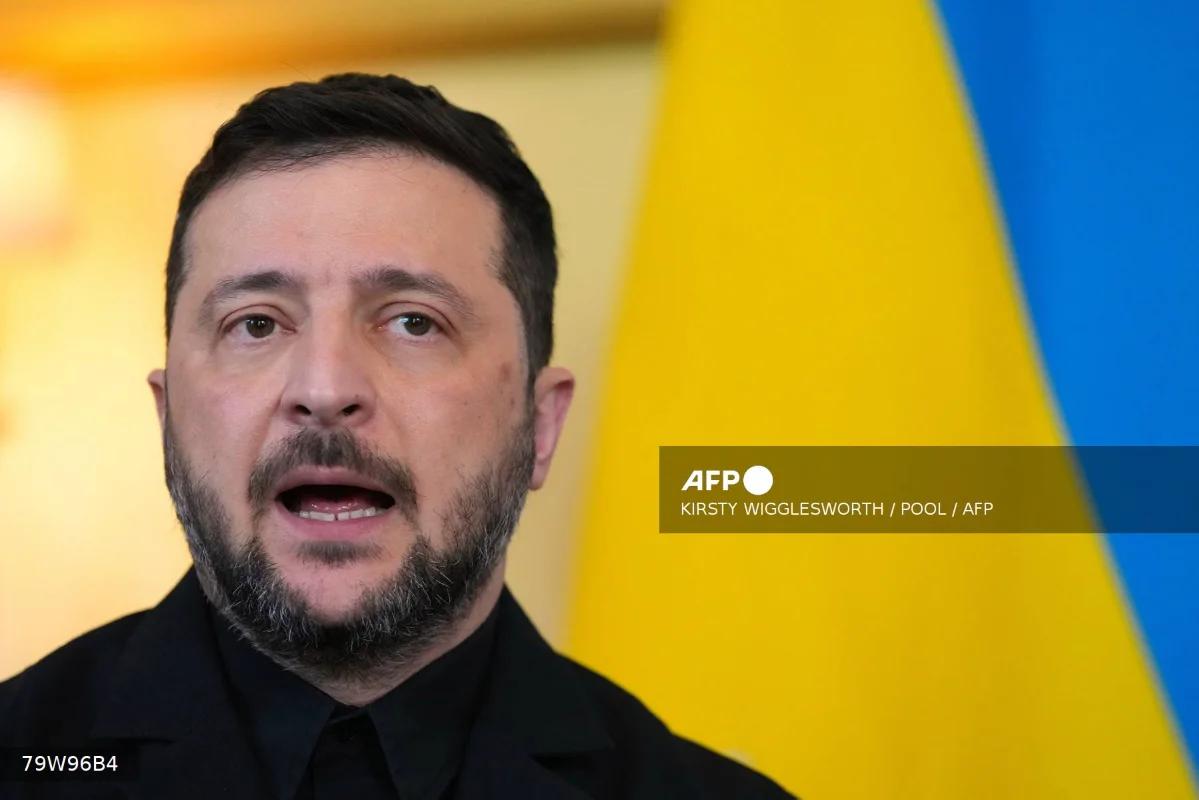
Ukrainian President Volodymyr Zelensky has launched a fierce accusation against European allies, labeling their pressure to reopen the Druzhba oil pipeline as outright blackmail amid escalating tensions over EU aid to Ukraine. The Ukrainian president made the remarks in response to threats from Hungary and Slovakia to block European Union financial assistance unless Ukraine swiftly restores the damaged pipeline, which carries Russian oil through Ukrainian territory.
“Zelensky made the remarks in response to threats from Hungary and Slovakia to block European Union aid to Ukraine over the pipeline's closure.”
Zelensky openly stated his opposition to yielding to what he characterized as coercive conditions, framing the European demands as fundamentally different from legitimate diplomatic negotiations. The Soviet-era Druzhba pipeline, which has been at the center of this diplomatic dispute, remains a critical energy lifeline for several Central and Eastern European nations, creating significant political leverage in the ongoing conflict.

Pipeline Damage Impact
The dispute centers on the Druzhba pipeline, a critical Soviet-era infrastructure that was damaged in January during a Russian strike in western Ukraine according to Kyiv's assessment. Ukrainian officials estimate that repairs could take up to six weeks, a timeline that has significantly angered Hungary and Slovakia, both of which depend heavily on the pipeline for their energy supplies.
The Druzhba pipeline, which traverses Ukrainian territory, serves as a vital conduit linking Russian oil fields to European markets, and its sudden shutdown has created immediate energy security challenges for these neighboring nations. This energy dependency has become a focal point of political pressure, with Hungary and Slovakia leveraging their vulnerability to influence Ukraine's policy decisions regarding both the pipeline and the broader European aid packages.
Political Dimensions
The political dimensions of the dispute have escalated significantly, with Hungary and Slovakia explicitly threatening to block crucial EU financial measures until the Druzhba pipeline is restored to operation. According to reports, the governments of Budapest and Bratislava have linked their support for a European 90-billion-dollar loan package—specifically intended for weapons procurement for Ukraine—to the immediate reopening of the oil flow.
“The Ukrainian president said Europeans were pressing him to repair the Druzhba pipeline that transports Russian oil, tying this issue to a European 90-billion-dollar loan blocked by Budapest and used in particular to buy weapons for Ukraine.”
The European Commission has attempted to mediate by proposing a technical inspection mission to assess the damage and accelerate repairs, but this diplomatic intervention has failed to alleviate the political tensions. Brussels's technical approach contrasts sharply with the hardline stance taken by Hungary and Slovakia, who are demanding immediate guarantees on oil supplies and have framed their position as a matter of national energy security rather than political coercion.
Ukraine's Security Position
Zelensky has firmly established Ukraine's position that national security and defense capabilities cannot be treated as bargaining chips in energy negotiations. The Ukrainian president has articulated that any negotiation framed around conditions limiting military assistance is fundamentally unacceptable, stating that Kyiv will not compromise its defense policy under energy pressure logic. Zelensky emphasized that Ukraine's ability to defend itself takes precedence over energy supply considerations, and he warned that yielding to such coercive tactics would set dangerous precedents for future negotiations.
The Ukrainian government's official position underscores the principle that security matters cannot be contingent on economic concessions, particularly when those concessions involve enabling Russian oil flows that indirectly support the aggressor state. This stance reflects Ukraine's determination to maintain control over its territorial infrastructure and its sovereignty in decision-making processes.
Global Energy Crisis
The broader geopolitical context has been significantly influenced by the ongoing US-Israeli war with Iran, which has upended global energy markets and created new challenges for international relations. The Strait of Hormuz, historically accounting for a fifth of the world's oil supplies, has been virtually paralyzed due to the conflict, creating ripple effects across global energy distribution networks.
“The US-Israeli war with Iran has upended global energy markets. The Strait of Hormuz, a route that once accounted for a fifth of the world's oil supplies, has been virtually paralysed due to the conflict.”
Ukraine, which has positioned itself as having expertise in drone warfare and has offered assistance to Washington's allies in the Gulf, has expressed growing concern that the United States' focus on the Middle East conflict could potentially delay or divert support for Kyiv. This global energy crisis has intensified the pressure on European nations to secure alternative energy sources, but has also complicated diplomatic relations and created new fault lines in transatlantic cooperation as different nations prioritize varying strategic interests in an increasingly volatile international environment.

Ukraine-Hungary Relations
Diplomatic relations between Ukraine and Hungary have deteriorated significantly throughout this dispute, with Zelensky publicly accusing Hungary's government of spreading "anti-Ukrainian sentiment" and maintaining close ties with Russia. The Ukrainian president has drawn clear red lines in relations with Budapest, stating that Ukraine will work with any Hungarian leadership as long as they are not "allied with Putin, specifically the aggressor state." This statement reflects Ukraine's broader strategy of differentiating between legitimate diplomatic partners and those perceived as enabling Russian aggression.
Zelensky's remarks represent a direct challenge to Hungarian Prime Minister Viktor Orban's government, which has maintained a more equivocal stance on the Ukraine conflict and has been increasingly vocal about Hungary's energy security concerns. The escalation in rhetoric between the two capitals highlights the complex web of energy dependencies, political alliances, and national security considerations that are shaping Europe's response to the ongoing conflict in Ukraine.