Data Investigation
One Stabbing Was Terror. The Other Was a “Knifeman”.
On 29 April a man stabbed two Jewish men in Golders Green; police called it terrorism and raised the national threat level. On 19 June a man wounded five people in Edinburgh, several of them Muslim, two attacked after prayers; the Prime Minister said it looked like anti-Muslim hatred. We counted how every outlet we could measure covered each attack, and how often they reached for the word “terror”.
Two stabbings. One story dominates.
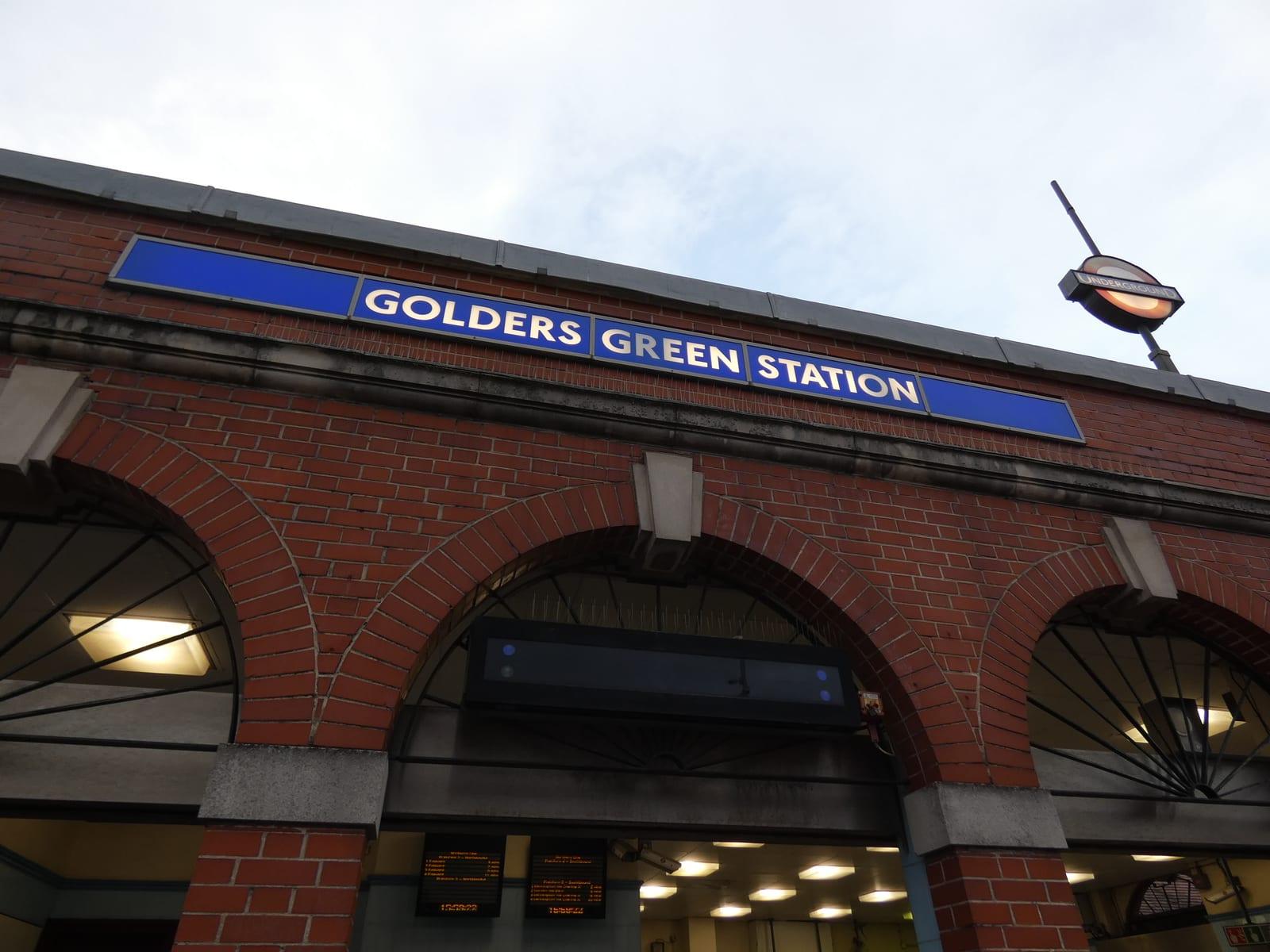
Golders Green
29 April 2026Two visibly Orthodox Jewish men (aged 34 and 76), plus a Muslim man stabbed earlier the same day
Edinburgh
19 June 2026Five men wounded, several of them Muslim; two attacked after prayers
In the first 72 hours, the national press covered the Golders Green stabbing several times more heavily
Excluding Scottish/regional titles, for which Edinburgh is a local story. This is the fairest national-press comparison.
Broken down by day
The same 72-hour window, split into the day of each attack (Day 1) and the two days after. The national/all toggle above applies here too.
Articles per day. Day 1 is the day of each attack (Golders Green 29 April; Edinburgh 19 June). Golders Green’s coverage is front-loaded onto the days of the COBRA meeting, the terrorism declaration and the threat-level rise, the very institutional signals Edinburgh never received.
Outlet by outlet, first 72 hours
Hover a bar for that outlet’s framing-term counts. National and international outlets skew hard toward Golders Green; only the Scottish local titles invert it, because Edinburgh is on their doorstep.
The word “terror” attached to one attack far more than the other
Golders Green
of articles used “terror” / “terrorism” framing.
Edinburgh
of articles used “terror” / “terrorism” framing.
The naming gap is more subtle than the volume gap. The targeted community is named at a similar rate either way (68% of Golders Green articles use “antisemitic”; 69% of Edinburgh articles use “Islamophobia” or “anti-Muslim”). The divergence is in tone: Golders Green was a flat “terror attack” that raised the national threat level, while Edinburgh, with an active counter-terror investigation, was reported as “suspected” attacks, “faith-based hate”, or simply a “knifeman”, and drew the word “terror” far less often.
What the framing looked like in practice
Golders Green: named as terror
“PM promises action after two Jewish men stabbed in suspected terror attack in Golders Green”
ITV News
“Golders Green: UK terror threat level raised to ‘severe’ after London stabbings”
GB News
“Two Jewish men stabbed in London in what police call terrorist incident”
CNN
Edinburgh: hedged and softened
“Man charged after suspected faith-based attacks leaves five injured in Edinburgh”
STV News · “Faith-based attacks” in place of “anti-Muslim”, even after the PM named anti-Muslim hatred.
“Public told to ‘stay indoors’ after knifeman prowls Edinburgh”
GB News · A motive-free “knifeman prowls” frame for an attack police were treating as anti-Muslim.
“Scottish police charge man after apparent anti-Muslim attacks in Edinburgh”
Times of Israel · Named the motive but did not reach for “terror”, despite the active counter-terror probe.
And the victim almost nobody covered
“Golders Green attacks: A Muslim was also stabbed — not that you’d know”
Middle East Eye · The same attacker stabbed a Muslim man hours earlier; that victim was near-absent from the coverage.
“Why is the Muslim victim of London’s knife rampage getting less attention?”
5Pillars
The newsroom gap mirrors a government gap
Editors do not decide in a vacuum how large a story is. They read the signals the state sends, and the state sent opposite signals. After Golders Green the government convened an emergency COBRA meeting the same day, raised the national threat level, declared a terrorist incident, sent the Prime Minister and Home Secretary to the scene and announced £25m in community security funding. After Edinburgh, an attack the Prime Minister himself called anti-Muslim, none of that happened. When the government treats one attack as a national emergency and the other as a written statement, the coverage follows.
They asked the obvious question
“Where is the COBRA meeting, Keir Starmer? Or does that not apply when Muslims are attacked?”
Zarah Sultana MP
“No Cobra meeting @Keir_Starmer?”
William Dalrymple, historian
“The Muslim community is rightly nervous and worried; this is a direct consequence of political rhetoric that demonises entire communities.”
Muslim Council of Britain
Sources for the institutional record:
- PM remarks from Downing Street on Golders Green attack (30 Apr 2026, GOV.UK)
- UK raises terror threat level to “severe” after Golders Green (CBS News)
- Government announces £25m for security after Golders Green attack (Radio NewsHub)
- Police charge man after suspected anti-Muslim attacks in Edinburgh (Al Jazeera)
- Outcry after attacks targeting Muslims in Edinburgh (Middle East Eye)
Every article behind the numbers
The full first-72-hour set, one row per article. Filter by incident or by source, or search the headlines, to see exactly what was counted. Each headline links to the original article.
The article-level table appears once the live dataset has loaded. If you are seeing the bundled snapshot, the per-article list is not included in it.
How this was counted
- For each outlet and each incident we ran site-restricted and open searches (Google News + Google), scraped the article bodies, and read each article’s publication date.
- Every figure is scoped to the first 72 hours of each attack: only articles dated on the day of the attack or the two days after are counted, the same way for both incidents. This removes the “Edinburgh is newer” objection entirely.
- We flag, per article, whether it uses the community-naming term (“antisemitic” / “Islamophobia” / “anti-Muslim”) and whether it uses “terror”/“terrorism”. Counts are lower-bound floors (search returns a capped number of results per query).
- Scottish/regional titles are separated out because Edinburgh is their local story; the headline disparity figure excludes them.
- Every counted article is listed in the table above, so the numbers can be audited row by row.
Outlets the search index may not fully enumerate here:
BBC, Sky News, The Guardian, The Times, The Telegraph, The Independent, iNews, The New York Times, Reuters, The Herald (Scotland), The National, Daily Record, Edinburgh Live, Daily Mail, The Sun, Daily Mirror, Daily Express, Metro.