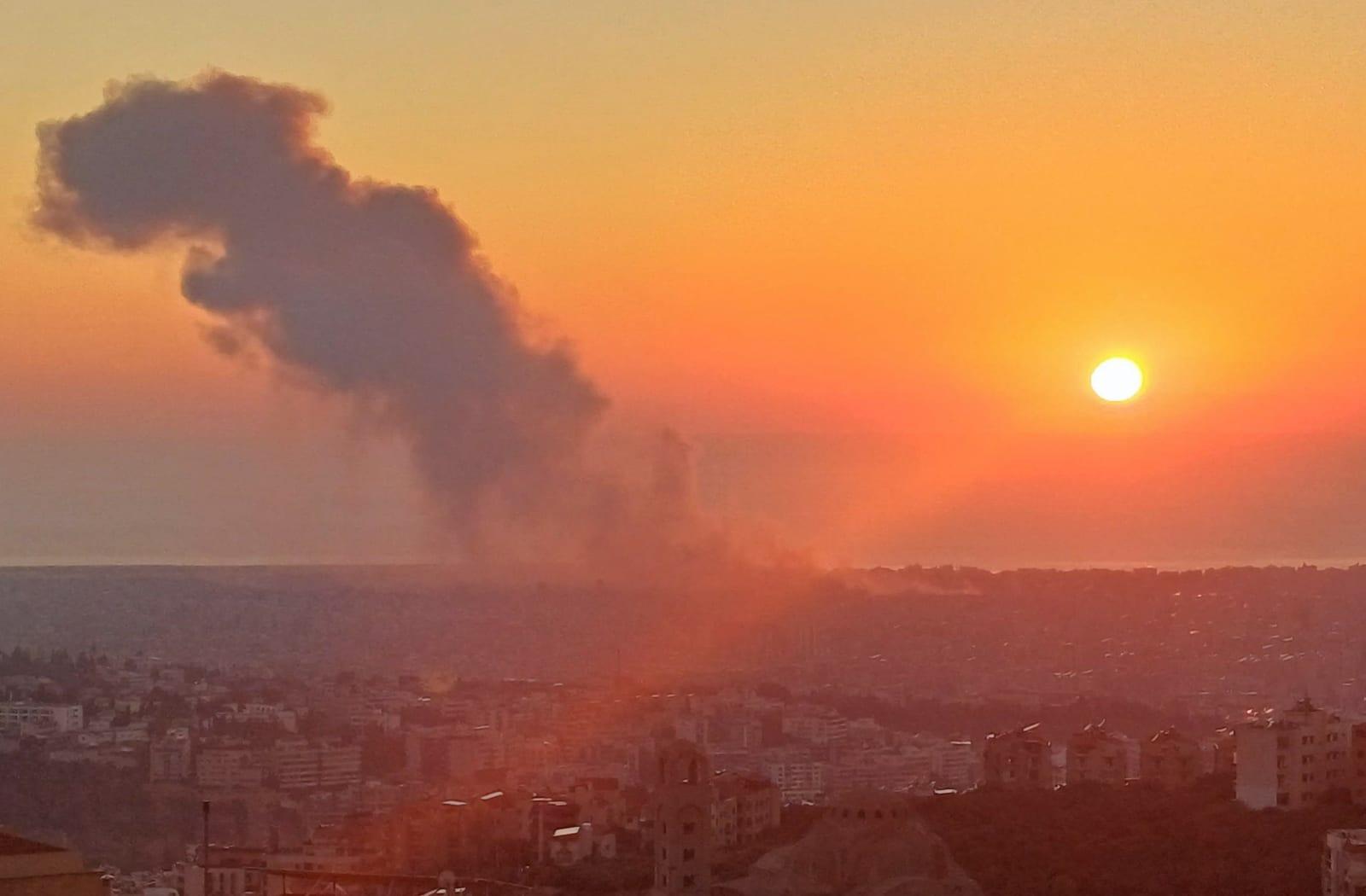
Israel has killed roughly 3,000 people in Lebanon, including 292 women and 211 children. Hezbollah has killed roughly 21 people in Israel. That ratio is 140 to 1. On 18 May 2026, AP, Reuters, The Independent, the Toronto Star and The Irish Times all ran headlines that hide it.
Each newsroom wrote a headline that says less than its own reporters wrote in the body. AP and Reuters built the wires. The Independent, the Toronto Star and The Irish Times republished them under their own mastheads. None of the five tells you who is doing the killing. That is the complaint. It is not a political objection. Each headline contradicts the article it sits on top of.
The five headlines, as they ran
| Outlet | What they published, 18 May 2026 |
|---|---|
| Associated Press | “Lebanon death toll reaches 3,000 in fighting between Israel and Hezbollah” |
| The Independent (ran the AP wire) | “Lebanon death toll reaches 3,000 in fighting between Israel and Hezbollah” |
| Toronto Star (ran the AP wire) | “Lebanon death toll reaches 3,000 in fighting between Israel and Hezbollah” |
| Reuters | “Israel, Hezbollah war persists despite truce extension; Lebanon’s death toll nears 3,000” |
| The Irish Times (ran the Reuters wire) | “Lebanon’s death toll nears 3,000 since March”Sub-head: “Israel-Hizbullah war continues despite truce extension” |
One desk picks the frame. Dozens of mastheads run it within hours. Fix it at source and you fix the downstream cascade. That is why the AP and Reuters complaints both demand a corrected wire advisory, not just a corrected page.
Take action
Make them correct it. Five complaints, one click.
One click sends a tailored complaint to each of the five outlets, anchored to that outlet’s own accuracy code: AP Standards, The Independent, the Toronto Star Public Editor under the National NewsMedia Council, Reuters Standards under the Trust Principles (with a corrected-wire-advisory ask, because Reuters’ wire ran verbatim in The Irish Times), and the Irish Times Readers’ Representative under Press Council of Ireland Principle 1, which puts a three-month Press Ombudsman escalation on the table.
What Israel actually did, in the wires’ own words
Read the bodies AP and Reuters published beneath their own headlines. The actor is named on every line.
- Israel invaded southern Lebanon and bombarded Beirut and other areas (AP, in its own body).
- Israel occupies a self-declared security zone in southern Lebanon. Israeli forces are razing villages. Israel struck more than 30 sites in 24 hours. Israel ordered villages to evacuate. (Reuters, in its own body.)
- Israel blew up the main Litani River bridges. Israel issued evacuation orders covering roughly 14% of Lebanon’s territory. Israeli strikes have destroyed more than 40,000 homes and displaced more than 1 million people.
The Lebanese Health Ministry counts the dead at roughly 3,000 since 2 March 2026. AP puts the number at 3,020, with 292 women and 211 children. Reuters puts the Sunday figure at 2,988, with 613 women, children and healthcare workers. Al Jazeera, citing the same ministry, says 3,002 dead and 13,492 wounded, with 589 women and at least 185 children among the dead. UNICEF says Israeli strikes were killing at least one child a day in Lebanon, for weeks.
On the Israeli side, on Israel’s own figures reported by Reuters: 18 soldiers, 1 defence-ministry contractor, 2 civilians. Roughly 21 people. The civilian dead in Lebanon counted by the Health Ministry (the women, children and medics alone) outnumber the total Israeli dead by more than 20 to 1.
This is not contested. The five articles say it themselves. They just refuse to put it in the headline.
We are not omitting context. The headlines are.
The wires say the current phase began on 2 March 2026 when Hezbollah fired at Israel, two days after the United States and Israel attacked Iran. Hezbollah has fired large numbers of rockets and drones into northern Israel. Note it. We are noting it. The Hezbollah action is in the body of every article we are complaining about. It is in this editorial too. What is missing from the headlines is the other side of that ledger.
What the headlines do, exactly
1. They delete the killer
“Reaches” and “nears” turn a death toll into the weather. It rises. It climbs. Nobody pulls a trigger; nobody drops a bomb. The body of each article names Israel as the actor in line after line. The headline strips that actor out. A reader who only sees the headline cannot tell who killed 3,000 people. A reader who reads the body can. The headline tells the reader less than the journalism beneath it, in the only direction that matters: away from responsibility.
Compare how these same desks write headlines when an official enemy is the actor. Russia strikes Ukrainian cities. Hamas attacks an Israeli kibbutz. Iran fires missiles. Active voice. Named subject. Verb of force. When the actor is the Israeli military, the verb becomes “reaches”.
2. They pretend this is a fight between equals
“Fighting between Israel and Hezbollah.” “Israel, Hezbollah war persists.” “Israel-Hizbullah war continues.” Each of those phrasings frames a contest between two comparable parties. A reader is told to picture two combatants of roughly similar weight, with roughly similar responsibility for the casualties.
140 to 1. One side has fighter jets, an occupation force razing villages on the ground, and evacuation orders covering 14% of the other country’s territory. The other side fires rockets across a border. One side has displaced a million people on the other side’s soil. The other side has not. Calling this a “fight between” or a “war between” is a load-bearing editorial lie, and the wires’ own arithmetic exposes it.
3. They erase the women and the children
AP’s body says 292 women and 211 children are dead. Reuters’ body says 613 women, children and healthcare workers are dead. Their own reporters wrote those numbers. Their own headlines refused to carry them. “Reaches 3,000” rounds them off into an undifferentiated lump.
A headline has room for nine words. “Including hundreds of women and children” is six. The information was already on the page. The editors chose not to use it. That is not an interpretive disagreement. That is a sourced fact, present in the same piece of journalism, deleted at the headline layer.
Bonus, on the AP wire: who fired first, twice
AP opens its causal chain with Hezbollah firing at Israel. It puts the United States and Israel attacking Iran into a trailing “two days after” clause. First action: foregrounded. Triggering action: backgrounded. This is a secondary issue compared to the headline, but it compounds the pattern. The structure consistently lifts one side’s actions and lowers the other’s, even when both are in the same paragraph.
Why this matters, in plain numbers
A clear majority of people who see a story on social media never click the article. The headline is the article for them. When the headline says “Lebanon death toll reaches 3,000 in fighting between Israel and Hezbollah”, what gets implanted is: a tragedy happened, two parties were fighting, Lebanon counts its dead. What does not get implanted is: Israel killed nearly 3,000 people, including hundreds of women and children, while occupying southern Lebanon, bombarding Beirut and ordering villages to evacuate.
The same desks know how to write the second sentence. Their own reporters wrote it. They keep choosing the first sentence anyway.
The test each one fails, on its own code
We are not arguing politics. We are quoting each outlet’s own published accuracy standard at it.
- National NewsMedia Council of Canada (binds the Toronto Star): “The headline of a story should be supported by the information in the story itself.” The Star ran the AP headline; the AP story itself names Israel as the actor and counts 292 women and 211 children. The Star’s headline does neither. That is the NNC standard, broken.
- IPSO Editors’ Code, Clause 1 (Accuracy) (the UK benchmark; The Independent is not an IPSO member and self-regulates, so we cite Clause 1 against The Independent only as the recognised industry standard, alongside The Independent’s own published accuracy commitment): IPSO has ruled, repeatedly, that a headline not supported by the text breaches Clause 1 even when the body is accurate.
- Press Council of Ireland, Principle 1 (Truth and Accuracy) (binds The Irish Times): headlines are expressly complainable, and must not give a misleading impression. They do here. The two-week clock has started; the Press Ombudsman is the next stop.
- AP Statement of News Values and Principles / AP Corrections Policy: “When we’re wrong, we must say so as soon as possible.” AP’s own copy lists the women, children, the invasion and the bombardment. AP’s headline omits all of it. AP is wrong, by AP’s own definition.
- Reuters Trust Principles / Reuters Handbook of Journalism: integrity, freedom from bias, explicit corrections. Reuters’ own body documents the 140-to-1 ratio. Reuters’ headline frames a co-equal “Israel, Hezbollah war”. That is not freedom from bias; it is the textbook example of editorial false balance.
Here is a headline supported by every word of the article beneath it: “Israeli attacks kill nearly 3,000 in Lebanon, including hundreds of women and children, health ministry says.” It fits in the same space. It uses the same source. It is not partisan. It is just accurate.
What we are demanding, outlet by outlet
- AP: rewrite the headline. Issue a corrected wire advisory to every downstream member. Publish a correction note. AP’s desk picked this frame; AP’s desk has to unpick it.
- The Independent: rewrite the headline you republished under your masthead. Stop hiding behind “it’s a wire story”. You ran it. Your accuracy commitment attaches to what you publish, not only to what you originate.
- Toronto Star: the Public Editor takes this in writing. If the Public Editor stage does not produce a corrected headline supported by the story, the National NewsMedia Council does, on the same accuracy standard. We are filing in writing precisely so the escalation has a clean paper trail.
- Reuters: rewrite the headline. Issue a corrected wire to subscribers. The Irish Times ran your copy verbatim; one corrected wire fixes The Irish Times automatically. That is the leverage and we are using it.
- The Irish Times: Readers’ Representative first, in writing. Two weeks. After that, Office of the Press Ombudsman under Principle 1. The three-month deadline runs from 18 May 2026. We are putting that deadline on the record.
One honest note on figures
The exact split varies by snapshot date and by how each Health Ministry update bundles women, children and healthcare workers together. It does not affect the argument. Every version of the figure, from every cited source, shows hundreds of women and children among roughly 3,000 dead Lebanese, against roughly 21 dead Israelis. Every version contradicts every one of the five headlines.
Take action
Make them correct it. Five complaints, one click.
One click sends a tailored complaint to each of the five outlets, anchored to that outlet’s own accuracy code: AP Standards, The Independent, the Toronto Star Public Editor under the National NewsMedia Council, Reuters Standards under the Trust Principles (with a corrected-wire-advisory ask, because Reuters’ wire ran verbatim in The Irish Times), and the Irish Times Readers’ Representative under Press Council of Ireland Principle 1, which puts a three-month Press Ombudsman escalation on the table.
Sources: AP wire copy 18 May 2026, as carried by AP member outlets (verified syndication via local10.com, clickondetroit.com, thealbertan.com, journalgazette.net and others); Reuters wire 18 May 2026; The Independent, 18 May 2026 (article b2978825, AP wire); Toronto Star, 18 May 2026 (article 19b82762, AP wire); The Irish Times, 18 May 2026 (Reuters wire); Lebanese Ministry of Public Health; UNICEF; Al Jazeera; PBS NewsHour; TIME (April 2026, civilian casualty documentation); the public record on displacement, evacuation-order area, homes destroyed and Litani bridges. Standards: AP News Values and Principles; AP Corrections Policy; Reuters Trust Principles; Reuters Handbook of Journalism; IPSO Editors’ Code Clause 1 (cited only as the recognised UK benchmark; The Independent is not an IPSO member); Press Council of Ireland Code of Practice Principle 1; National NewsMedia Council (Canada) accuracy standard. The critique is addressed to the coverage, not to any individual journalist.