Abbas Araghchi Says Israel’s Assassinations Failed Against Iran’s Coordinated Resistance
Key Takeaways
- Araghchi says Israeli assassinations failed against Iran’s coordinated resistance
- Iranian leadership emphasizes unbreakable unity and iron state discipline
- Statement appeared on X on Thursday
Ceasefire, unity, and claims
Iran’s Foreign Minister Abbas Araghchi said Israel’s “repeated terrorist assassinations have completely failed,” arguing the attacks instead revealed “the unbreakable unity, purpose, and iron discipline of the Islamic Republic’s state institutions.”
“Skip to main content World Middle East Iran Israeli newspaper: Iran intended to assassinate the President of Syria The Israeli newspaper 'Jerusalem Post' claimed that Iran intended to assassinate Ahmad al-Sharā’, the President of Syria, and Israel warned the Damascus government about it”
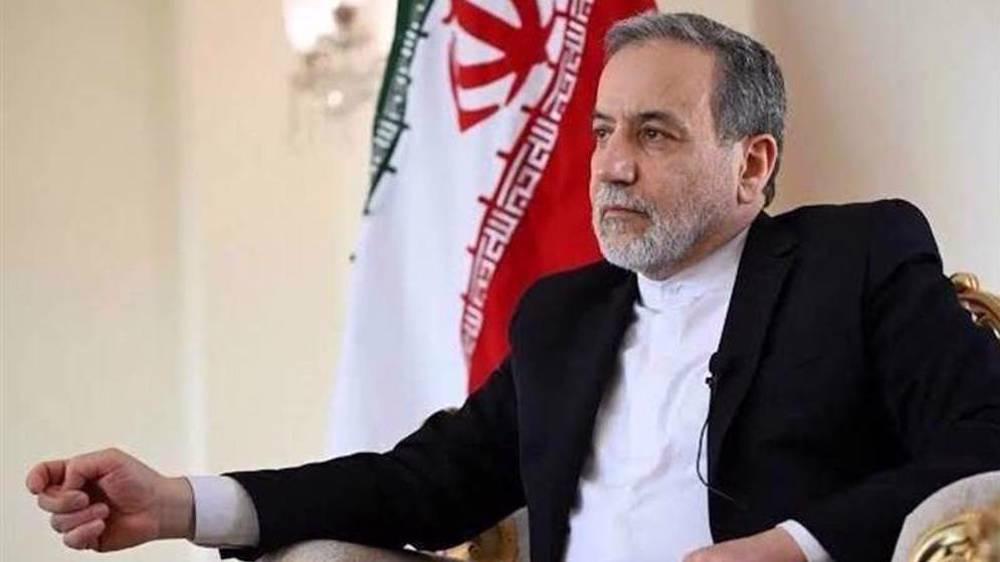
In a statement on X on Thursday, Araghchi said: “The failure of Israel's terrorist killings is reflected in how Iran's state institutions continue to act with unity, purpose, and discipline,” and he added that “The battlefield and diplomacy are fully coordinated fronts in the same war.”
Araghchi also said, “Iranians are all united, more than ever before,” and described Iran’s responses as “part of a single, unified strategy to defend Iran’s sovereignty and support the axis of resistance against Zionist aggression.”
The PressTV account ties the current posture to a broader escalation narrative, saying that on February 28 the United States and Israel initiated a “large-scale and unprovoked war against Iran,” including assassinating “Leader of the Islamic Revolution Ayatollah Seyyed Ali Khamenei and several high-ranking military commanders.”
It further claims that Iranian Armed Forces carried out “a series of retaliatory missile and drone operations against US and Israeli military assets for over 40 days,” followed by “a two-week ceasefire” brokered on April 8 and negotiations in Islamabad.
PressTV says the Islamabad talks ended after “21 hours of intensive discussions,” with Iran citing “a lack of trust in US commitments.”
Trump’s ceasefire and leadership
As fighting was set to resume, President Donald Trump announced an extension of a 14-day ceasefire, and The Independent framed the move around what Trump called Iran’s “seriously fractured” leadership as an obstacle to a peace agreement.
The Independent says Trump also told reporters that the military would continue a blockade on Iranian ports until Tehran’s “leaders and representatives can come up with a unified proposal,” following a request from Pakistan.

The Independent’s account emphasizes uncertainty inside Iran after assassinations, stating that “it is unclear who is actually in charge in Iran” and that the political vacuum has been filled by “ardent nationalists within the Islamic Revolutionary Guard Corps.”
It adds that this “tight-knit circle” is “staunchly anti-America” and that analysts say they are “reportedly passing messages by word of mouth to avoid detection by electronic means and ensure new leadership figures are not assassinated.”
The Independent also describes how US-Israeli strikes have increased sympathy for the cause, saying they “foment nationalism among the regime’s younger supporters,” while creating “a hostile climate for more liberal and moderate elements within the discussions.”
In the same reporting thread, The Independent says the IRGC was set up in the immediate aftermath of the Iranian Revolution in 1979, when “the shah, Mohammad Reza Pahlavi, was deposed,” and it reports the group has “around 124,000 members.”
It further states that Ahmad Vahidi assumed office after Mohammad Pakpour was killed in a US-Israeli attack at the outset of the war on 1 March, and it notes Vahidi is “reported to be in touch with the supreme leader on a regular basis.”
Internal divisions and negotiations
The Independent reports that even within Iran’s negotiation posture, there are signs of disagreement between the foreign ministry and the IRGC.
It says that after foreign minister and career diplomat Abbas Araghchi announced the reopening of the Strait of Hormuz “last week,” the IRGC “made the unusual move to criticise the announcement” with the affiliated Tasnim news agency describing the statement as “a complete lack of tact in information dissemination.”
The Independent also cites the Institute for the Study of War, saying the disagreement was “reflective of broader divisions within the Iranian regime” in an update on 17 April.
It further reports that the ISW said the secretary of Iran’s supreme national security council, Mohammad Bagher Zolghadr, complained to senior IRGC leaders “including Vahidi” that foreign minister Araghchi had “surpassed his mandate” in negotiations.
The Independent states that the IRGC has insisted that the strait remain shut due to the US blockade.
It also says Araghchi is “said to have caused concern by suggesting Tehran’s support for Hezbollah and the Axis of Resistance was flexible,” attributing that claim to the New York Post.
The Independent adds that “Zolghadr’s anger caused senior leaders in Tehran, including former IRGC Intelligence Organisation chief and long-time member of Mojtaba’s inner circle, Hossein Taeb, to call the negotiating delegation back to Tehran,” quoting the ISW.
In parallel, the Independent includes a broader assessment of leadership change, quoting Dr Andreas Böhm saying, “This new leadership is rather more straightforward,” and that “They say, for any escalation of the Americans, we will escalate further.”
Assassination strategy and fallout
Several sources describe assassination attempts and the strategic logic behind them, but they do so with different emphases.
PressTV argues that Israel’s “criminal campaign of assassinations and sabotage has achieved the exact opposite of its intended goal,” and it says the “desperate and cowardly acts” have “only reinforced the coordination between Iran’s defensive frontlines and its diplomatic efforts.”
In contrast, The Independent’s framing centers on how assassinations have created a “political vacuum” and an unclear chain of command, saying “it is unclear who is actually in charge in Iran.”
The Al Arabiya correspondent account in Al Arabiya’s reporting says Israel’s targeting is aimed at creating “a vacuum in Iran's formal authority,” quoting an Israeli official to explain that Israel targets “current and former officials, i.e., those with experience in running the country and potential future leaders.”
It adds that the “ultimate goal” is “to create a vacuum in Iran's formal authority, in preparation to target the internal front and in preparation for what Israel calls the overthrow of the regime in Iran in the coming period.”
The Independent also notes that after the killing of Ayatollah Ali Khamenei on 28 February, the shift has led to a “less tolerant approach to the West,” quoting Dr Andreas Böhm that the previous leader would have been “risk-averse” and “against going all-out.”
Meanwhile, Al Arabiya’s account says Israel failed to assassinate former Iranian President Mahmoud Ahmadinejad, but that “Reports had been conflicting” and that Israel acknowledged the next day that it “had attempted to kill him but did not succeed.”
The Times of India excerpt adds a separate warning from Iran’s IRGC aerospace commander Brigadier General Seyyed Majid Mousavi, saying he threatened to “destroy the Gulf oil industry if hostilities resume after the ceasefire.”
War planning, intelligence, and markets
Beyond the immediate ceasefire debate, multiple reports describe the intelligence and planning behind the conflict and its broader consequences.
“Iran’s Foreign Minister Abbas Araghchi has stated that the Israeli regime’s repeated terrorist assassinations have completely failed, instead revealing the unbreakable unity, purpose, and iron discipline of the Islamic Republic’s state institutions”
The Independent says the IRGC has been linked to “at least 20 credible plots against the UK” since 2022, and it describes how IRGC leadership is embedded within the establishment, with Vahidi “served as defence minister under former president Mahmoud Ahmadinejad between 2009 and 2013.”

PressTV, meanwhile, claims that Iran proposed “a ten-point plan seeking US troops' withdrawal and the lifting of sanctions” during negotiations in Islamabad, and it says talks ended after “21 hours of intensive discussions” without agreement.
The Times of India warns that the situation “could trigger massive economic fallout” as the ceasefire deadline nears, while it also says “The guns are silent, but the blockade remains.”
A separate Western alternative source, Crypto Briefing, ties the assassination of “top Iranian nuclear scientists” to nuclear tensions and says “Odds for Iran surrendering its enriched uranium stockpile by April 30 now sit at” a figure that is not fully visible in the provided text, while it also reports a “June 30 market” climbing and a “3-point drop from 36% to 33% at 8:21 AM.”
It further states “Daily volume is $50,725 in USDC” and that “the order book requires $14,740 to shift the market 5 percentage points.”
In parallel, the West Asian analysis from روزنامه دنیای اقتصاد quotes Seyed Hossein Mousavian’s “10 Points on Israel's War Against Iran,” including claims that “Israel's military aggression against Iran began exactly one day after Trump's two-month deadline to Iran regarding the nuclear talks” and that “Israel had pre-coordinated the plan to attack Iran with NATO leaders.”
Finally, the West Asian report from Euronews frames the stakes around protection failures, saying “Axios reported about a week before the strike that the Trump administration had laid 'maximum military options' on the table,” including targeting “Ayatollah Khamenei and his son Mojtaba if the nuclear path faltered.”
More on Iran

Iranian Officials Reject Trump’s Hardliners Vs Moderates Claim, Say Battlefield And Diplomacy Coordinated
10 sources compared
Iran’s Revolutionary Guard Seizes MSC Francesca And Epaminondas, Takes Them Toward Bandar Abbas
13 sources compared

U.S. Seizes And Boards Iranian Oil Tanker M/T Majestic X In Indian Ocean
14 sources compared
Trump Orders U.S. Navy To Shoot And Kill Iranian Mine-Laying Boats In Strait Of Hormuz
27 sources compared