Ali Shaath Says Rafah Crossing Reopens Next Week Under Trump Truce Plan
Key Takeaways
- Rafah crossing to reopen in both directions next week, Ali Shaath says.
- Reopening is tied to Trump's peace/truce plan for Gaza.
- The plan involves U.S.-led reconstruction and Peace Council-led diplomacy.
Rafah Reopens, Gaza Watches
The Rafah crossing between the Palestinian territory and Egypt is set to reopen “dans les deux sens” next week, Gaza administrator Ali Shaath announced, tying the move to a broader truce plan that had left the crossing closed until then.
“Amid the ongoing repercussions of the war and the stalled reconstruction efforts in the Gaza Strip, individual initiatives by residents who have lost their homes are emerging, as some resort to primitive solutions to secure shelter, in a scene that reflects the depth of the humanitarian crisis and the worsening living pressures”
France 24 reported that Shaath said the Rafah border point “rouvrira ‘dans les deux sens’ la semaine prochaine,” describing the reopening as part of the plan of truce announced by U.S. President Donald Trump in October.

Shaath also framed the reopening as a shift in Gaza’s relationship to the outside world, saying, “L'ouverture de Rafah signifie que la bande de Gaza n'est plus fermée à l'avenir et au monde.”
The report placed Shaath’s announcement on Thursday, 22 janvier, at the Forum de Davos, and said he was “administrateur de Gaza nommé par le Conseil de la paix de Donald Trump.”
The same France 24 account described a 15-person Palestinian governance committee, saying it is an “organe technocratique” meant to “superviser le rétablissement des services publics essentiels, la reconstruction des institutions civiles et la stabilisation de la vie quotidienne à Gaza,” according to the Maison Blanche.
While the crossing’s reopening was presented as a practical step, other reporting emphasized that daily life in Gaza remained shaped by ongoing violence and uncertainty even after ceasefire arrangements.
AFP reporting relayed by Le Devoir said Israeli strikes “remain daily,” and that “There is no difference between war and ceasefire, nor between the first and second phases of the agreement,” as residents described continued bombardments.
Plans, Phases, and Doubts
As the Rafah reopening was announced as part of a truce framework, other sources described the U.S. plan entering a second phase while residents and humanitarian workers questioned whether conditions were truly changing.
Le Devoir reported that “phase two of the American plan” was set to begin, and AFP interviews captured frustration from people living in tents and ruins, including Mahmoud Abdel Aal, who spoke “from his tent in Gaza City.”
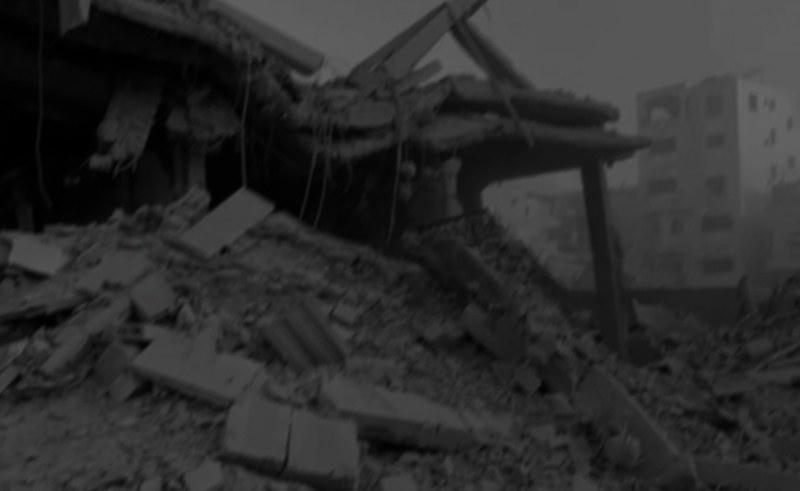
The same AFP account said that after Steve Witkoff announced the start of phase two on Wednesday, “14 people were killed in the territory, according to Civil Defense,” and it described a continuing pattern of daily bombardments.
Le Devoir also said Hamas and Israel accuse each other of violating the ceasefire, with Ahmad Sulayman saying, “There is no ceasefire, otherwise look at what the ceasefire has brought.”
The article described the Israeli army saying it carried out strikes on Thursday “against Hamas and Islamic Jihad fighters in retaliation for earlier fire on its troops,” while residents remained skeptical about improvement.
It also noted that a Palestinian technocratic committee had been formed “this week” to administer reconstruction under a Peace Council, yet people interviewed by AFP said “Nobody cares about us.”
Nivine Ahmad, 47, told AFP, “We miss real life,” adding, “we only have hope and patience.”
In parallel, The Times of Israël described Jared Kushner’s presentation during the signing ceremony for the Charter of the “Peace Council,” where he said the next step would be to “work with Hamas on demilitarization,” and he asserted “there was 'no Plan B'.”
Kushner’s plan, as described by The Times of Israël, would begin with Rafah and proceed northward to Gaza City, and it said “The next 100 days will be devoted to aid and reconstruction.”
Gaza’s Rebuilding, One Hand at a Time
Across Gaza, multiple reports described reconstruction efforts that were either stalled by access and materials restrictions or carried out through local initiatives and individual improvisation.
Chronique de Palestine reported that Palestinians in Gaza and those in exile were “funding community reconstruction efforts in the absence of international aid,” and it quoted an organizer of the Sameer project saying, “We must keep trying to help Gaza recover.”
The same account said Abu Ahmad, a displaced resident of north Gaza, believed “I could finally rebuild my house, or at least obtain a caravan to survive the winter,” but “Instead, we hear only about projects and conferences. Nothing has really changed.”
It described the “yellow line” cutting Gaza in two and said Abu Ahmad’s house was “now beyond the 'yellow line,'” while the article said nearly “70% of housing has been partially or totally destroyed” and “95% of schools lie in ruins,” citing UN estimates.
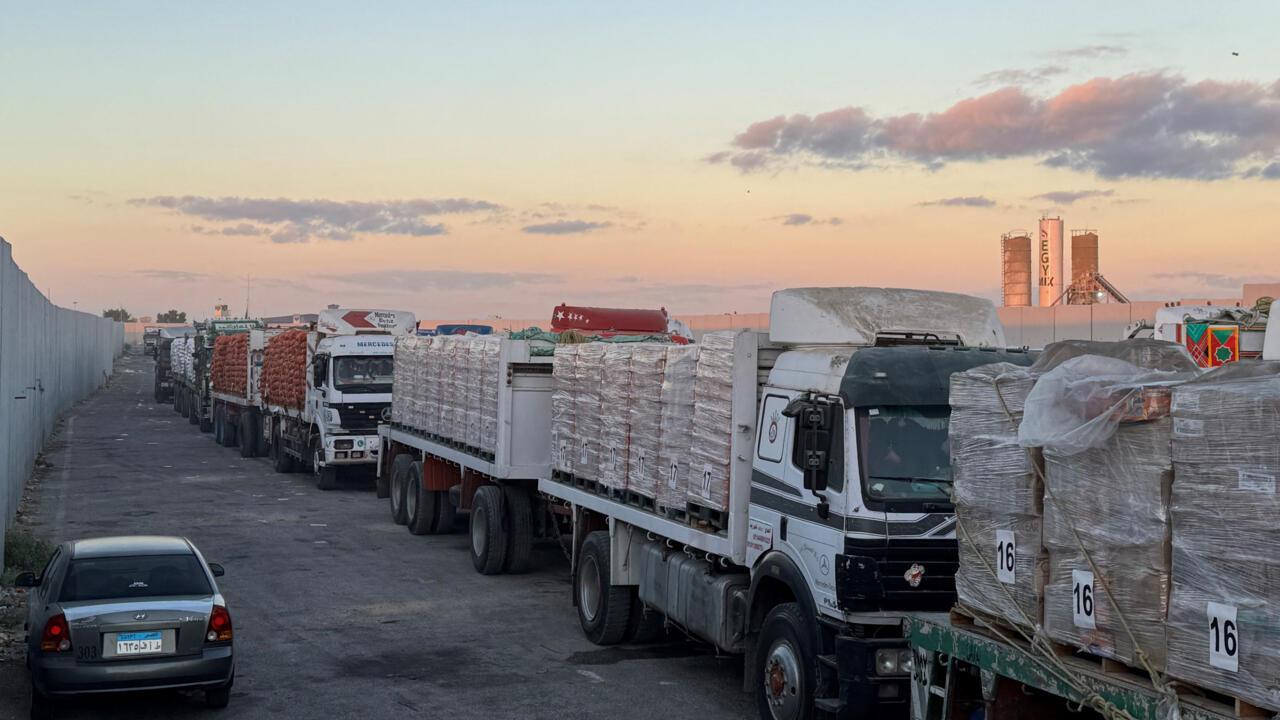
Chronique de Palestine also said humanitarian aid and reconstruction materials arrived “at rates well below those promised under the ceasefire agreement,” and that Gazans described the situation as a “new form of genocide.”
In Gaza City, the Gaza City Municipality launched the “We Will Rebuild” campaign on November 15, Palestine Independence Day, and Ahmed Al-Dremly said, “This campaign is part of a broader plan to rebuild Gaza through sanitation, planting, painting, reopening roads, and repairing homes.”
He added that the campaign began on Omar al-Mokhtar Street and that volunteers cleaned the area with “brooms, shovels, and hand brushes,” while Al-Dremly noted that “about 85% of the municipality's heavy and mid-size equipment had been damaged during the war.”
Al Jazeera Net described a different kind of rebuilding: a Palestinian rebuilding “stone by stone” with mud and debris, where the man said, “Building materials, of course, are all from the remnants of the house; we gathered stone by stone and, of course, mud.”
He explained, “We decided to build this house because reconstruction is prolonged,” and he said, “there is no news about reconstruction or anything, so one must strive and do everything with one's own hands as much as possible.”
International Warnings and Rights Risks
While reconstruction plans and local rebuilding continued, UN reporting warned that the situation in Gaza and the West Bank raised the risk of “ethnic cleansing” and described possible war crimes and crimes against humanity.
UN News said the UN fears an “ethnic cleansing” in Gaza and the West Bank, and it described the context as the first meeting of Trump’s “Peace Council” in Washington “this Thursday” to discuss reconstruction of the Gaza Strip ravaged by “two years of war.”
The UN Office for the High Commissioner for Human Rights (OHCHR) said it feared “an 'ethnic cleansing' in the Palestinian enclave and in the West Bank,” citing “the intensification of attacks, the systematic destruction of entire neighborhoods, and the denial of humanitarian aid” and “the forced transfers, which seem to aim at permanent displacement.”
UN News quoted OHCHR’s framing that these actions “appeared to aim at permanently relocating Palestinians across the occupied territories,” and it said the report noted “massacres and mutilations inflicted on civilians by Israeli forces in unprecedented numbers.”
The UN report also stated that it covered “the period from November 2024 to the end of October 2025,” and it detailed “the deaths of at least 463 Palestinians, including 157 children, as a result of famine.”
It further said famine and malnutrition were “the direct results of measures taken by the Israeli government, such as blocking entry and the distribution of humanitarian aid,” and it added that such acts would constitute “war crimes.”
UN News also warned that the acts could “constitute crimes against humanity” and “even 'genocide'” if carried out with the aim of destroying a group.
In the West Bank, UN News said the report described “the systematic and illegal use of force by Israeli security forces,” “widespread arbitrary detention, torture and other ill-treatment,” and “large-scale illegal demolition of Palestinian homes.”
It also warned of “a 'de facto' annexation of the West Bank,” and it quoted the UN High Commissioner for Human Rights, Volker Türk, saying, “Impunity is not an abstract notion: it kills.”
Art, Shelter, and Survival
As Gaza’s physical rebuilding faced delays and restrictions, other sources described how people adapted through shelter-making and how artists documented the war.
“Everyone is worried and frustrated because nothing has changed”
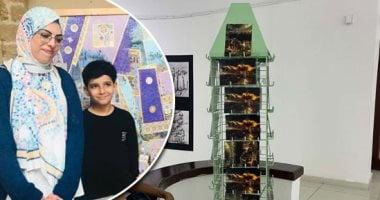
Al Jazeera’s Arabic-language reporting through اليـوم السابع focused on Palestinian artist Diana Al-Hosri, who said several paintings were lost “in Sabat al-Ilmi in Gaza during the war,” and she described hunger and displacement as part of her experience.

She told Youm7 that “we used to bake bread from animal feed and share it,” and she said, “I went without food for five days.”
She also described a moment when “the occupation targeted a neighbor who was beside me with quadcopters during the displacement,” and she said she held an exhibition during the war titled “Gaza 2024.”
In a separate report, Al Jazeera Net described a man building a “house of clay” from the remnants of a destroyed home, saying, “This is a house of clay from the original house,” and explaining that “We brought mud from west of the settlements.”
The same Al Jazeera Net account tied the rebuilding to the absence of reconstruction timelines, saying, “reconstruction is prolonged” and “there is no news about reconstruction or anything.”
القدس العربي described residents building temporary clay homes because tents “leak water and tear apart in the wind,” and it said the ceasefire did not end restrictions because “the occupation has continued to prevent the entry of building materials into the Gaza Strip.”
The report described Wafi Khalil gathering stones from ruined houses near the coast in al-Zawaida, saying, “I have grown exhausted after a year and a half of displacement,” and he added, “in summer it tears from the sun's rays, and in winter water leaks in.”
It also quoted him saying, “Because of this suffering and displacement I am thinking of building a temporary clay house until a permanent alternative becomes available.”
The same القدس العربي report included architect Mohammed Mustafa’s view that “Restoring whole houses with clay is not safe or practical, especially in rain,” while it described how residents search for clay in “clay-rich areas in eastern Gaza near where the occupation is present inside the Yellow Line.”
More on Gaza Genocide

Israeli Settlers Burn Vehicles, Attempt Mosque Fire in Deir Dibwan Near Ramallah
15 sources compared
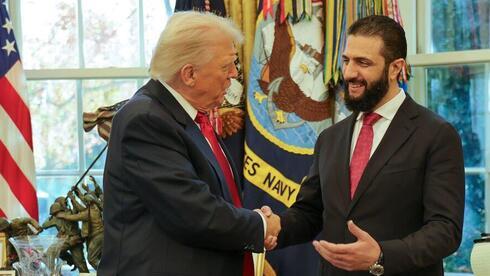
Trump Tells Netanyahu To Be More Responsible With Lebanon, Suggests Syria Fights Hezbollah
25 sources compared
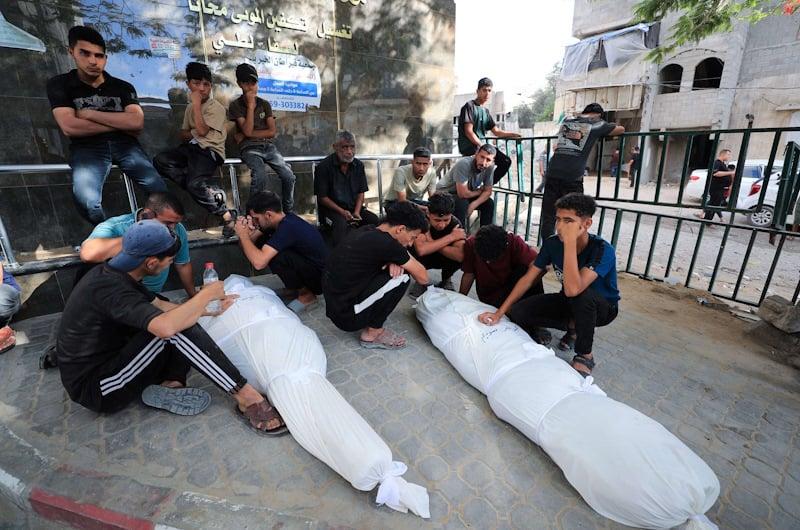
Israeli Forces Kill Three-Year-Old Palestinian Boy Rayan Abu Al-Ajeen in Central Gaza
11 sources compared

Israeli Drone Kills Nurse Mohammed Al-Habil and His Son in Gaza City
12 sources compared