Gaza Genocide · 02 May, 2026 · 7 min read
Rats and Weasels Overrun Gaza Displacement Camps, Spreading Disease to 1.45 Million
Rats and weasels infest Gaza displacement camps, escalating disease risk and harming children in sleep. Overcrowding and poor sanitation in camps worsen infestation, prompting calls for hygiene interventions.
How the infestation is caused / what conditions produced the vermin boom.
10 of 11 outlets skipped it: rodent control attempts include burning plastic and old shoes to create smoke that repels rodents, but it causes severe respiratory distress..
BBC was read line by line by the Watchdog: 2.3. See the score →
18outlets compared
Same story, two versions
tap a side to read it in full
Balkanweb
“With raw sewage flowing through many of the overcrowded camps, they have become breeding grounds for rodents.”Read the original ↗
SStreamline
“The collapse of sanitation infrastructure, combined with the presence of thousands of unrecovered bodies beneath the debris, has created a "perfect storm" for vermin.”Read the original ↗
Attribution of cause affects policy framing: sewage/breeding-ground emphasis centers on water-and-waste service repair, while the “unrecovered bodies beneath debris” frame expands urgency to broader recovery, mortuary capacity, and debris ecology.
Rats in tents
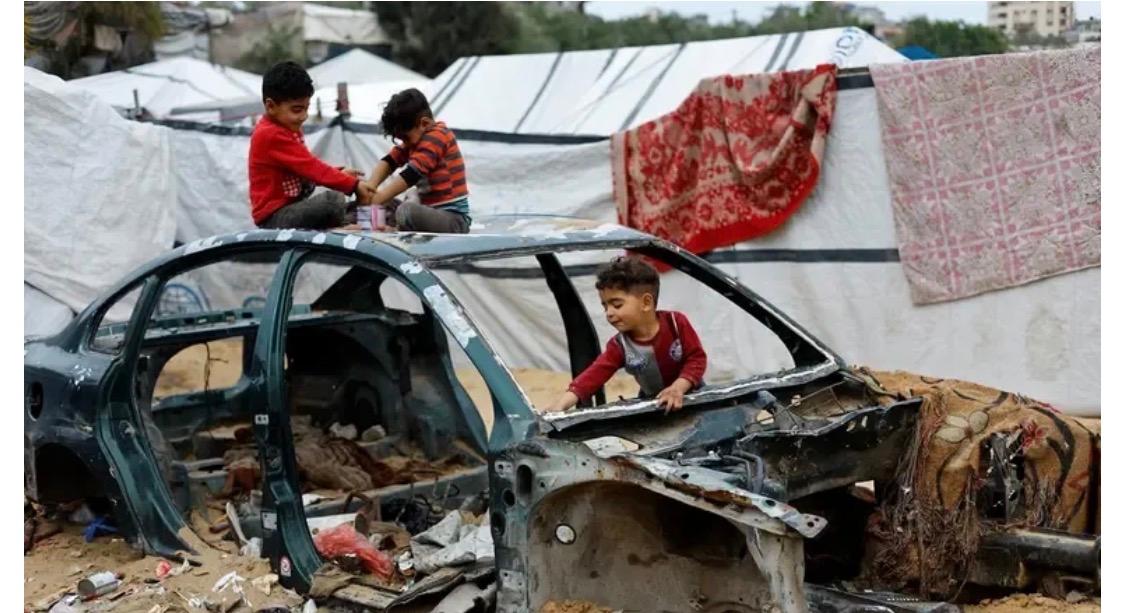
In Gaza, displaced families are describing a daily struggle against rats, weasels, and other pests as sanitation collapses and overcrowded camps become breeding grounds for vermin.
“daily battles now take place with rats, weasels and other pests that spread disease”
Balkanweb reports that in the Gaza Strip, “daily battles now take place with rats, weasels and other pests that spread disease,” and it quotes Samah al-Daabla telling the BBC: “We were woken up by her screams at 2am. BWhen my husband turned on the torch, the weasel ran away.”

The same report says her four-year-old daughter Mayaseen was given a tetanus shot at a hospital in Gaza City, but “suffered from fever and vomiting for days,” and is now recovering in her family’s tent.
It also describes how social media footage shows rats going to camps for displaced families, including “newborn babies, the sick and the elderly after the rodents have attacked them.”
The scale of exposure is quantified through a study cited by UN agencies, which says rodents or vermin were “frequently seen in 80% of the places where displaced families are now living,” affecting “some 1.45 million people.”
France 24 similarly frames the situation as a humanitarian crisis, saying Gazans are “confronted with the proliferation of parasites” in camps that remain “extremely critical on the humanitarian front.”
Across the reporting, the pattern is consistent: families say they stay awake to protect children from nocturnal bites, with Rizq Abu Laila telling Balkanweb, “We can't sleep! BIf we sleep, they bite the children and disturb us.”
What drove the infestation
Several reports tie the vermin surge to the breakdown of sanitation and waste management in Gaza, describing open sewage and garbage accumulation around tents.
Balkanweb says “With raw sewage flowing through many of the overcrowded camps, they have become breeding grounds for rodents,” and it adds that in warm spring weather “the animals thrive on the large piles of garbage that have piled up near people's tents.”B
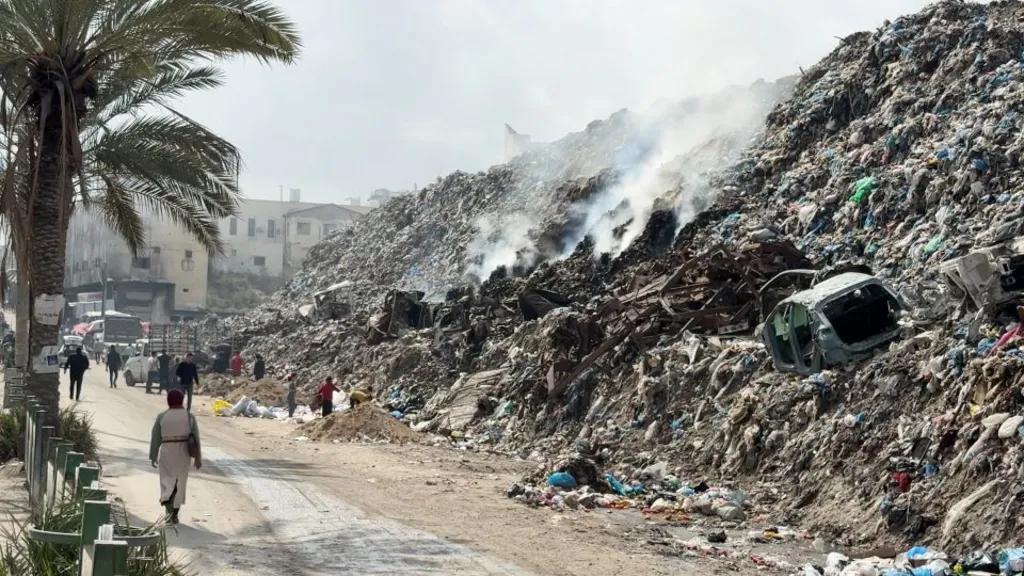
It also notes that “No reconstruction has taken place,” and that Gazans “still do not have any of the 200,000 caravans that Palestinian officials say they need as temporary homes.”
Zonebourse Suisse describes a similar mechanism, saying rats and parasites spread in tent camps “alors que la majeure partie des 2 millions d'habitants de Gaza a été déplacée,” and it links the attacks to the destruction of homes and infrastructure.
It also reports that Gaza’s systems of sewage and sanitation have been “en grande partie détruits par Israël,” while aid is constrained by Israeli restrictions.
The Reuters-linked reporting inside Zonebourse Suisse adds that COGAT, the Israeli security body that controls Gaza’s access, said it facilitated “environ 90 tonnes de produits antiparasitaires” and “plus de 1 000 souricières” into the enclave in recent weeks.
Africtelegraph frames the same causal chain in public-health terms, saying the enclave “no longer offers civilians reliable running water, a functioning sanitation system, or medical facilities,” and that “garbage accumulates in the immediate vicinity of families” when waste collection is absent.
Doctors, mothers, and officials
The reports include direct testimony from displaced families and warnings from medical and health officials about disease risk.
“Toute ma joie s'est envolée, elle s'est transformée en tristesse, en un déchirement de voir que mes affaires ont disparu, que mon trousseau de mariée est perdu”
Al Jazeera’s account of a bride’s experience, carried by Zonebourse Suisse and other outlets, describes how rats gnawed wedding clothes and pierced holes in a burgundy-embroidered dress, with Amani Abu Selmi telling Reuters: “Toute ma joie s'est envolée, elle s'est transformée en tristesse, en un déchirement de voir que mes affaires ont disparu, que mon trousseau de mariée est perdu.”
Zonebourse Suisse also quotes Khalil Al-Mashharawi describing how rats attack during sleep, saying: “Ils attaquent pendant notre sommeil,” and it adds that he and his wife “dorment désormais à tour de rôle” to protect their children.
In Gaza City, Balkanweb quotes Rizq Abu Laila describing the constant vigilance required: “We can't sleep! BIf we sleep, they bite the children and disturb us. There are so many weasels and mice - an abnormal number.”
On the medical side, Zonebourse Suisse reports that Mohamed Abu Selmia, director of Al-Shifa, expects worsening with summer and with Israel’s ban on pest-control materials such as rat poison, and it says he warned of fear about “la fièvre par morsure de rat, la leptospirose et même la peste.”
The same outlet says Abu Selmia stated that “Chaque jour, les hôpitaux enregistrent des cas de patients admis pour des incidents liés aux rongeurs, en particulier chez les enfants, les personnes âgées et les malades.”
WHO’s local representative is quoted in multiple outlets: Zonebourse Suisse cites Reinhilde Van de Weerdt saying about “17 000 cas d'infections liées aux rongeurs et aux ectoparasites” had been recorded since the beginning of the year, and it adds her conclusion that it is “simplement la conséquence malheureuse mais prévisible de personnes vivant dans un environnement de vie totalement effondré.”
Disease counts and camp conditions
Beyond individual stories, the sources describe measurable health impacts and camp conditions that they link to rodents and insects.
Zonebourse Suisse says that “à quelques jours de son mariage,” Amani Abu Selmi discovered rats had eaten her wedding trousseau, and it also reports that a rat bit the hand and toes of Khalil Al-Mashharawi’s three-year-old son, with Khalil saying: “Vendredi dernier, il a lui-même été mordu.”
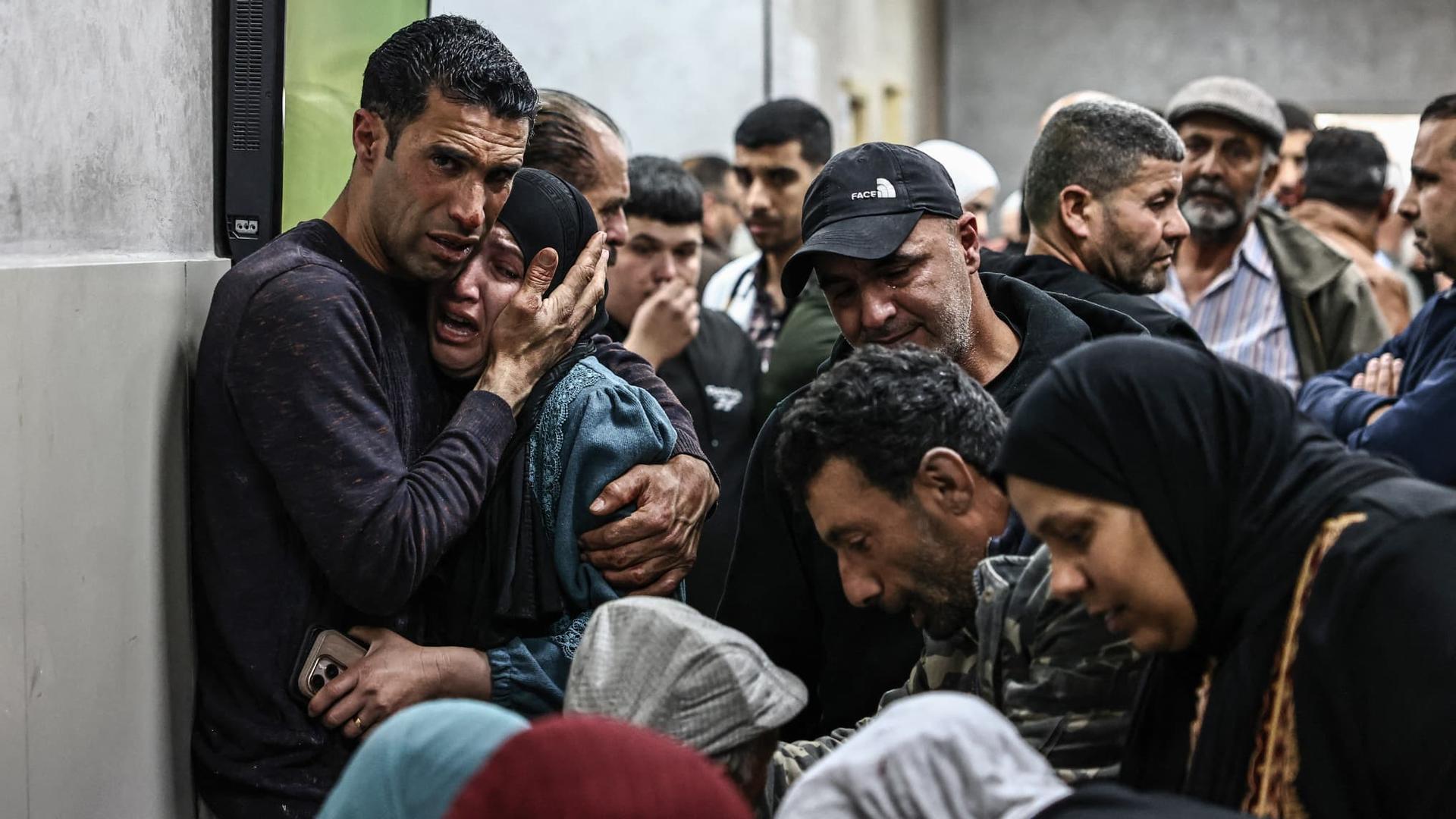
The outlet connects these incidents to a broader pattern, stating that “Chaque jour, les hôpitaux enregistrent des cas de patients admis pour des incidents liés aux rongeurs,” and it adds that there is “une crainte généralisée concernant la propagation de maladies graves.”
Africtelegraph describes the public-health threat in more clinical terms, saying the transmission of vector-borne diseases includes “leptospirosis, hepatitis A, infectious diarrhea, skin infections,” and it adds that “Rodent bites and scratches” are “multiplying among the displaced.”
It also says “on-site diagnostic capacities remain extremely limited,” preventing precise assessment of viral and bacterial circulation, and it warns that hospitals operate “on a tight schedule” with “insufficient equipment and stocks of appropriate medicines.”
The Arabic-language reporting from التلفزيون العربي describes “catastrophic” conditions more than six months after a ceasefire declaration, saying displaced people face “a widespread infestation of rodents and insects inside the dilapidated tents,” and it reports that doctors warn of rising “scabies and viral and bacterial skin infections.”
Another Arabic-language report quotes Dr. Hani Al-Fleit, head of Pediatrics Department at Shuhada al-Aqsa Hospital, saying hospitals record daily cases of scabies and skin infections, and it adds that there is “a sharp rise in skin diseases with higher temperatures.”
Competing frames and next steps
The sources diverge in how they frame responsibility and urgency, even while describing the same vermin-driven health crisis.
“to address hygiene needs”
Balkanweb emphasizes aid workers calling for urgent measures and quotes Cogat saying it is working with international organizations “to address hygiene needs,” while it also highlights that “No reconstruction has taken place” and that Gazans lack the “200,000 caravans” Palestinian officials say they need.B

Zonebourse Suisse foregrounds the Israeli restrictions and the Israeli ban on pest-control materials, reporting that Mohamed Abu Selmia expects the problem to worsen “en raison de l'interdiction par Israël des produits de lutte antiparasitaire, tels que la mort-aux-rats,” and it also states that Israel generally blocks entry of materials it deems dual-use.
Africtelegraph, by contrast, stresses humanitarian access and calls for “the permanent opening of corridors to stabilize sanitary conditions before a genuine epidemic surge occurs,” and it says United Nations agencies and international NGOs are urging that approach.
The same outlet also describes how international donors “condition their commitments on guarantees of humanitarian access and on a political framework allowing a large-scale restart of aid,” linking the health emergency to broader political negotiations.
In the background of these calls, the sources also quantify the ongoing displacement and camp scale: Zonebourse Suisse says “la majeure partie des 2 millions d'habitants de Gaza a été déplacée,” while the Arabic-language reporting from التلفزيون العربي cites UN data that “about 1.7 million people out of 2.2 million in the Gaza Strip live in displacement camps.”
The Reuters-linked reporting also includes a specific operational claim by COGAT about facilitating “environ 90 tonnes” of pest-control products and “plus de 1 000 souricières,” which is presented as part of efforts to address the health system problem.