
Amnesty International Urges Israel To Stop Destroying Civilian Property In Southern Lebanon
Key Takeaways
- Amnesty International urges Israel to stop destroying civilian property in southern Lebanon.
- Israeli forces have razed thousands of civilian structures, including historic sites, in southern Lebanon.
- El País describes the tactics as Gaza-style and ethnic cleansing, accusing disproportionate force.
Debel solar panels dispute
Amnesty International urged Israel to stop destroying civilian property in southern Lebanon after a video circulated on social media showing Israeli military excavators destroying solar panels for the Lebanese border village of Debel and its water station.
“In the historic heart of Bint Jbeil, a 400-year-old Great Mosque once stood as a testament to the city’s enduring cultural memory”
Naharnet reported that the human rights organization made the statement Tuesday after the footage emerged, and it said on Saturday the Israeli military was investigating the incident.
Naharnet also tied the Debel footage to another incident in the same village, saying Debel is the same village where a soldier was filmed earlier this month smashing a statue of Jesus, prompting international condemnation.
Amnesty International said it has previously documented extensive destruction by the Israeli military along Lebanon’s border before and after the November 2024 ceasefire, and it added it had called for reparations and war crimes investigations.
“So far, neither has appeared,” Amnesty International said in the Naharnet account.
The Week’s report, citing AP, placed the broader context of Israel’s campaign in southern Lebanon alongside the same Amnesty International statement, linking the Debel solar-panel video to the latest international criticism.
In that AP-linked framing, Amnesty International’s call to stop destruction of civilian property sits alongside Netanyahu’s comments that “we are not done yet” after destroying Hezbollah tunnels in southern Lebanon.
Netanyahu on drones and tunnels
Prime Minister Benjamin Netanyahu told Israelis that drones are Israel’s next target in Lebanon, saying “we are not done yet” after destroying Hezbollah tunnels in southern Lebanon.
The Week, citing AP, reported that Netanyahu said, “I gave instructions a few weeks ago for a special project to eliminate the drone threats. It will take time - but we will blow that up too,” framing the next phase as continued operational work.

The same AP-linked account described Israel’s military detonating a large explosion late Tuesday in Qantara, and it said Israel's Geological Survey recorded the blast as a “seismic event.”
The army said the tunnel network included two large tunnels—one about 800 metres (yards) long and the other 1.2 km (0.7 miles) long—equipped with sleeping rooms, toilets, kitchen facilities and launchers aimed at Israel.
An Israeli military official said the network included large rooms where over 100 Hezbollah fighters could gather at once, and the official said it ran underneath and alongside a mosque, school and soccer field.
The Week reported that the town was roughly 10 km (6 miles) from the Israeli border, and it noted the official spoke on condition of anonymity under military briefing rules.
In parallel, Defence Minister Israel Katz said the army has been instructed to destroy any Hezbollah infrastructure it finds in southern Lebanon “just like in Gaza,” while Amnesty International’s Debel solar-panel statement was also included in the same AP-linked report.
Bint Jbeil destruction mapping
Al Jazeera Arabic’s fact-checking team described Bint Jbeil’s historic heart as a place where a “400-year-old Great Mosque” once stood, but now it lies in ruins alongside “more than 1,500 buildings systematically destroyed by Israeli forces” in southern Lebanon.
“Mobile version Sign Up Login Home Lebanon Middle East World Business Sports Climate Change & Environment Entertainment Offbeat Culture Science Obituaries Technology Health Entrepreneurship Roundup En ع Amnesty International urges Israel to stop destroying civilian property in southern Lebanon by Naharnet Newsdesk 5 hours ago Comment 0 [](https://www”
The report said satellite imagery and open-source intelligence revealed what it called a deliberate Israeli policy to render southern Lebanon “permanently uninhabitable,” and it described Israeli operations expanding into a policy of systematically “wiping out” civilian homes, residential neighbourhoods and vital infrastructure.
Al Jazeera reported that Mohammad Bazzi, the mayor of Bint Jbeil, told the outlet that the extensive destruction reflects an organised campaign targeting civilian architecture and identity.
It said Bazzi noted with alarm that systematic demolitions proceeded “unabated even after the announcement of a ceasefire,” which Al Jazeera framed as suggesting a long-term strategy of territorial erasure.
The outlet also reported that even before the current conflict erupted in March, Israel was violating the November 2024 ceasefire with Hezbollah almost daily, killing hundreds.
Al Jazeera’s investigation said it tracked “14 distinct videos” published by Israeli soldiers and journalists between April 16 and 24, and it stated that “93 percent of the documented demolitions – 13 out of the 14 incidents – occurred within the Nabatieh governorate.”
It further reported that “Approximately 3,000 housing units have been levelled,” and that Bazzi said “more than 70 percent of the city has been destroyed and 20 percent partially damaged,” bringing the affected urban footprint to more than 90 percent.
Ethnic cleansing claims and UN expert
EL PAÍS English described Israel’s approach in southern Lebanon as applying “Gaza‑style tactics” and said it is “accelerates ethnic cleansing,” even though the report said a ceasefire had been extended for three weeks.
It reported that the Israeli army tried names for the occupied territories, including “advanced defense line” and “security zone,” before settling on “Yellow Line,” and it said the term is linked to Gaza’s “52% of the Gaza Strip — now a depopulated, ruined territory.”
EL PAÍS said the plan is to keep Hezbollah away from the Israel-Lebanon border and described it as a reprise of a map resembling the 6% of Lebanon Israel occupied for 15 years until its withdrawal in 2000.
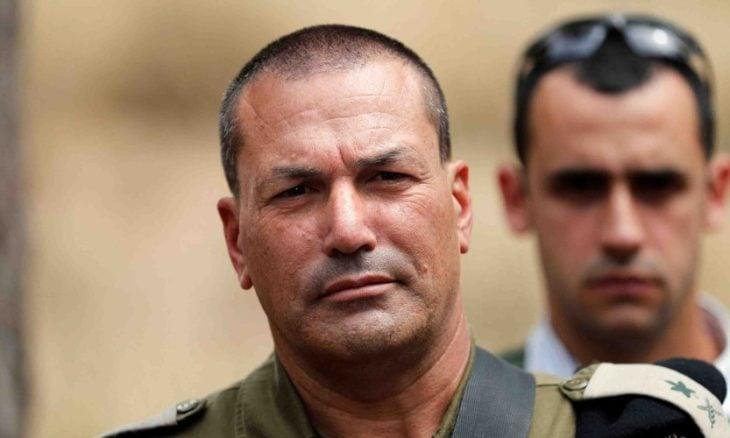
The report said Defence Minister Israel Katz openly acknowledges that the objective is to wipe the border villages off the map, adding that he said they would follow the model of Beit Hanoun and Rafah in Gaza, where the army left 90% of homes in ruins.
EL PAÍS quoted Ben Saul, the United Nations Special Rapporteur on Human Rights and Counterterrorism, saying the actions are “manifestly disproportionate” and illegal, and it included Saul’s statement that “The forced and arbitrary displacement of civilians is a war crime, as is the mass destruction of civilian property without justification by military necessity,”.
It also said that on the eve of the ceasefire, Saul and other U.N. experts signed a statement warning that “The deliberate destruction of homes is a weapon of war and a form of collective punishment, particularly in Shiite areas in the rural south of the country. It also points to ethnic cleansing,” and it quoted Saul telling EL PAÍS, “It’s a repeat of what’s happening in Gaza,”.
EL PAÍS further reported that Lebanon’s National Council for Scientific Research told AFP that Israel destroyed or damaged 500 homes in the first three days of the ceasefire, which began on Friday, April 17, and it stated that since March 2 the Israeli offensive had hit 50,000 homes in a country of five million residents, more than a million of whom are forcibly displaced.
Looting warnings and raids
As Israel’s campaign continued, multiple reports focused on internal Israeli warnings about looting and on ongoing strikes in southern Lebanon.
“Jerusalem: On Monday, the Israeli Army Chief of Staff, Eyal Zamir, issued a warning to his forces about the consequences of looting, noting that controversial posts on social networks constitute a red line”
The القدس العربي report said Haaretz had reported soldiers in southern Lebanon are suspected of looting large amounts of civilian property based on testimony from soldiers and field commanders, and it quoted Zamir telling officers, “If looting exists, it is disgraceful and may harm the image of the Israeli army. If such incidents occur, we will investigate them.”
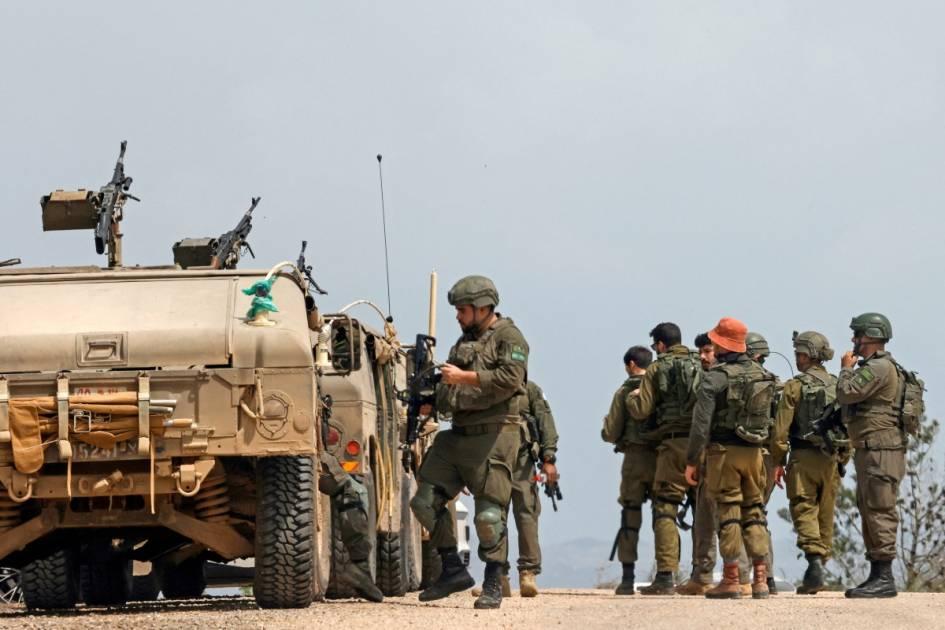
It also said video clips circulating on social networks show Israeli soldiers filming themselves joking as they damage property inside houses believed to be in southern Lebanon, and it referenced a photo of a soldier using a hammer to smash a statue of Christ in the village of Debel in southern Lebanon that drew international condemnation.
The جريدة الرياض report added that Netanyahu vowed to continue military action against Hezbollah in Lebanon despite the ceasefire, and it said authorities reported four people killed on Monday in the south of the country.
It reported that Netanyahu noted two central threats from Hezbollah: 122 mm rockets and drones, and it said he pointed out that Hezbollah has almost 10 percent of the rockets it possessed at the outbreak of the war.
The same report said Defence Minister Yisrael Katz told the UN Special Representative in Lebanon, Janine Hennis-Plasschaert, “Nasrallah is playing with fire, and this fire will burn Hezbollah and all of Lebanon.”
Finally, the independent Arabic-language report اندبندنت عربية said the army stressed in a statement to Agence France-Presse that it regards “any attack on civilian property and any act of looting as a matter of extreme seriousness,” and it quoted Zamir saying “Conscripts and reserve soldiers should not use social networks as a tool for controversial posts or self-promotion. This is a red line that must not be crossed.”
More on Lebanon

Hezbollah Lawmaker Ibrahim Al-Moussawi Says Joseph Aoun Remarks Would Be a Catastrophe
12 sources compared

Trump Tells Netanyahu To Limit Lebanon Strikes As Ceasefire Stalls
10 sources compared
UNICEF Warns Darfur Children Face Acute Crisis After April 2024 Violations
15 sources compared
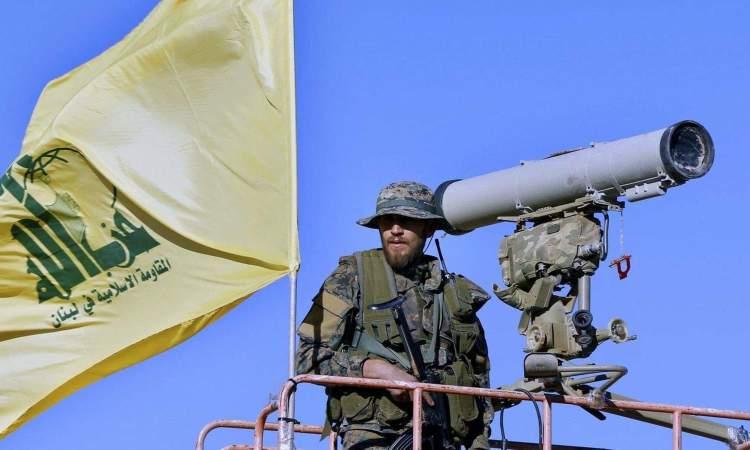
Hezbollah Fires Missiles and Drones, Striking Merkava Tanks in Al-Qantara and Kherbet Salam
14 sources compared