Full story
VAT cut and funding fight
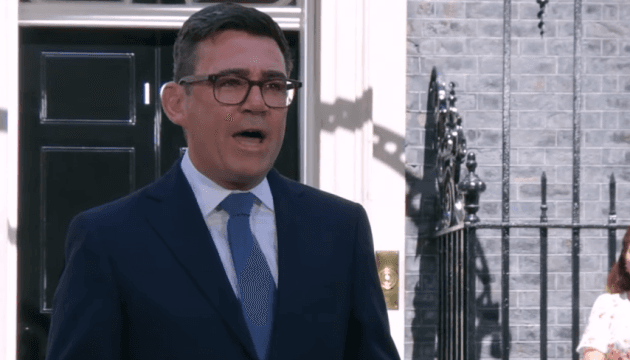
Andy Burnham told his newly assembled cabinet he wanted a “cost of living government” as he chaired his first meeting as prime minister, pairing the pledge with an energy tax cut that would remove VAT from household electricity bills from 1 October.
The BBC said Downing Street told ministers the estimated £850m cost of the VAT cut over the rest of the financial year could come from £1.8bn earmarked by the previous government to roll out the digital ID scheme in the next three years.

But Darren Jones, who was among Starmer loyalists sacked from the cabinet on Monday, said the ID programme was “unfunded” and that Burnham would need to set out where the money would be found.
The Guardian reported Burnham began the process on Tuesday morning with an announcement that VAT would be removed from electricity bills from 1 October, reducing the electricity price cap by £45 at a total cost of £850m next year.
Burnham also insisted his government would always “show how we are going to pay” for policies, while conceding that funding new announcements ahead of his first Budget would require ministers to be “prepared to reprioritise” how they allocate their budgets.
Cabinet reshuffle and quotes
The BBC said Burnham faced an early row over whether the plan to pay for the VAT cut by scrapping Sir Keir Starmer’s digital ID scheme was properly funded, after Darren Jones posted that the ID programme was “unfunded.”
Opposition parties seized on the funding dispute, with Conservative shadow chancellor Sir Mel Stride saying, “We are only one day in and already Labour are playing fast and loose with the public finances.”

The BBC also described how Burnham appointed John Healey as chancellor, with Healey having resigned as defence secretary amid the funding row, and how Dan Jarvis stepped in as defence secretary when Healey resigned.
In a separate development, the BBC said Miatta Fahnbulleh denied he had led a purge of Starmer supporters, telling BBC Newsnight “no one has a right” to be in the cabinet, which contained a “diversity of views”.
The Guardian added that Burnham urged ministers to examine “all possible ways” to tackle the cost of living crisis, while also setting the cabinet’s mission within existing borrowing rules.
Pressure points across the UK
Beyond Westminster, Northern Ireland politicians urged Burnham to turn promises into action, with Ulster Unionist Party leader Jon Burrows saying, “Those in power need to reconnect with ordinary people. Time will tell what difference, if any, his premiership makes,” as he argued families there were feeling the cost of living.
The same report said Burrows welcomed Burnham’s comments on devolution while stressing that “any future changes must protect Northern Ireland’s place within the United Kingdom,” and it noted that the Prime Minister held calls with Scotland’s First Minister John Swinney and Wales’ First Minister Rhun ap Iorwerth before a joint call with Northern Ireland First Minister Michelle O’Neill and Deputy First Minister Emma Little-Pengelly.
In England’s regions, North East mayor Kim McGuinness urged Burnham to use his arrival in Downing Street to usher in a “new era of power in the regions,” calling for immediate interventions to tackle the cost of living and long-term changes to give “hope of a better future.”
Asian Standard reported McGuinness called for mayors to be given control over a share of national tax revenues and renewed calls for long-term funding for regional bus fares, noting bus fares in the North East are currently capped at £2.50, lower than the £3 national cap.
The Guardian’s account of the government’s immediate agenda also tied the cost-of-living push to wider policy choices, including a plan to reduce the national bus fare cap by a third from £3 to £2 and a timetable acceleration for implementing a national care service.